Shamima Muslim Writes: The honour and duty of representation
Since I started this role a year ago as Deputy Presidential Spokesperson, I have had the privilege of representing at different events — the President, the First Lady, the Chief of Staff and his deputies, and my own immediate boss, the Minister for Government Communications, at different events. It is an honour I do not […]
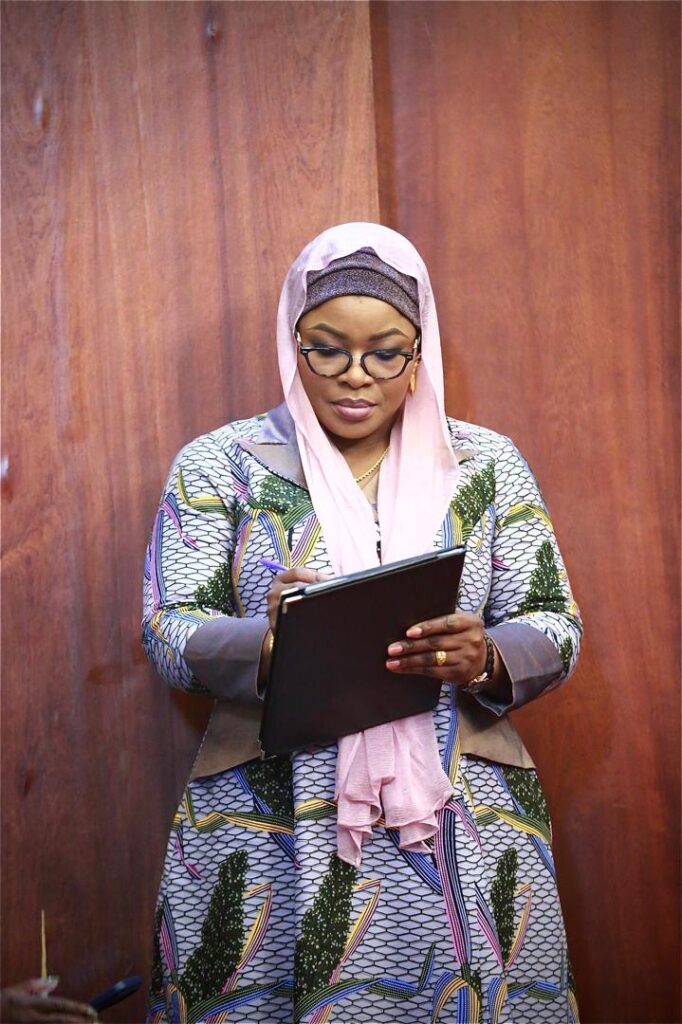
Since taking on the role of Deputy Presidential Spokesperson a year ago, I have been honored to represent various dignitaries, including the President, the First Lady, the Chief of Staff and his deputies, as well as my own Minister for Government Communications. This responsibility does not come lightly. Recently, I read a speech on behalf of the Chief of Staff, Dr Julius Debrah, which included a passage that resonated deeply with me: "My years in public service have taught me that good intentions alone do not improve lives.
Delivery does. As Chief of Staff, I am privileged to help translate President Mahama’s vision into results people can see and feel." How does one convey such a message with humility? How does one honor the weight of such a powerful statement? These words are not merely empty phrases; they carry the stories of countless meetings, difficult decisions, and the pressure that the public rarely witnesses.
To truly represent this sentiment, one must carry the speaker's lived experiences with respect, not merely perform them. Just last weekend, I read another speech on behalf of Hon. Felix Kwakye Ofosu, Minister for Government Communications. In this speech, the lines "A government committed to democracy must not fear scrutiny. My duty as Minister for Government Communications is not to fear your headlines, but to ensure you have accurate information to write them" struck me profoundly.
Holding such a word as "duty" with sincerity means recognizing both the responsibility and the burden it entails. Approaching such a statement with depth is crucial; you must convey its meaning as if it were your own. Representing someone else's words is not just about delivering a speech. It is about safeguarding their credibility and carrying their story, intent, tone, and relationship with the audience.
Representation is not a substitution but a stewardship role. When someone represents a higher office, the focus must always remain on the principal. Any deviation from this shifts the attention away from the true subject. The representative should accept a brief introduction and deliver the message with humility, accepting the compliment of being entrusted with their message.
Ultimately, all representation loops back to one voice. Every appointed individual, whether a Chief of Staff, Minister, Deputy, or CEO, represents their office, but first and foremost, they are extensions of President John Dramani Mahama. When I speak, I am amplifying his vision of a reset Ghana. The Chief of Staff's message about delivery is tracking President Mahama's vision into tangible results.
My Minister's commitment to duty and resisting scrutiny reflects the democratic values upheld by President Mahama. All representatives must speak in alignment with the vision of their Principal. This privilege is not merely about representing a high office; it is about being trusted as a vessel for a President who believes good intentions must become visible results, and that a government must have the courage to face scrutiny. This is the honor, and this is the duty.
Written by urgent.news from MyJoyOnline Ghana's reporting — not their text. Machine-written — may contain errors; check the original before relying on it.