Sener suministrará a Defensa drones de entrenamiento de tiro
El acuerdo incluye los modelos MOAI, ALBA y Scrab III, ideados para simular amenazas reales como los misiles Patriot, Nasam o Mistral. A finales de julio firmó un contrato similar con Suecia. Leer
The Spanish engineering firm Sener has secured a contract with Spain's Defense Ministry to provide target drones for training purposes. The agreement includes the MOAI, ALBA, and Scrab III drone models, which are designed to simulate real threats such as Patriot, Nasam, or Mistral missiles. In late July, Sener signed a similar contract with Sweden.
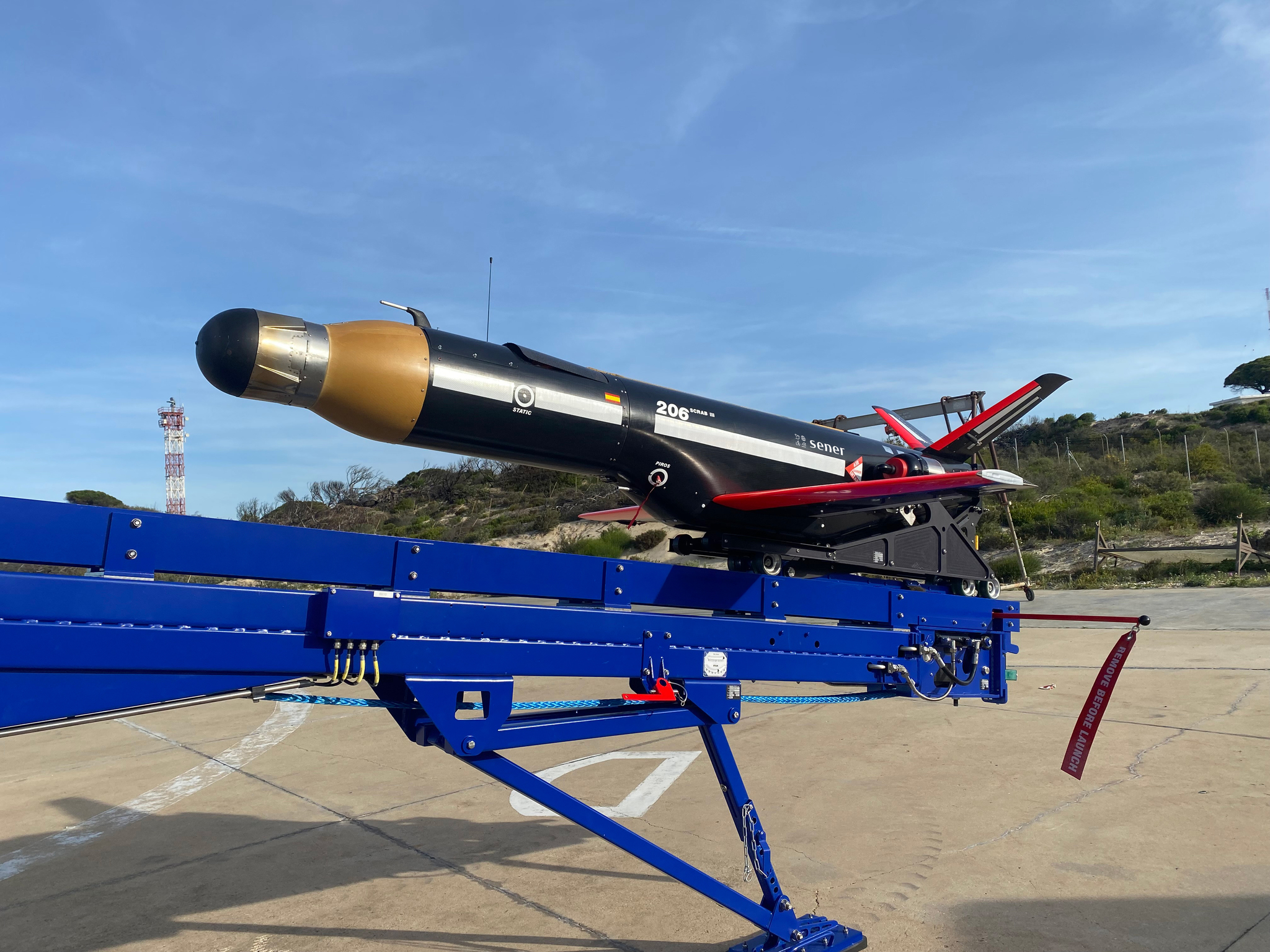
These unmanned aircraft, often referred to as target drones, are utilized for training, testing, and validating Defense capabilities by simulating real-world threats, including enemy aircraft or missiles. The firm has been awarded a contract from the Directorate-General of the National Aerospace Technical Institute (INTA), which is affiliated with the Ministry of Defense, enabling the establishment of the necessary systems at El Arenosillo testing center in Huelva.
The drones will enable advanced training for Air Force units, including air-to-air shooting exercises, non-piloted air-to-air missile engagements, and air-to-air cannon practice. The contract also covers the Scrab III, Scrab II, and MOAI systems. The MOAI is a military training target aircraft capable of reaching optimal speeds for artillery shooting drills (35 to 90 mm calibers) and can serve as a direct target or tow various decoys, depending on the mission requirements.
Additional accessory options, such as the MDI (Miss Distance Indicator), radar or infrared signatures, and smoke canisters, can be installed on the MOAI.
The Scrab III drone is designed to counter high-speed threats (subsonic, below the speed of sound) with long ranges. It is tailored for military defense anti-aircraft systems training, such as Patriot, Amraam, or Nasam. The combination of Scrab III, Scrab II, and MOAI provides diverse training needs and threat profiles, which is particularly relevant given the evolution of operational scenarios and the increasing use of unmanned aerial vehicles, necessitating flexible means to prepare and evaluate responses to threats with varying characteristics in terms of speed, maneuverability, and behavior.
Written by urgent.news from Expansion ES's reporting — not their text. Machine-written — may contain errors; check the original before relying on it.