Russia launches mass production of electronic warfare systems to counter Starlink, but analysts say its capabilities are overstated
Russia has begun mass production of the Volna Kupol Garant system, designed to jam SpaceX’s Starlink, state-controlled news agency TASS reported late last week. Russia claims the system can “collapse” the operation of Starlink satellites in orbit. However, military analysts interviewed by The Insider are highly skeptical of Moscow’s statements regarding the Volna Kupol Garant’s capabilities. What…
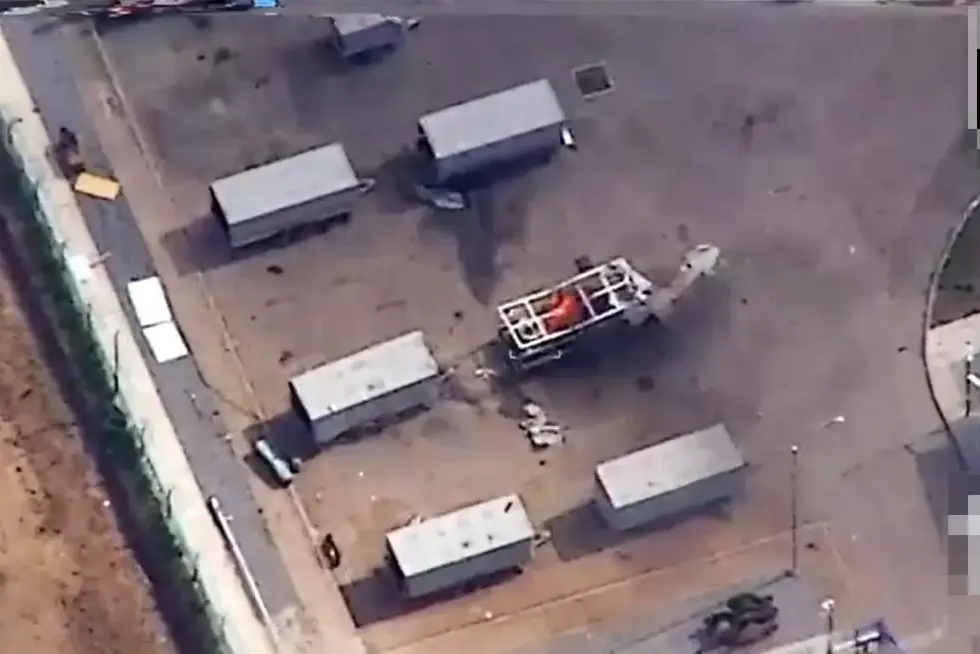
Russia has commenced mass production of the Volna Kupol Garant system aimed at disrupting SpaceX's Starlink, according to TASS, the state-run news agency. Moscow asserts that the system can "neutralize" Starlink satellites in orbit, but military analysts express significant skepticism about the Volna Kupol Garant's capabilities.
The Volna Kupol Garant system comprises multiple trailers, each equipped with satellite antennas. Ukrainian communications and electronic warfare expert Serhii "Flash" Beskrestnov, who first reported the system's existence, claimed eight dishes were sufficient to "disable" a satellite and disrupt terminal operation within a 20-square-kilometer radius.
Ukrainian troops have acknowledged that Russian electronic warfare systems like Volna Kupol Garant reduce the effectiveness of Starlink, which has been widely employed by Ukraine's Armed Forces. Despite these claims, experts at the Institute for the Study of War (ISW) and other analysts maintain that the system's actual impact is overstated.
The system's major limitations include its immobility, high cost ($1.5 million per unit), and limited coverage area. Critics argue that the system's effectiveness is questionable due to these factors, with some suggesting that it would require numerous units to cover significant areas, making it financially unsustainable. Furthermore, the system's powerful signal could inadvertently make it a target for enemy strikes.
While the system may have demonstrated some effectiveness on specific portions of the front, analysts emphasize that its overall impact on the balance of forces on the battlefield is limited. The deployment of such systems near critical sites and in border areas is likely to be Russia's main strategy, as creating continuous electronic warfare coverage over large areas is impractical due to resource constraints.
Written by urgent.news from The Insider's reporting — not their text. Machine-written — may contain errors; check the original before relying on it.