Nasjonal sørgeperiode: – Ikke en økonomisk begivenhet
Men kong Haakon VIII tiltrer i en brytningstid, mener sjeføkonom.
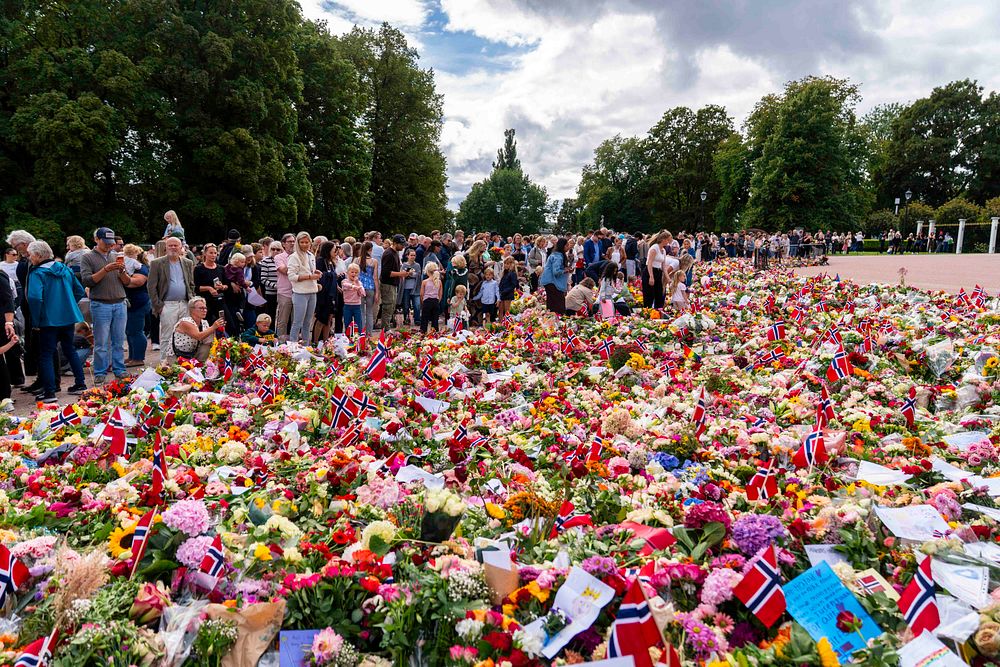
Norge is currently in a national period of mourning following the death of King Harald last week. This period lasts for nearly two weeks, ending on September 9th with the burial ceremony. Economists believe the events surrounding the king's passing are unlikely to leave a lasting impact on Norway's economy. While flower sellers have had much to do, their contribution to overall economic activity is negligible, according to Kyrre Aamdal.
The mourning period may dampen participation in various events, though burial services could bring some additional activity. Most economic activity "remains largely unaffected." People are expected to continue working as usual, with major events such as the elite football tournament proceeding normally. It is highly unlikely that many fewer people will visit restaurants during this time.
While there may be a slight impact on certain economic indicators in September, such as increased savings rates and reduced consumption, the overall significance is minimal. It is tempting to focus less on these figures, according to Aamdal. The government has noted that there are no clear rules for a national mourning period in Norway, except for those affecting government and state-owned enterprises.
It is up to individuals and businesses to determine their own actions. "Society will continue as normal," the government states in its guidance. There are no requirements for businesses or organizations to halt operations. Events can proceed as planned, and cultural and sports events can be held according to schedule. Cancellations, postponements, or adaptations may be made at the discretion of each party.
The same applies to private events such as birthdays, weddings, baptisms, and confirmations. On the actual burial day, organizers may choose to cancel, postpone, or adjust the timing to avoid coinciding with funeral services. This may be particularly necessary in Oslo, where special attention may be required. Schools and employers may consider allowing employees to follow the televised funeral ceremony.
While the king's passing does not directly affect Norway's economy, Jan Ludvig Andreassen notes parallels with several major events in 1991, including the dissolution of the Soviet Union, the Gulf War in Kuwait and Iraq, and the banking crisis in Norway. He also points to other geopolitical tensions, such as the wars in Ukraine and Iran, which have significantly impacted oil and energy prices.
In comparison to the 1990s, when Norway faced economic challenges, the current situation is more favorable. The internet revolution helped the country recover, while the current AI revolution is also noteworthy.
Written by urgent.news from E24 Norway's reporting — not their text. Machine-written — may contain errors; check the original before relying on it.