MCP Explained: Most AI Agent Builders Are Rebuilding What This Protocol Already Solves
Most AI agent builders are solving the N x M integration problem from scratch. MCP already solves it. Here is what it does and when to use it.
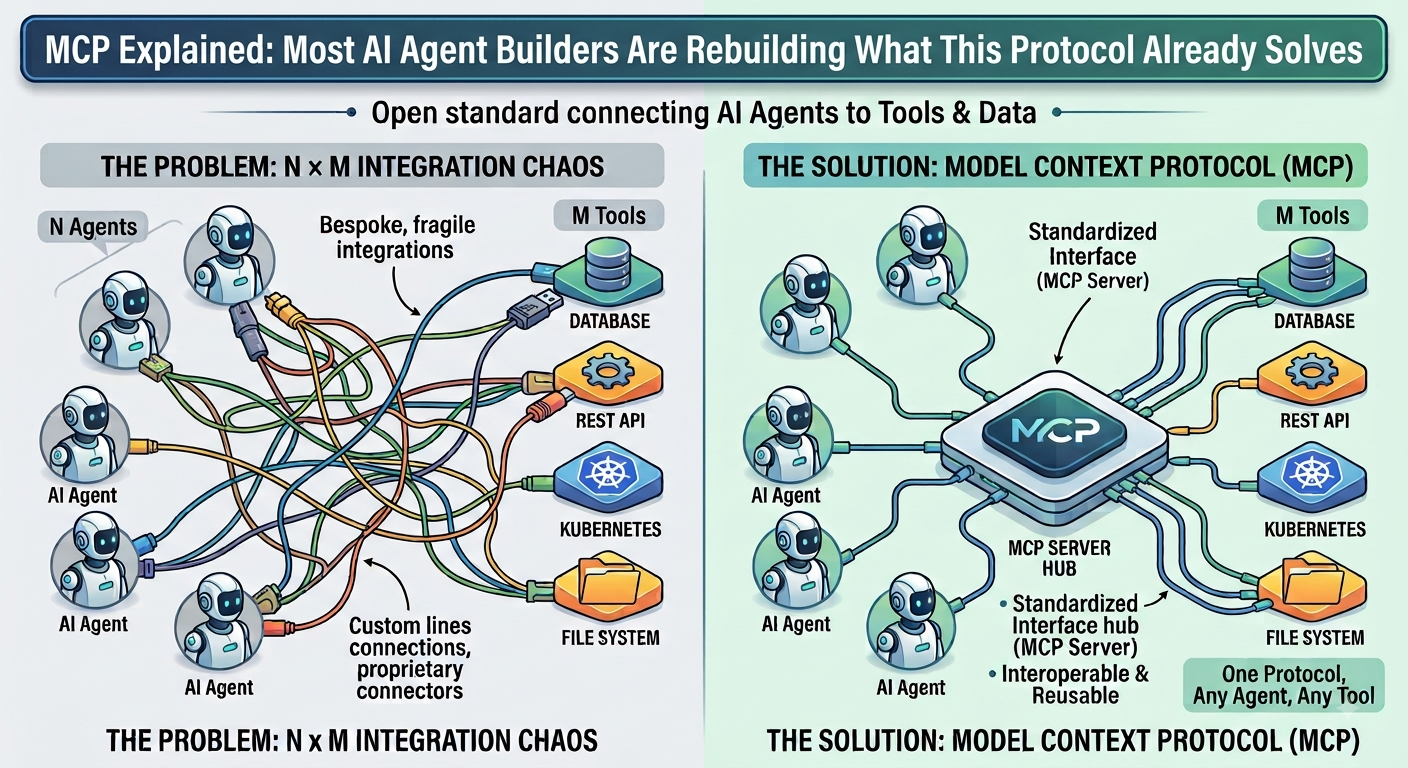
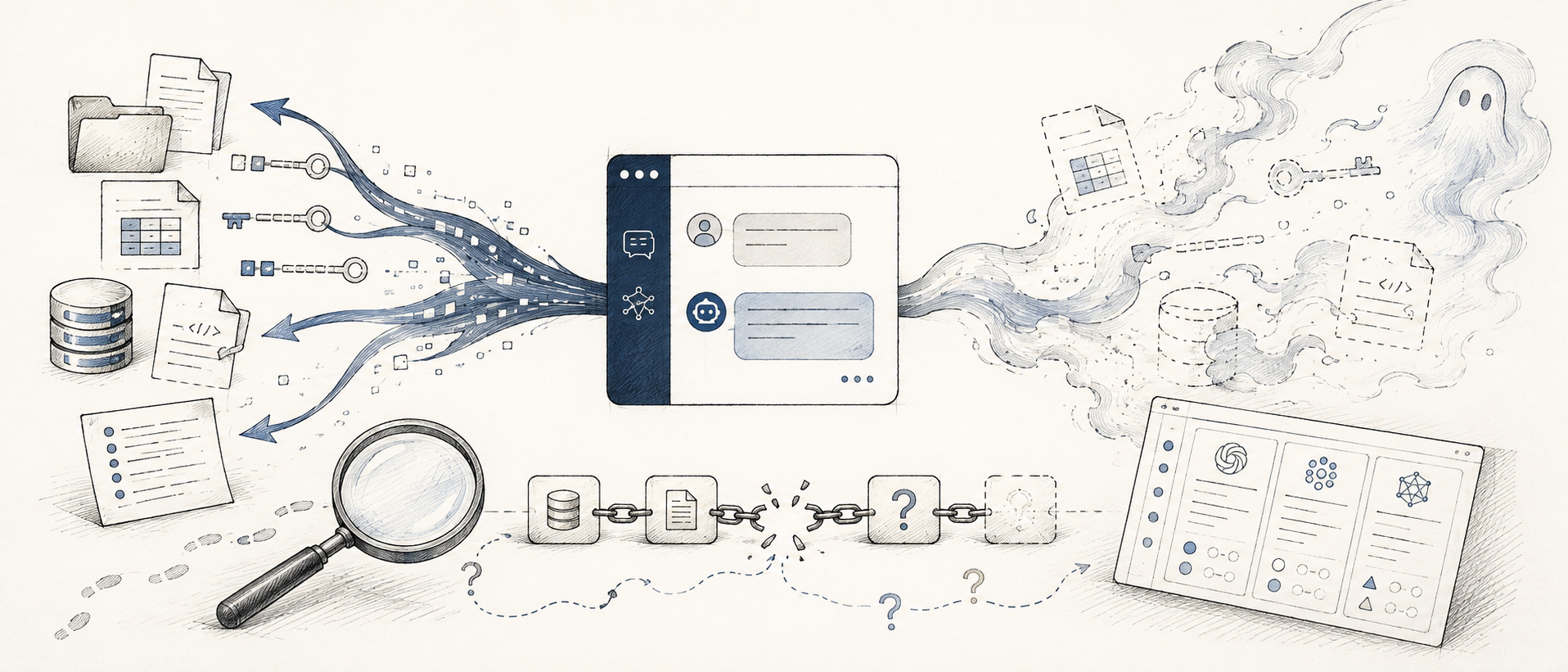
AI agents often require custom wrappers for various tools like databases and APIs, leading to a complex "N x M integration problem" where each agent needs unique connectors for each tool. Anthropic's Model Context Protocol (MCP) aims to solve this issue by providing a standardized interface between AI models and external systems.
MCP is an open communication standard that defines how AI agents request information and take actions on external tools. It works by separating the MCP Host (the AI agent), MCP Client (the component within the host that communicates using MCP), and MCP Server (external services exposing their capabilities in the MCP format). All servers use the same JSON-RPC messages to advertise tools and respond to requests.
The benefits of MCP include interoperability among different agents and tools, easier sharing of toolsets across agents, and the ability to switch between LLM providers without rewriting integrations. However, a downside is the context window problem - loading all available tools upfront can consume a significant portion of the agent's token budget. One solution is to use the Agent Skills pattern, where only relevant tools are loaded into context based on the current task.
Written by urgent.news from HackerNoon's reporting — not their text. Machine-written — may contain errors; check the original before relying on it.