Indian Navy eyes indigenous SATCOM terminals to boost network-centric warfare
The Indian Navy is seeking indigenous satellite communication terminals for its warships. These advanced terminals will enhance network-centric warfare capabilities at sea. The new systems aim to improve reliability in harsh maritime conditions. Companies will develop prototypes with mandated indigenous content. Prototypes will undergo rigorous testing before series production begins.
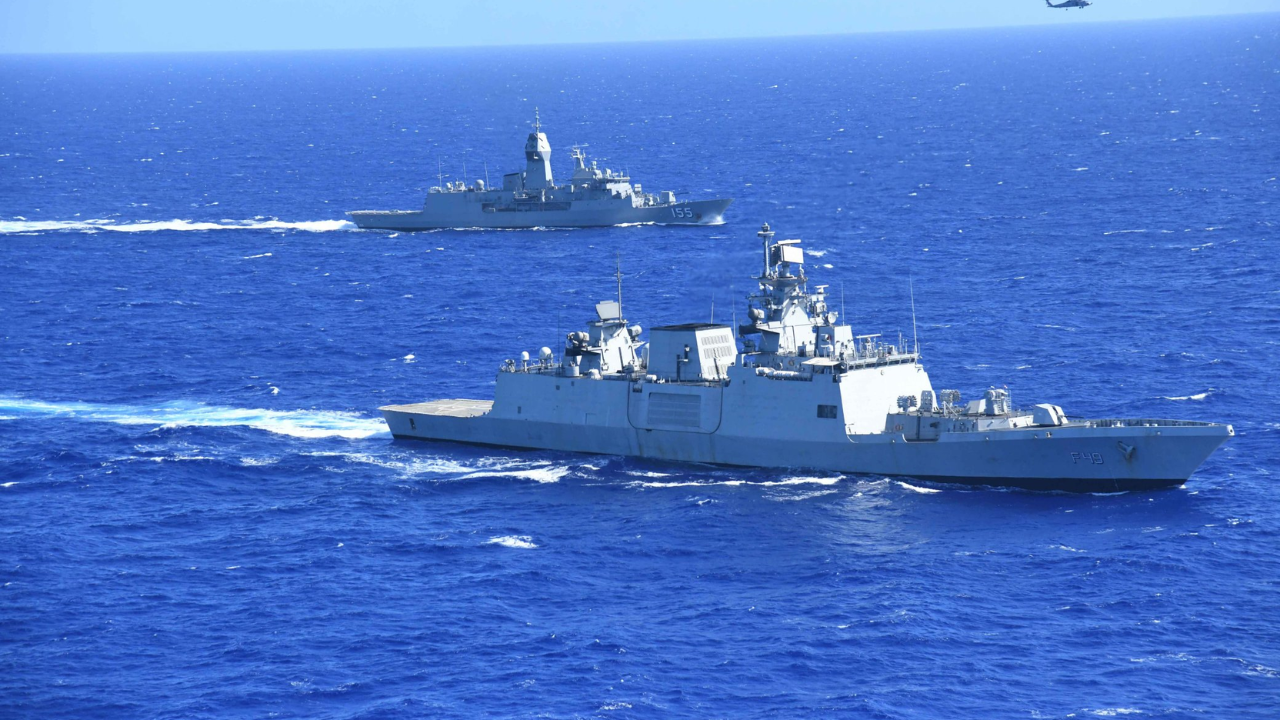
The Indian Navy is seeking to bolster its network-centric warfare capabilities through the development of indigenous ship-based satellite communication terminals. The navy has issued an Expression of Interest (EoI) for the creation of advanced C-band and Ku-band terminals that will be compatible with the recently launched GSAT-7R satellite.
These domestically developed and industry-funded terminals will enable warships to maintain secure communication links, even when operating thousands of kilometers away from land. Since the first GSAT-7 Rukmini satellite went into service in 2013, the navy has increasingly relied on satellite communication to maintain a single secure network.
The latest GSAT-7R satellite expands secure communication coverage to approximately 2,000 kilometers across the Indian Ocean Region. The enhanced capability will allow the navy to better link different ships and aircraft into a single shared operational picture, giving commanders across the force a unified real-time view of enemy dispositions, own-force locations, and emerging threats.
This will enable any unit to engage a target, even if it was not the one that initially detected it. The system will rely on Rukmini Terminals, with the new designs focusing on reducing mechanical components for improved reliability in harsh maritime conditions. Testing requirements are rigorous, including sea condition simulations, evaluation at the Space Applications Centre in Ahmedabad, and vulnerability assessment clearance before integration into the navy's network.
The project, reserved for Micro, Small, and Medium Enterprises (MSMEs), will begin with three prototypes before moving to series production of around 30 units. Companies have until 22 September to raise queries and submit proposals by 24 October, followed by a 104-week development period.
Written by urgent.news from Times of India's reporting — not their text. Machine-written — may contain errors; check the original before relying on it.