In Bishkek, US envoys shadow the SCO summit in challenge on Beijing and Moscow’s turf
As China and Russia rallied dozens of countries in Bishkek to shape a multipolar world order, Washington’s envoys were splitting the spotlight by meeting several Central Asian presidents in the Kyrgyz capital this week. The manoeuvring showed that the US was likely to continue its outreach to the region and seek to blunt Beijing’s influence, but it would be “unrealistic” for Washington to force…
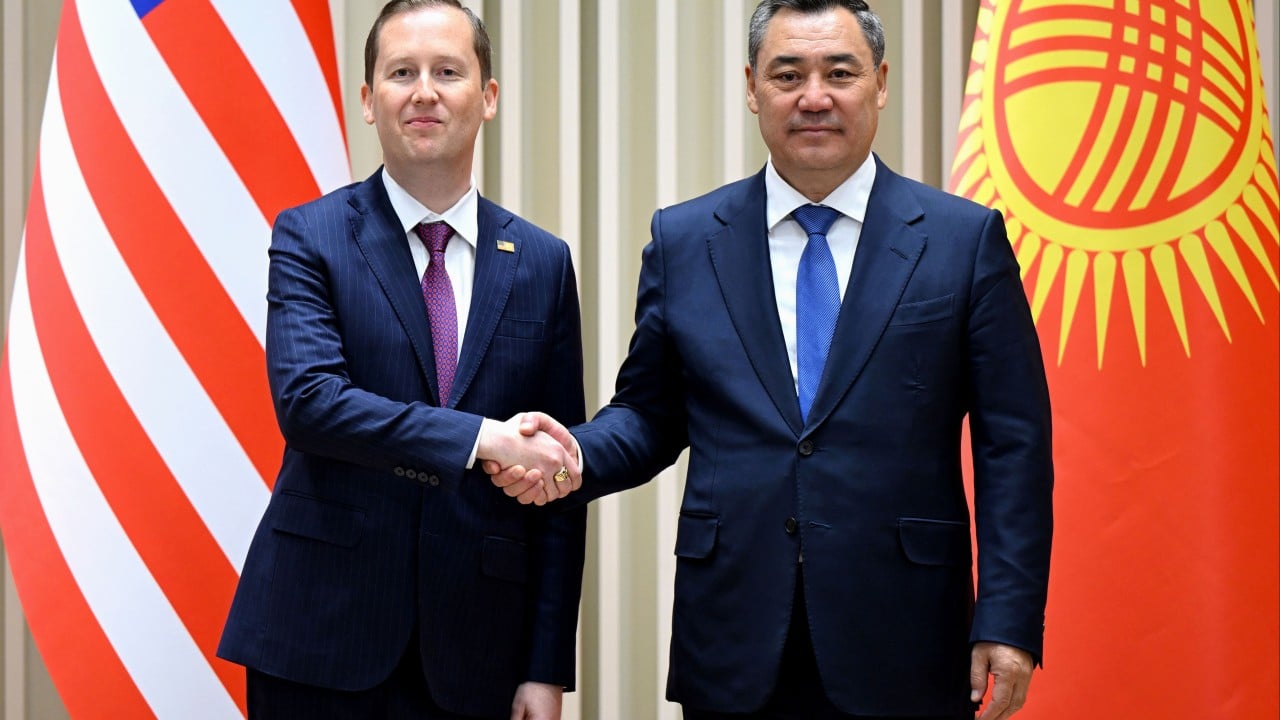
During the Shanghai Cooperation Organisation (SCO) summit in Bishkek, US envoys Steve Daines and Sergio Gor interacted with Central Asian presidents to signal ongoing outreach to the region and counter Beijing's influence. The two diplomats visited Kyrgyzstan, Tajikistan, and Uzbekistan in the wake of Chinese President Xi Jinping and Russian President Vladimir Putin's presence at the SCO gathering.
Central Asian nations, once a strategic battleground between British and Russian empires, have today gained renewed geopolitical significance amid strategic competition between the US and China. US Senator Steve Daines emphasized the importance of the C5+1 platform, which includes Central Asian countries and the US, while Chinese analyst Wu Xinbo highlighted that Washington's engagement in the region could potentially rival China and Russia's influence.
Despite fostering balanced foreign policies, Central Asian states have established connections with various international players, such as the European Union, Japan, World Artificial Intelligence Cooperation Organisation, and Pax Silica. Washington has cautioned Pax Silica members against joining Beijing's alternative mechanism, but analysts believe such pressures to select sides between China and the US are unlikely.
Written by urgent.news from Reuters Business via SCMP's reporting — not their text. Machine-written — may contain errors; check the original before relying on it.
This story
This is one outlet's version. Read the fullest account.