If solar irrigation is over-drawing groundwater, you’re doing it wrong
Over the past five years, India’s agricultural solar program, PM-KUSUM, has installed over 2.5 million solar pumps, making them affordable for smallholder farmers through subsidies. As the government prepares PM-KUSUM 2.0, the challenge is to advance the clean energy transition without continuing to over-exploit groundwater
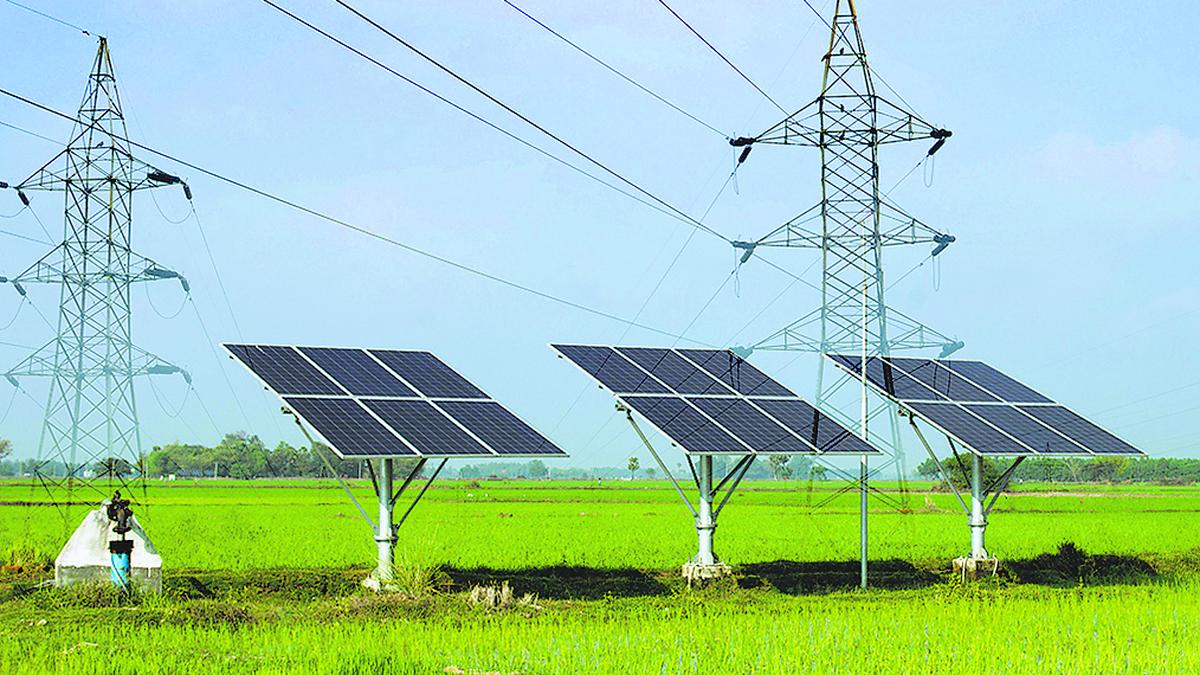
The debate surrounding the impact of solar irrigation on groundwater in India often treats the technology as a uniform model, usually focusing on standalone solar pumps with no incentive to conserve water. However, the reality is that solar irrigation models vary significantly in design, ownership structure, and pricing incentives, which in turn influence their effects on groundwater.
For instance, grid-connected solar models incentivize efficient water use by allowing farmers to sell surplus solar electricity back to the grid. A scheme in Gujarat, called Suryashakti Kisan Yojana (SKY), provides a Rs 7 per unit of energy feed-in tariff, encouraging farmers to conserve electricity and even earn an average of Rs 21,900 annually by exporting energy.
In Bangladesh, the fee-for-service centralised solar model allows pump owners to earn revenue by supplying water to multiple farmers within a command area, which has resulted in farmers using less water than those who used diesel for irrigation, despite solar irrigation being cheaper. The kind of solar irrigation model deployed, where, and with what incentives are crucial factors in determining its impact on groundwater.
The debate also often overlooks the role of energy as the sole determinant of groundwater outcomes, ignoring the impact of local hydrogeology and agriculture. Factors such as local hydrogeology, cropping patterns, marginal returns to irrigation, and soil type can significantly shape farmers' irrigation behaviour. In regions like Punjab and Haryana, where irrigation is already widespread and dominated by water-intensive crops, there may be limited scope to expand irrigated area, making it unlikely that solar irrigation will exacerbate groundwater over-exploitation.
Conversely, in Eastern India, where irrigation expansion has been constrained more by access to energy than to water, solar irrigation can enhance agricultural productivity and climate resilience. Solar irrigation policy should therefore adopt a differentiated regional approach, taking into account context-specific deployment of solar irrigation models, along with stronger groundwater monitoring and adaptive management to address emerging stress early.
Moreover, solar irrigation's broader implications extend beyond water and energy, affecting food security. Groundwater irrigation in India generates significant carbon dioxide emissions, and agricultural electricity subsidies amount to over ₹1 lakh crore annually. By reducing both emissions and subsidy burdens, solar irrigation can yield substantial mitigation and fiscal benefits.
Thus, the question to ask is not whether solar irrigation will worsen groundwater risks, but how best to deploy it to maximise its benefits.
Written by urgent.news from The Hindu's reporting — not their text. Machine-written — may contain errors; check the original before relying on it.