GREEN DREAMS PIVOT: Short‑term relief from Strait of Hormuz tension is great for Sasol’s fragile recovery story
One of the country’s most important companies is slowly dragging itself into the fresh air of dividends and unqualified audits. But there is still a way to go.
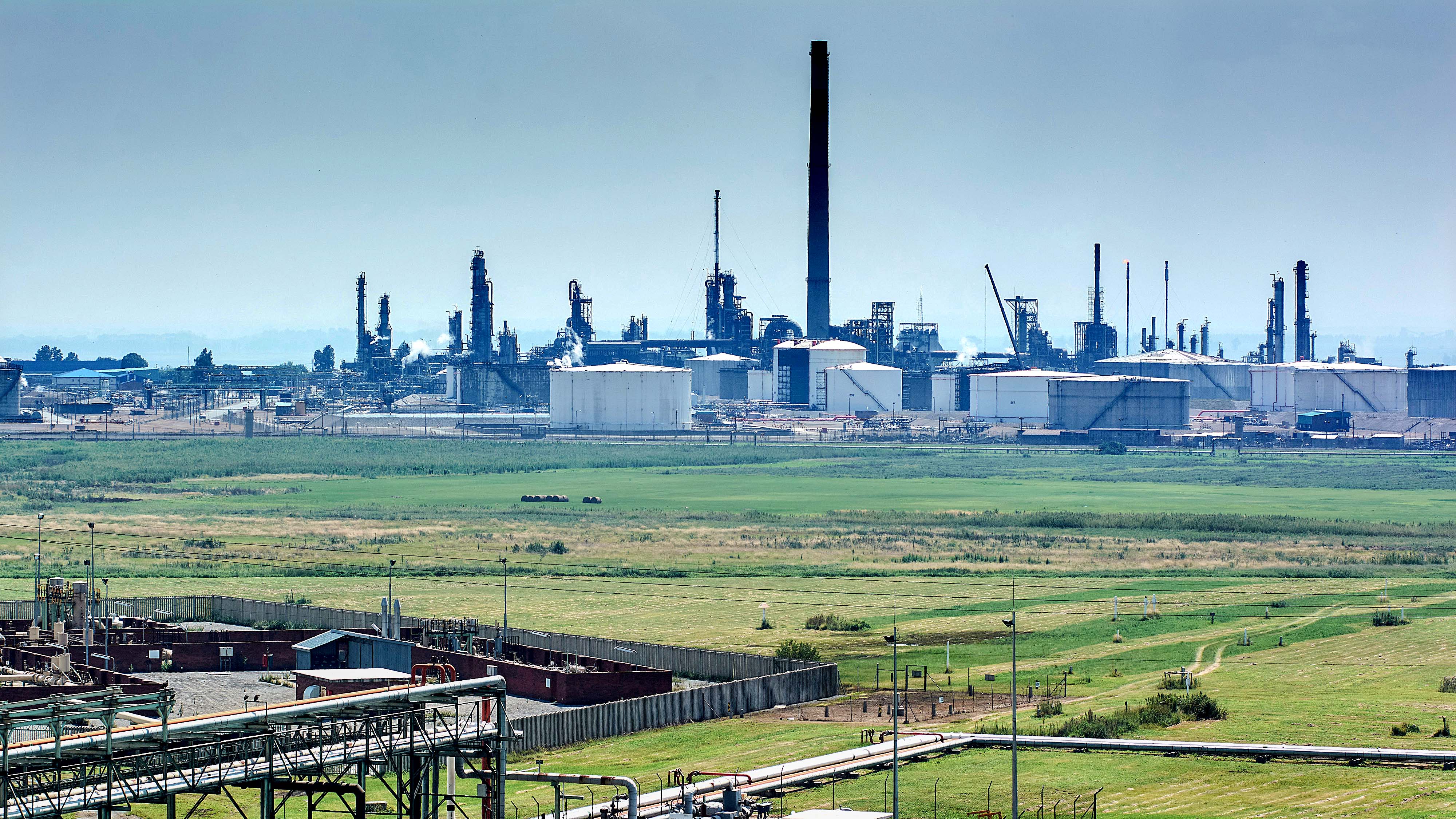
Last year, South Africa's Sasol, a key player in the energy sector, found itself grappling with the fallout from the turmoil surrounding the Strait of Hormuz. The company was gradually emerging from its financial struggles, with the prospect of generating dividends and passing rigorous audits. However, there remained significant challenges ahead.
One notable aspect of Sasol's recent strategy involved its venture into sustainable aviation fuel (SAF) in Brazil. Although the company boasted impressive technological capabilities in this area, its CFO, Walt Bruns, cautioned of a strategic shift. The joint venture, Zaffra BV, which was a partnership with Topsoe, was being gradually dismantled due to a lack of industry backing. The aviation industry's unwillingness to cover green premiums was a major obstacle.
Rather than constructing new greenfield SAF facilities abroad, Sasol decided to leverage its existing facilities at Natref and Secunda for SAF production. They planned to market this SAF independently and possibly form partnerships with firms in China or the Far East to license their technology. Bruns framed this as a 'speed bump but not a roadblock.'
In addition to SAF, Sasol has positioned itself as a proponent of the green hydrogen economy in South Africa. However, Bruns acknowledged that these projects face similar demand-side challenges as SAF, coupled with a total lack of public infrastructure. The R16-billion spent over the past decade on environmental compliance programs yielded little in the way of tangible results, as no one was willing to pay for these green initiatives.
Sasol's hydrogen economy needs to gain traction or risk falling behind. In FY26, the company recorded R16.8-billion in non-cash impairments. Notably, the Secunda Liquid Fuels refinery cash-generating unit (CGU) remained "fully impaired," which had a profound impact on the company's financial health. This led to costly write-offs on its balance sheet, including a R3.8-billion impairment on its Mozambican Production Sharing Agreement and a full R462-million write-off of its equity investment in the Central Térmica de Temane project in Mozambique.
While Bruns defended the economic value of Secunda, he admitted that Sasol was trapped in an impairment cycle driven by macro assumptions dictated by auditors. The stronger rand, usually a positive sign for South Africa, actually drove these write-offs by lowering the rand-denominated value of Sasol's US dollar-based revenues.
Furthermore, Sasol had to deal with four major material weaknesses in its Internal Control over Financial Reporting (ICFR). These issues, ranging from inadequate risk assessment processes to insufficient precision in calculating impairment information, raised significant governance concerns. The board and the market needed to have absolute confidence in the precision of Sasol's massive non-cash write-offs.
Written by urgent.news from Daily Maverick's reporting — not their text. Machine-written — may contain errors; check the original before relying on it.