From MIT to IBM, expediting AI and quantum deployment
MIT affiliates engage with the MIT-IBM Computing Research Lab to bring rigorous theory to production systems.
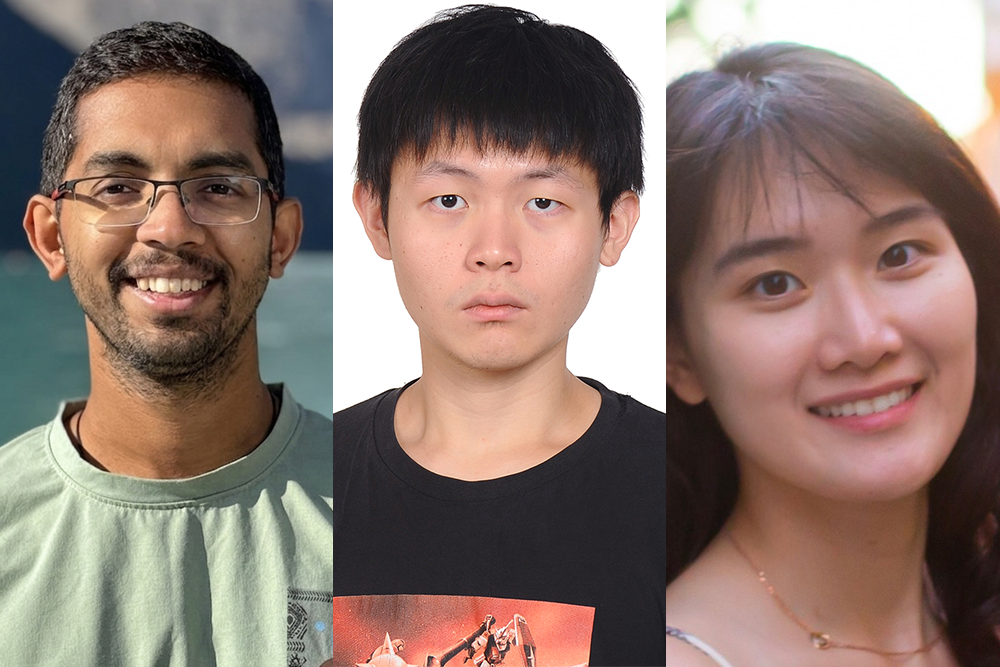
The MIT-IBM Computing Research Lab has played a crucial role in facilitating research collaborations between academia and industry, enabling the transition from theoretical research to real-world applications. Srinivasan Arunachalam, Zhang-Wei Hong, and Irene Ko, all former MIT graduate students and IBM researchers, have leveraged their experiences at the MIT-IBM lab to make significant contributions to AI, quantum computing, and related fields.
Hong, who began his PhD at MIT in 2020, focused on improving value function learning for reinforcement learning in video games. His techniques were applied to domains such as robotics, large language models, and reinforcement learning for science. Hong's curiosity-driven exploration has led him to investigate test-time training for agents and foundation models, as well as developing infrastructure for IBM's agentic framework for enterprise tasks.
Ko's research has been value-driven, focusing on trustworthy AI. Her work on identifying pain points in current trustworthy methods and developing vLLM Hook, a lightweight inference engine plugin framework, has the potential to revolutionize AI inference platforms by providing significant cost savings while enhancing safety and reducing hallucinations. Ko's MIT-IBM collaboration also allowed her to align her research goals with industry standards, ensuring the practical application of her work.
Arunachalam's quantum research at MIT, under Professor Aram Harrow, led him to explore the potential for quantum speed-ups in various algorithms and circuits. His learning-theory-first perspective allowed him to identify target problems where quantum computing could provide insights and improvements.
Written by urgent.news from MIT News AI's reporting — not their text. Machine-written — may contain errors; check the original before relying on it.