Corals Reveal El Niño Events Have Become Stronger in Recent Decades, Probably Because Humans Have Been Heating Up the Planet
Researchers used elements trapped within Galápagos corals to understand natural swings in the climate over the past millennium. They hint that variability has gone up over the past 40 years compared to preindustrial times
As the world anticipates the emergence of a "super" El Niño in the Pacific Ocean, researchers have discovered that these climate events have been growing stronger due to rising global temperatures. This revelation was drawn from an analysis of coral records from the Galápagos Islands, published in the journal Science on August 27. While the study does not definitively attribute this trend to human-induced climate change, it strongly suggests it is the most probable cause.
The El Niño-Southern Oscillation (ENSO) is a natural climate phenomenon that alternates between El Niño, marked by warmer-than-average water temperatures, and La Niña, characterized by cooler-than-average temperatures. El Niño typically brings wetter and cooler winters to the southern United States while inducing hot, dry conditions in various regions worldwide. Recently, the National Weather Service forecasted a 70% probability that the brewing El Niño could become the strongest on record since 1950.
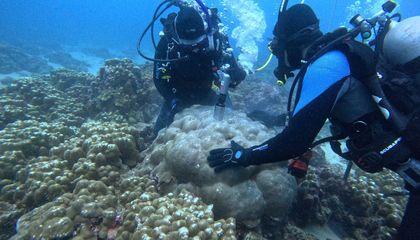
To unravel the influence of climate change on El Niño, scientists turned to corals as an invaluable source of historical data. Co-author Julia Cole of the University of Michigan explained that the chemistry of coral skeletons precisely reflects the environmental conditions during their growth. Over the past 40 years, the variability of ENSO has increased by 36% compared to pre-industrial times and is approximately 16% greater than the fluctuations observed between 1851 and 1982. These findings indicate a perturbed system, deviating from its historical behavior.
Kim Cobb, a climate scientist at Brown University, emphasized the significance of this research, stating that it offers compelling evidence that human-induced global warming may play a role in the heightened intensity of El Niño events. While uncertainties persist among scientists, the evidence leans heavily towards the belief that climate change is affecting the ENSO cycle.
Written by urgent.news from Smithsonian's reporting — not their text. Machine-written — may contain errors; check the original before relying on it.


