CNA Explains: How Singapore could reclaim more land in the future
With major reclamation works on the horizon, CNA looks at how reclamation methods have evolved.
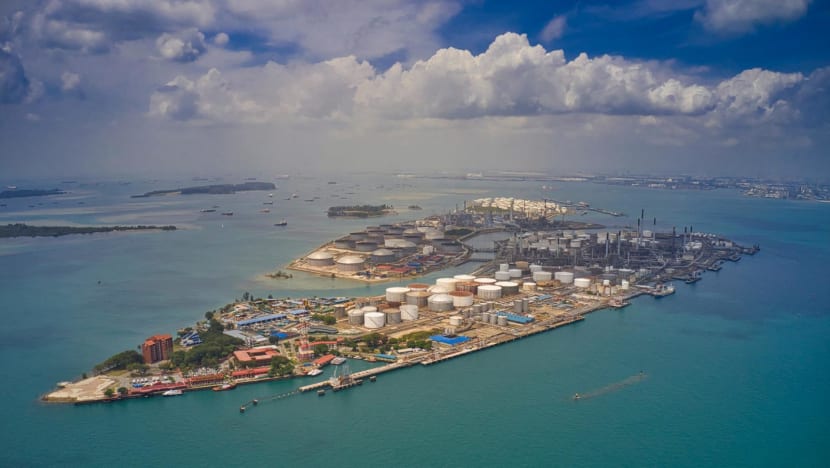
Singapore boasts the world's most reclaimed land, accounting for over a quarter of its 744 square kilometre area. Prime Minister Lawrence Wong has hinted at expanding this reclaimed land further by merging several islands south of Jurong Island into a larger western island over the coming decades. The preparatory works for Long Island, a coastal protection strategy, are set to commence by the end of 2026, paving the way for an 800 hectare project with a projected lifespan spanning several decades.
Conventional land reclamation methods such as infilling have been constrained by escalating costs, limited supply of fill material, and environmental concerns. The government has been exploring alternative methods to address these challenges. In September last year, Singapore reclaimed 800 hectares of land at Pulau Tekong through empoldering, a technique that reduces sand usage by nearly half but entails higher maintenance costs.
Geotechnical experts shed light on how land reclamation has evolved. In its infancy, reclamation efforts began in 1822 at the south bank of the Singapore River, adding approximately 300 hectares of land, equivalent to around 420 football fields. Following independence, Singapore added 160 to 165 square kilometres, expanding its land area from about 581.5 square kilometres in 1965 to the current 744 square kilometres.
The East Coast Reclamation Scheme, initiated in 1966 and carried out in seven phases till 1986, reclaimed around 15 square kilometres of land, including East Coast Park, the East Coast Parkway (ECP), and housing estates like Marine Parade. Modern reclamation projects like Long Island also aim to bolster long-term climate resilience by raising baseline land elevations to safeguard coastal areas from rising sea levels.
Traditionally, land reclamation involved the use of hill-cut materials, or soil excavated from hills. However, with limited hills available for excavation, Singapore has shifted to importing sand from Jurong Island, Chinese Garden, and Changi East. This practice has been constrained by the dwindling supply of fill material and the escalating cost of sand.
To overcome these challenges, Singapore has turned to marine clay from sea wall construction and excavated material from MRT projects and buildings. The use of dike or sea wall along the boundary of the proposed land area, followed by filling it with materials, is a common practice. While sand is the ideal choice due to its ease of handling and resistance to compression, its increasing cost and limited availability pose challenges.
One hectare of seabed approximately 10 metres deep necessitates around 100,000 cubic metres of fill material, regardless of the material used. For the Long Island project, an estimated 160 million cubic metres of infill material might be required, comparable to the volume of 64,000 Olympic-sized swimming pools.
Written by urgent.news from CNA - Singapore's reporting — not their text. Machine-written — may contain errors; check the original before relying on it.
Also reported by 1 other outlet
- CNA Explains: How Singapore could reclaim more land in the future channelnewsasia.com