Chinese workers use parasols and sunscreen indoors to combat ‘office ageing’
A growing number of Chinese workers are sharing tips on social media to combat “office ageing.” Suggestions range from applying sunscreen and using full-face masks to setting up parasols at their desks. Recently, a RedNote user with the handle @lelehangmu from Jiangsu province in eastern China shared that just one month into his job, his complexion had noticeably darkened, and his eyes frequently…
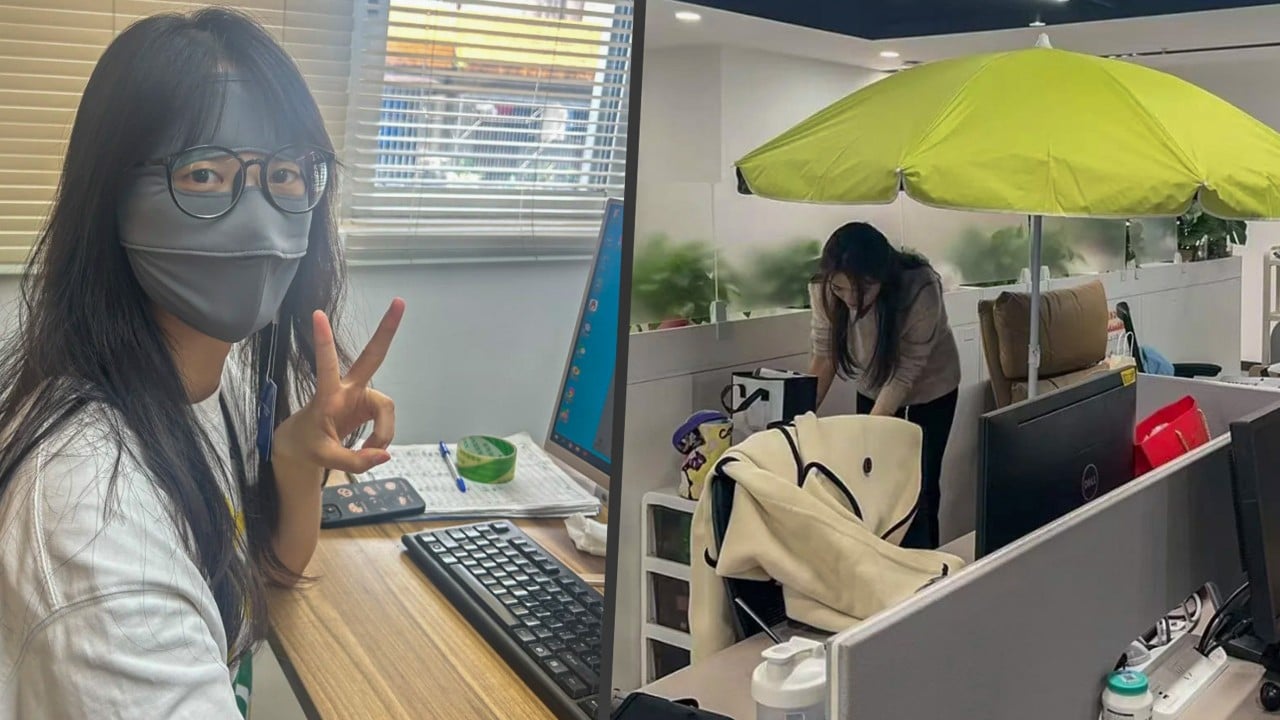
In recent years, a growing number of Chinese employees are turning to unconventional methods to combat the effects of prolonged office work, dubbed "office ageing." Among the various suggestions shared on social media platforms, some Chinese workers have resorted to using parasols, wearing sun hats, applying sunscreen and even setting up makeshift humidifiers to counteract the adverse effects of their work environment.
One RedNote user, @lelehangmu from Jiangsu province, shared that after just one month on the job, he noticed his skin darkening and frequently strained eyes. His post gained traction, with others reporting similar changes in appearance and expressing dissatisfaction with second-hand smoke in shared offices.
Lighting designer Yoki explained that offices often prioritize cool-toned lighting to maintain worker alertness, but pointed out that lighting is only one aspect of the issue. Dry air, polluted ventilation systems, and high carbon dioxide levels can further contribute to physical discomfort and mental fatigue associated with long hours at work.
The phenomenon of "sick building syndrome" was first introduced by the World Health Organization in the 1980s. Symptoms such as headaches, nasal congestion, dry skin, throat irritation, fatigue, and poor concentration can arise from spending extended periods in certain buildings, even without a specific diagnosis. This issue emerged alongside modern architecture and energy conservation efforts, leading to buildings being sealed tight to reduce heating and cooling costs, inadvertently limiting the flow of fresh air indoors.
In a 2008 study, social medicine scholar Sumedha Joshi connected sick building syndrome to decreased productivity and increased absenteeism, recommending improved ventilation, regular breaks, and strategies to alleviate workplace stress. Social media has seen a shift from health concerns to appearance-related issues, with users sharing photos showcasing the deterioration of personal hygiene and skin condition throughout the workday.
Chinese workers have taken matters into their own hands, employing creative self-care methods such as using empty milk-tea cups as makeshift humidifiers and keeping unconventional "desk pets" like rocks and mango pits. These coping mechanisms highlight a deeper concern about working conditions and excessively long hours. As of May, the average weekly working hours in China surpassed 48.2 hours, exceeding the statutory 44-hour limit.
One online commentator aptly remarked, "A good office is not a perk but a basic right. People should shape the workplace, not be reduced to cogs in cubicles."
Written by urgent.news from South China Morning Post's reporting — not their text. Machine-written — may contain errors; check the original before relying on it.