China frustra el consenso en la cumbre del G20 albergada por Estados Unidos
Pekín se opone al lenguaje que pide la eliminación de las políticas 'no orientadas al mercado' para frenar los desequilibrios comerciales. Leer
China disrupted consensus at G20 finance ministers' summit hosted by the United States by opposing the language in the agreed-upon communique to eliminate non-market policies aimed at reducing global trade imbalances, according to US and European officials. Beijing objected to the wording on various issues, including efforts to ensure the smooth functioning of global energy, food, fertilizer, and critical mineral supply chains.
When asked why China had resisted the agreed language, a senior US official said they were to blame. If WTO (World Trade Organization) agreements show persistent distortions, they are the worst offenders. The US, hosting the event in North Carolina, released a statement from the presidency on Tuesday night, agreed upon by all G20 members except China.
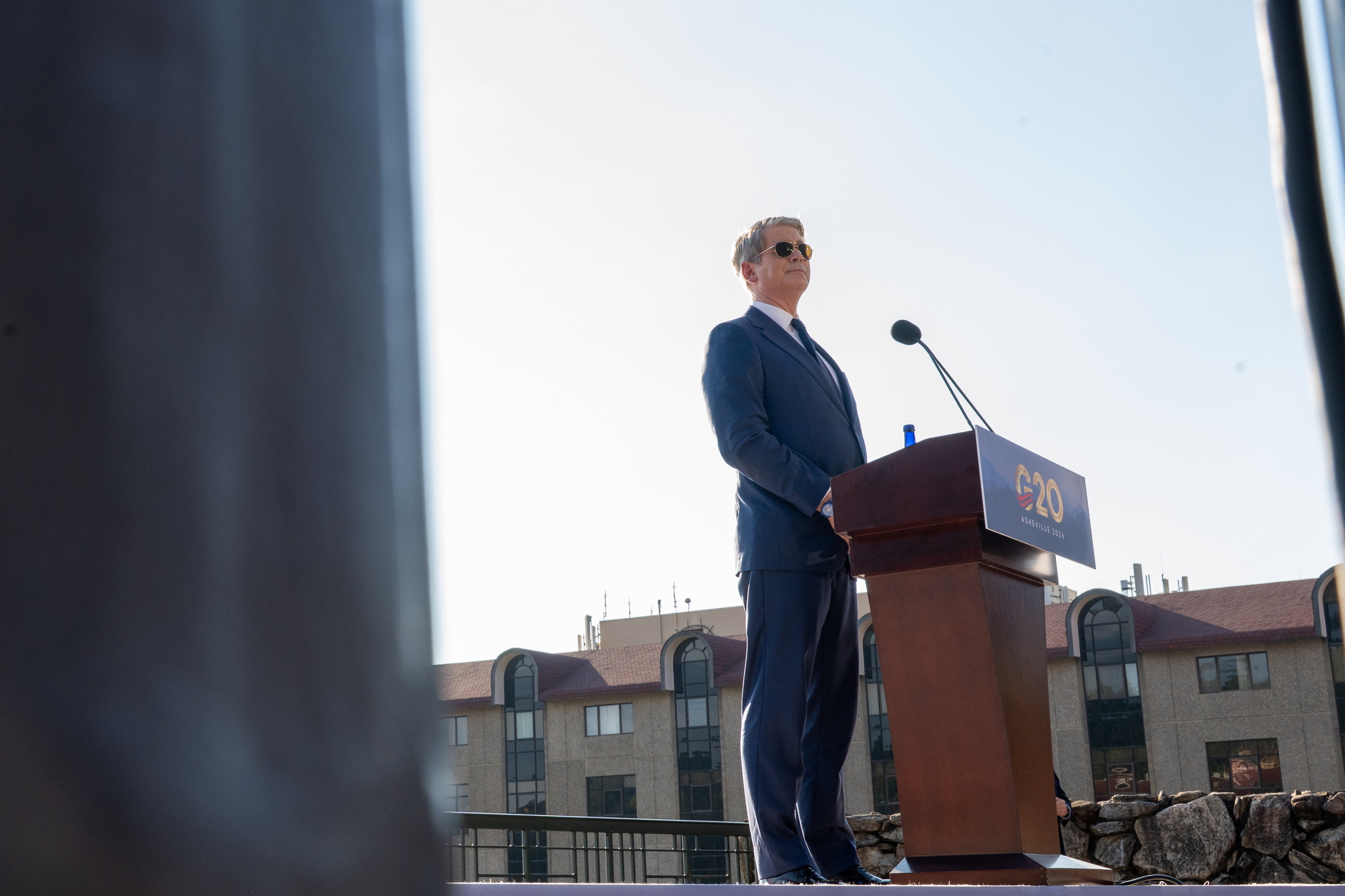
US Treasury Secretary Scott Bessent told the press he hoped to announce a joint statement consensus but due to one member, the group could not achieve full consensus. The discrepancy occurs three weeks before President Xi Jinping's visit to Washington for a summit with President Donald Trump, and three months before G20 leaders gather in Miami for their annual summit.
US officials said G20 members — which include Japan, France, the UK, the EU, India, and Russia — had agreed on the need to adopt measures to eliminate non-market policies and practices exacerbating global trade imbalances. However, China opposed the expression "non-market policies," according to US officials and a senior European Commission official.
They also resisted IMF and OECD requests for improved data to analyze such policies. The issue boiled down to a few words. As we have seen with the Chinese, they try to slow down the process and modify terminology gradually. We will not allow it, declared the senior US official. They must seriously reconsider this stance. If they cannot even agree on the words, they could not carry out any actions.
The European official said it was a missed opportunity for the global economy. The disagreement arises in a context of concern over Chinese exports, largely considered to be driven by excessive domestic productive capacity, a stance China denies. China's trade surplus with the EU reached €360 billion in 2025, according to EU data.
The US is working on imposing tariffs on China and other countries to address the surplus capacity. The European official added that while the Chinese delegation may have felt cornered by the others in the two-day meeting, they had objected to so many points in the draft communique that it made consensus impossible. One of the four sections China opposed in the final statement asserted that countries with excessive and persistent external surpluses should eliminate distortions limiting internal consumption and generating excessive dependence on exports for growth.
This was interpreted as a reference to China, although the country was not named. Officials said China also opposed any mention of critical minerals. Last year, Beijing threatened to impose strict global controls on exports of critical minerals after Trump imposed tariffs on China. Trump and Xi reached a truce in their trade war in October, but US officials say China is not fully meeting its commitment to ensure a supply of rare earths.
Washington also wants China to relax restrictions on exports to Japan, a key supplier for US supply chains. Beijing's behavior toward Japan is terrible, declared the senior US official. China also objected to a section on how to ensure predictable navigation through the Strait of Hormuz due to concerns about implications for the Strait of Taiwan and the South China Sea, over which it claims sovereignty.
Bessent presented the G20 meeting as an effort to promote global economic growth, address economic imbalances, and debate ways to restructure sovereign debt. The summit also saw private sector executives, including JPMorgan CEO Jamie Dimon. China also opposed language used by G20 members to express solidarity with a Common Framework designed to help countries with high debt levels reduce their obligations, particularly those contracted with China.
Global financing costs have reached multi-year highs, putting pressure on the world's largest economies and generating investor nervousness. The summit was tense at times. On Monday, European officials refused to pose for photos with Russian Finance Minister Anton Siluanov, who made his first physical appearance at an international meeting since Russia's invasion of Ukraine in 2022.
German and EU ministers also criticized the global trade war of Trump. Valdis Dombrovskis, European Commissioner for Economy and Productivity, called tariffs counterproductive. However, the senior EU official said despite some discrepancies, G20 members valued US efforts to promote global economic growth.
Written by urgent.news from Expansion ES's reporting — not their text. Machine-written — may contain errors; check the original before relying on it.