China approves string of ‘telepathy’ devices amid push to leapfrog Elon Musk
China’s health regulators have granted approvals for a string of brain-technology products this year, as domestic start-ups push to transform the treatment of conditions ranging from paraplegia to Alzheimer’s and depression. The approvals come as Beijing bids to lead the world in brain-computer interfaces – devices that allow patients to control digital devices using thought alone – offering…
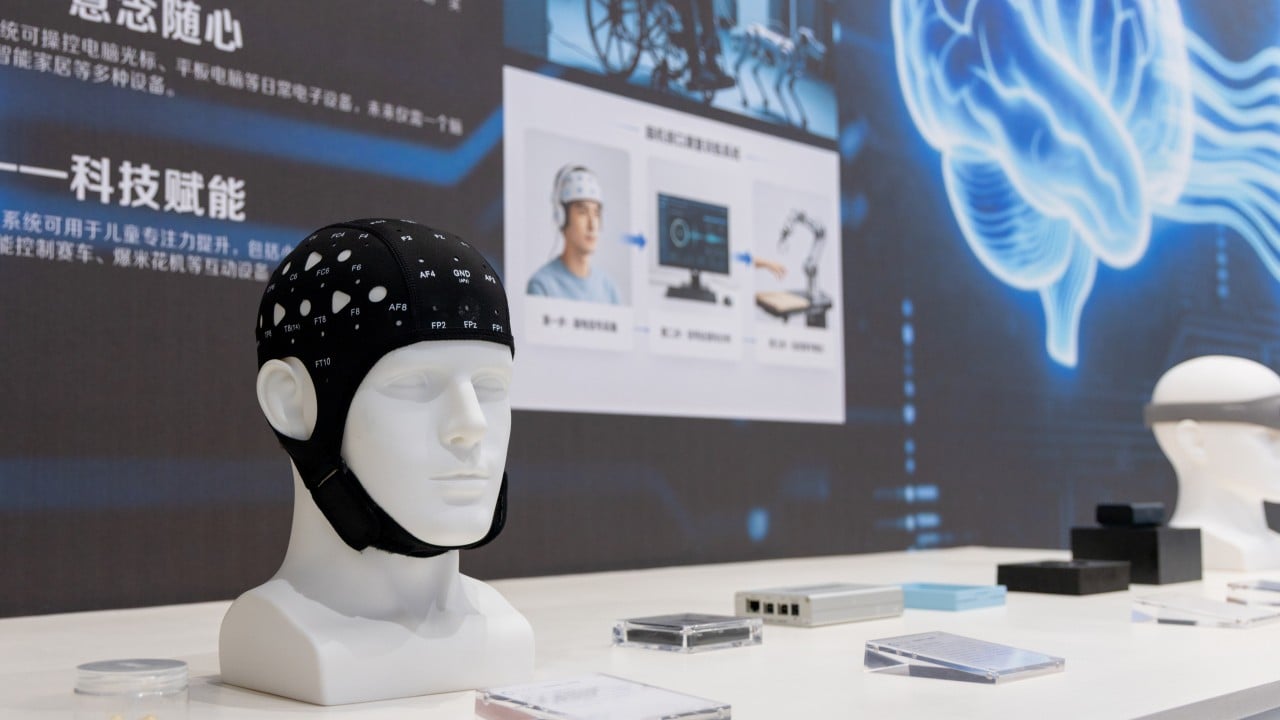
China's health regulators have recently authorized a series of brain-technology devices, as domestic entrepreneurs strive to revolutionize the treatment of various conditions, including paraplegia, Alzheimer's, and depression. The approvals come amid Beijing's efforts to become a global leader in brain-computer interfaces (BCIs) – technology that enables patients to control digital devices with their thoughts, and Beijing is offering strong policy backing to aid Chinese companies in competing with global players like Elon Musk's Neuralink.
The Chinese market has seen a surge in investment and government financing, as aging populations create a growing demand for novel health technologies. Tiankai Suishi, a Tianjin-based firm, received approval for a brain assessment system that detects cognitive impairment by reading electrical signals emitted by the brain. This cap, covered in electrodes and worn on the patient's scalp, was granted on August 19.
Tiankai Suishi also develops BCI devices aimed at early detection of cognitive dysfunction in Alzheimer's and schizophrenia patients, and they are currently seeking regulatory approval for a product to diagnose depression. StairMed Technology, supported by Tencent and Alibaba, recently received approval for a micro-electrode driver to aid in implanting BCI devices during brain surgery.
Their implant has shown potential, allowing a paraplegic patient to operate a digital device via thought, according to their co-founder. Meanwhile, Shanghai's Neuracle Medical Technology obtained China's first regulation for an implantable BCI device to help spinal cord injury patients regain hand movement. Hangzhou's BrainCo is also working on BCI products to aid depression screening in collaboration with a Capital Medical University hospital.
Zhejiang province and Shenzhen, a major tech hub, are both boosting the sector's growth by encouraging firms to go public and assisting in international expansion and mergers and acquisitions. With an aging population, the number of neurological disorders like Alzheimer's and Parkinson's disease has risen from 329 million in 1990 to an estimated 468 million in 2021, according to a study in the journal Med. China's BCI market is expected to reach 6.14 billion yuan by 2028.
Written by urgent.news from South China Morning Post's reporting — not their text. Machine-written — may contain errors; check the original before relying on it.
This story
This is one outlet's version. Read the fullest account.
- Honda tells suppliers to cut costs in $9 billion push to fend off China, documents show brecorder.com
- China approves string of ‘telepathy’ devices amid push to leapfrog Elon Musk scmp.com
- Honda tells suppliers to cut costs in US$9bil push to fend off China nst.com.my
- Honda tells suppliers to cut costs in $9 billion push to fend off China: Reuters cnbc.com
- Honda tells suppliers to cut costs in US$9 billion push to fend off China, documents show businesstimes.com.sg
- Exclusive-Honda tells suppliers to cut costs in $9 billion push to fend off China, documents show investing.com