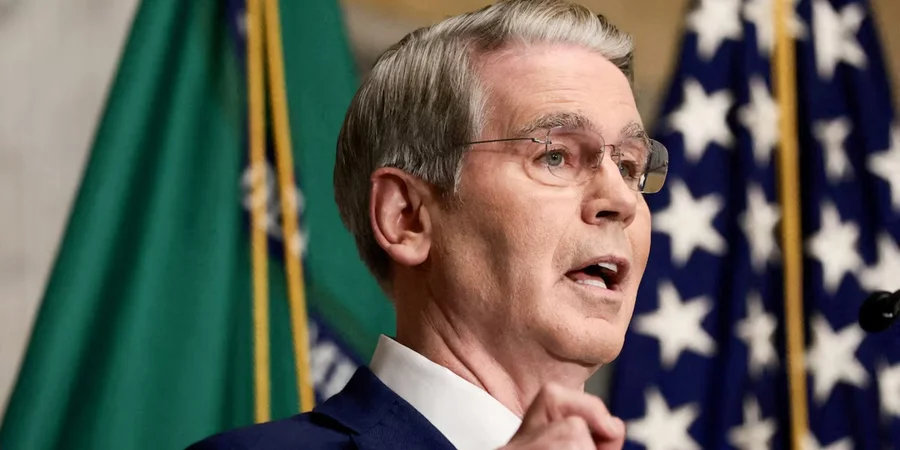
BoJ’s Takata says central bank need to consider a broad range of options on monetary policy response
Bank of Japan (BoJ) board member Hajime Takata said on Wednesday that the central bank needs a different response from conventional semi-annual rate hike pace.

Hajime Takata, a member of the Bank of Japan's board, recently stated that the central bank should not simply follow the conventional semi-annual rate hike pace. He emphasized the need for a more adaptable approach to monetary policy, considering a broader range of options. Takata highlighted that the coming regime change, with 2026 marking a shift, necessitates a different response as rate hikes are becoming a global trend due to economic growth and AI-linked investments.
The BoJ should explore alternative measures rather than sticking to the standard 0.25% rate hike each time. The central bank is closely monitoring bond market situations, although it does not expect Japan to be an exceptional case where the next rate hike might not be 0.25%. The decision for each rate hike should be assessed at every meeting.
While consecutive rate hikes are a possibility, the exact pace remains to be determined. As of now, the USD/JPY pair has increased by 0.10% on the day to 160.35. The Bank of Japan has adopted an ultra-loose monetary policy since 2013 to stimulate the economy and fuel inflation, considering an inflation target of around 2%. The policy, based on Quantitative and Qualitative Easing (QQE), involves printing money to purchase assets like government or corporate bonds to provide liquidity.
In 2016, the BoJ intensified its strategy by introducing negative interest rates and directly controlling the yield of its 10-year government bonds. In March 2024, the bank lifted interest rates, exiting the ultra-loose monetary policy stance. The stimulus provided by the central bank led to the Yen's depreciation against other major currencies, widening the differential and causing the Yen's value to decline.
This trend reversed in 2024 after the BoJ abandoned its ultra-loose policy stance, partly due to a weaker Yen and rising global energy prices, which boosted Japanese inflation beyond the BoJ's 2% target.
Written by urgent.news from FXStreet's reporting — not their text. Machine-written — may contain errors; check the original before relying on it.
This story
This is one outlet's version. Read the fullest account.