ANALYSIS: SA turns right as Ramaphosa hands economic levers to the private sector
For many years, our politics could have been understood as a contest between the left and the right, with different interests playing out within this prism. There can now be no more argument: the left has lost and the right has won.
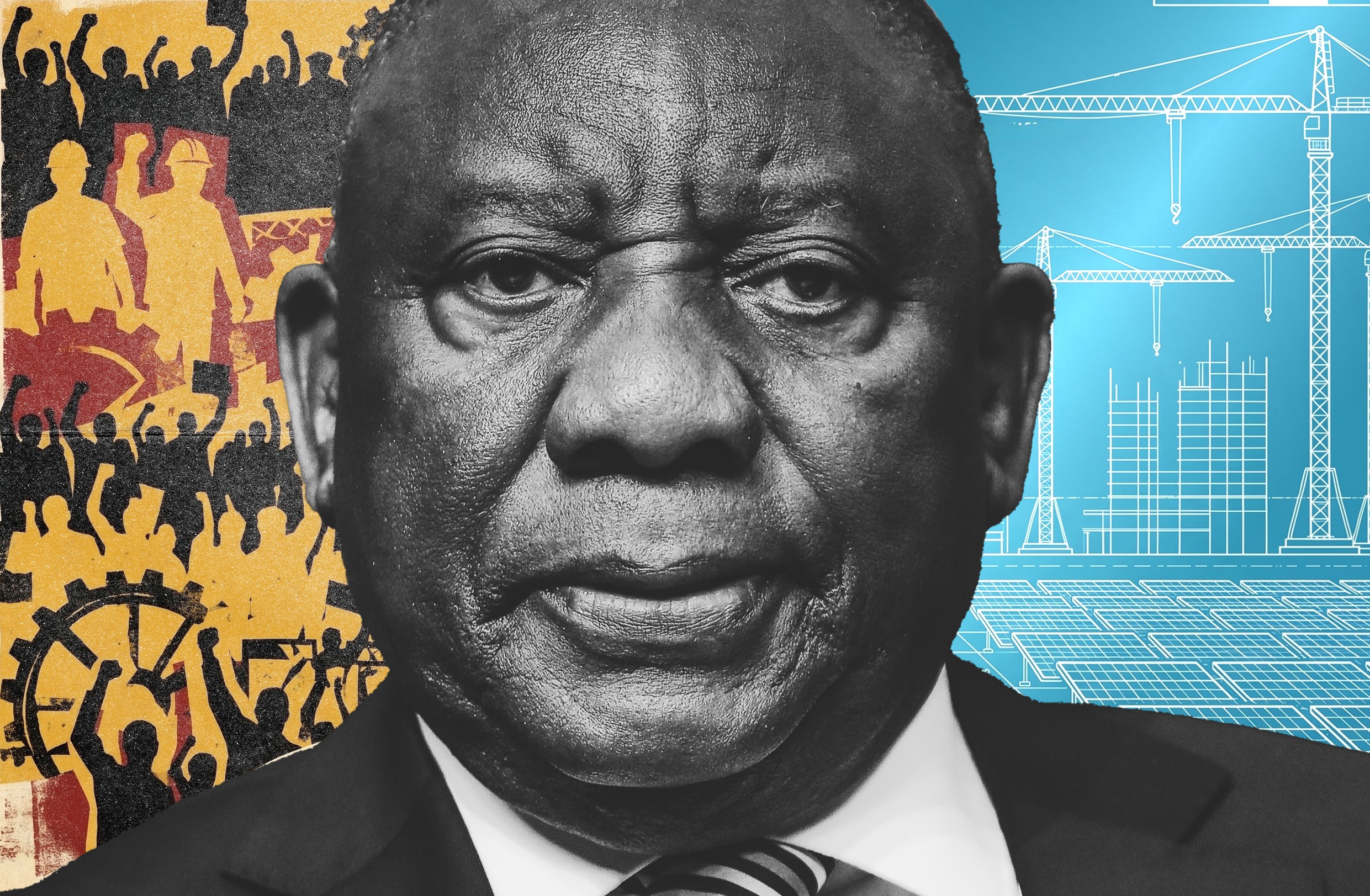
South Africa's political landscape has shifted dramatically, with the left losing and the right emerging victorious. President Cyril Ramaphosa's recent weekly newsletter strongly advocated for unbundling Eskom, emphasizing that it would lead to increased competition and lower power costs for consumers. He compared the situation to Telkom's fixed-line telecommunications monopoly, noting how competition transformed the landscape, bringing massive investment and drastically lowering communication costs.
Ramaphosa strongly believes that state monopolies hinder progress, whereas private-sector competition drives it, asserting that this is the strongest gesture of support for a free market economy from any president and ANC leader since 1994. This shift is not isolated, as there has been a trend since at least 2019 to open up areas previously controlled by the government to the private sector. The most obvious examples are Eskom and Transnet, where the private sector has significantly improved services.
Critics argue that Ramaphosa's government's real "reform" involves bringing in the private sector at the expense of the government. However, the outcome is clear: the government's grip on the economy has loosened, while the private sector's influence has grown. This massive shift is striking, as it represents a departure from the apartheid era when industry was controlled by the state, built up through government logistics, electricity, and iron and steel manufacturing.
Interestingly, there has been little organized pushback against this process. While parliamentary opposition has come solely from the EFF and MK, MK has not mounted a substantive policy response, and the EFF has not launched a campaign on the issue. Historically, the ANC would have conducted substantive policy discussions, but it is currently embroiled in internal battles, making official announcements difficult.
The opposition in the Tripartite Alliance has primarily come from the SACP and Cosatu, but they have launched little public pushback. Cosatu's affiliated unions in the affected sectors have been powerless to stop the changes, and the National Union of Mineworkers (NUM) has had to accept that a private operator will control Pier Two at Durban Port. Ramaphosa's personal conversations with the NUM about Eskom's unbundling demonstrate the lack of organized opposition.
The collapse of state capacity, primarily due to the State Capture era and the Covid-19 pandemic, facilitated this rapid process with minimal response. Through initiatives like Business For SA, corporate entities provided the necessary expertise and resources, benefiting from improved services and a profit motive. Many executives were motivated by a desire to help improve South Africa's economy, benefiting millions.
In the past, concerns were raised that the SACP might negatively influence the ANC and the government. However, this is far from the truth, as the ANC's pursuit of socialism has been deemed the "most direct route to socialism" by the Institute for Race Relations. The argument about whether South Africa will go left or right is now over, as the country is moving to the right. It will take a significant political change to alter this course.
Written by urgent.news from Daily Maverick's reporting — not their text. Machine-written — may contain errors; check the original before relying on it.