Act for Nutrition conference: WFP official says malnutrition not just driven by poverty
A two-day international conference, ‘Act For Nutrition: The Emergency We Can No Longer Ignore’, is being held at Islamabad’s Serena Hotel on Pakistan’s persistent nutrition and stunting crisis. With more than 40 per cent of children under five stunted, a maternal mortality rate of 155 deaths per 100,000 live births, and malnutrition costing Pakistan upwards of $17 billion annually, the country…
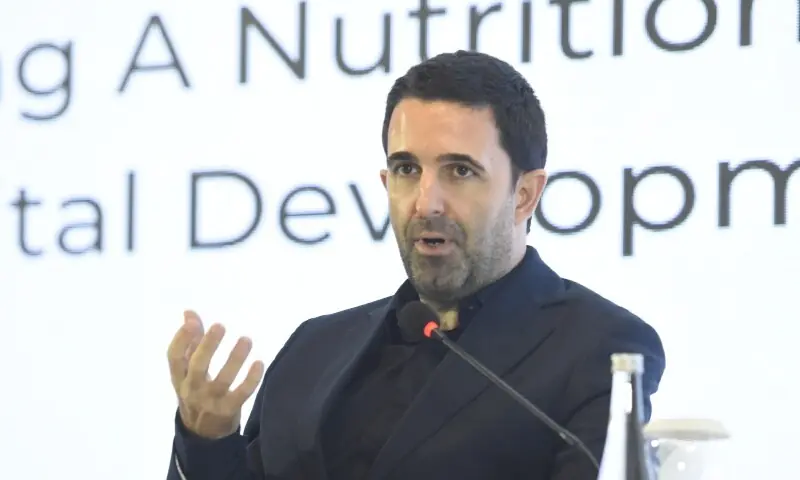
The two-day international conference, titled 'Act For Nutrition: The Emergency We Can No Longer Ignore', is currently underway at Islamabad’s Serena Hotel. With over 40% of children under five stunted, a maternal mortality rate of 155 deaths per 100,000 live births, and malnutrition costing Pakistan up to $17 billion annually, the nation faces a critical juncture.
The conference gathers policymakers, international development leaders, health professionals, and nutrition experts to address the growing crisis and foster urgent, coordinated action. Discussions will shift the focus from statistics to practical, measurable interventions aimed at enhancing nutrition outcomes and safeguarding Pakistan's human capital and future generations.
Ellen Thom, deputy representative for the World Health Organisation in Pakistan, emphasized that lack of action poses a more significant risk than malnutrition itself. She highlighted that at least 14 children die every three minutes due to causes related to maternal and child malnutrition, which could have been prevented. Pakistan is losing $17 billion annually owing to stunting and malnutrition, a fact stressed by Ellen Thom.
Thomas Conan, deputy country director for the World Food Programme, clarified that malnutrition is not solely driven by poverty. Instead, it is also influenced by inadequate access to healthcare services, water, and sanitation facilities.
Dr. Faiza Wahab, food security adviser on nutrition and social protection at GIZ Pakistan, called for more attention to adolescent nutrition. She pointed out that the current focus on the first 1,000 days of a child's life ignores the crucial period between childhood and motherhood. During adolescence, girls are particularly vulnerable to anaemia and iron deficiencies due to rapid growth, hormonal changes, and menstruation.
Investing in adolescent nutrition yields returns in the form of human capital development since it impacts girls' ability to participate in education and cognitive capabilities.
Ellen Thom, deputy representative for the World Health Organisation in Pakistan, stressed the need to integrate social protection programs with healthcare services. Evidence shows that such integration, along with strengthening primary healthcare, effectively reaches vulnerable families and delivers high-impact nutrition interventions.
Thomas Conan, deputy country director for the World Food Programme, emphasized that nutrition is not just about food; it also involves providing a healthy diet, promoting multi-sectoral collaboration, and ensuring access to healthy diets through nutrition-sensitive social protection.
Written by urgent.news from Dawn's reporting — not their text. Machine-written — may contain errors; check the original before relying on it.