Why quartz watches keep such good time
A quartz watch performs a surprisingly large amount of counting. The National Institute of Standards and Technology explains that the crystal in a typical quartz wristwatch vibrates at 32,768 Hz. Its electronic circuit divides that frequency by 32,768 until it produces a one second signal, which can drive the hands. That high, stable frequency is the key advantage over a mechanical watch, whose…
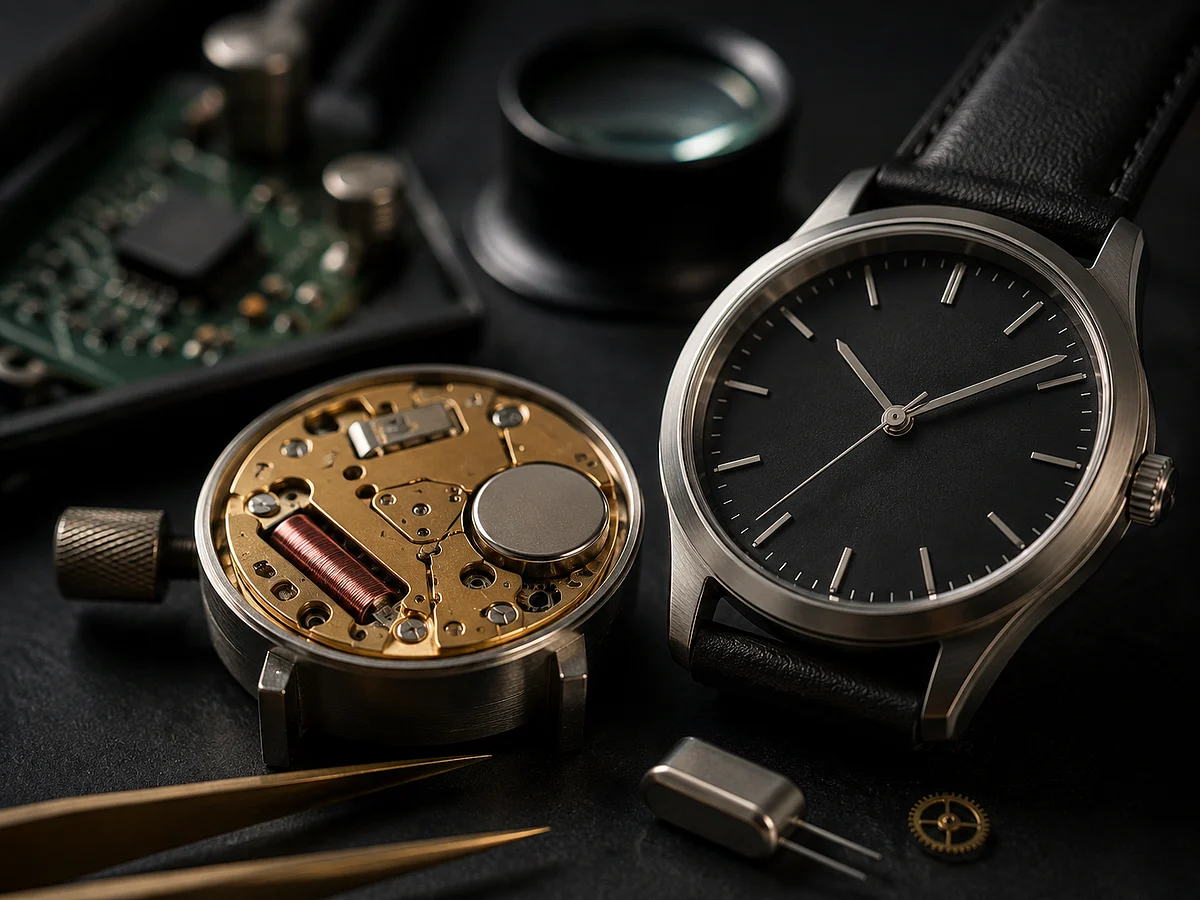
Quartz watches maintain accurate timekeeping due to their high-frequency oscillators. The crystal oscillates at 32,768 Hz, which is divided down to produce a one-second signal. This stable frequency sets quartz apart from mechanical watches, which rely on a balance wheel and escapement that are affected by temperature, position, and other mechanical variations.
Quartz watches are usually more rational for those who prefer a low-maintenance option, while mechanical watches offer a mechanical fascination for those who enjoy the intricate craftsmanship. When selecting a quartz watch, consider features you will actually use, such as case size, water resistance, and additional functions like solar charging or chronograph.
The Casio MTP S120L is an example of a practical quartz watch, featuring solar charging and useful everyday specifications. The Timex Expedition Metal Field T40051 is a simpler alternative focusing on legibility and compact field watch styling.
Written by urgent.news from Gulf News's reporting — not their text. Machine-written — may contain errors; check the original before relying on it.
Also reported by 1 other outlet
- Why quartz watches keep such good time gulfnews.com