Why Is Nepal So Vulnerable to Flooding?
Climate change is to blame, say government officials.
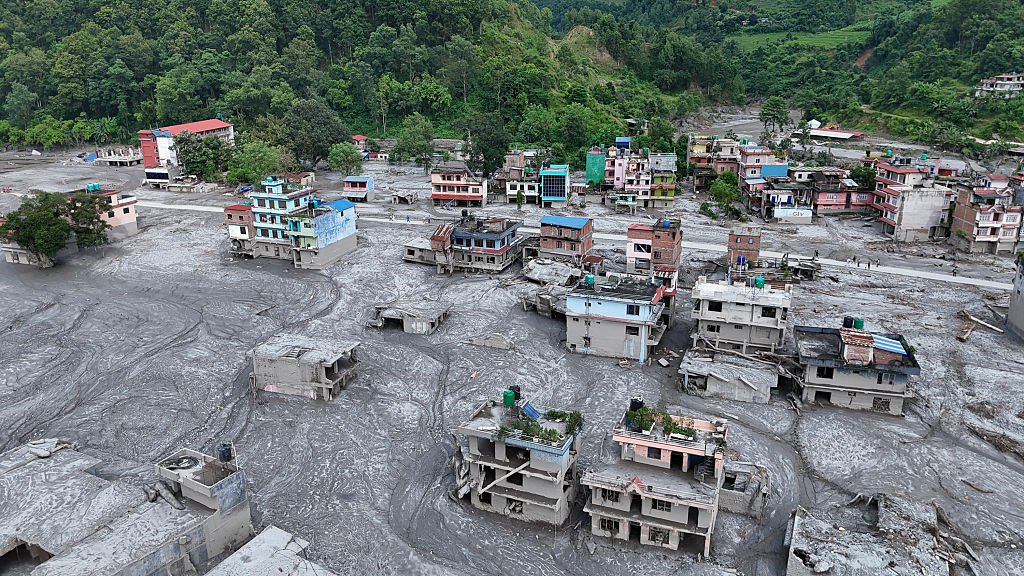
Catastrophic flooding in Nepal and Tibet is highlighting the risks mountain villages face due to human-induced global warming, according to Nepal’s climate change chief Maheshwar Dhakal. The country’s foreign minister, Shisir Khanal, called for a global effort to tackle climate change. Nepal has already seen over a thousand deaths and more than four thousand people missing following the disaster.
The country has experienced several deadly climate events and natural disasters in recent years, including landslides and flooding in 2012, 2017, and 2015’s 7.8 earthquake that killed nearly 9,000 people and triggered over 20,000 landslides. Experts say that as our planet warms, extreme weather events will become more frequent, particularly in vulnerable nations like Nepal.
Nepal's topography, ranging from low-lying plains to some of the world’s highest peaks, contributes to its vulnerability to extreme flooding. Last week’s flooding was triggered by a landslide that caused a glacier to fall into nearby villages, rapidly accelerating the erosional process due to global warming.
Economic development along riverbank towns and villages has increased, putting growing communities at risk. The area where the floods occurred has become far more populated than before, with tourism and hydropower facilities adding to the population density. Professor Göran Ekström of Columbia University notes that while landslides occurred before global warming, it has sped up the process, resulting in more frequent and severe events.
Nepal currently lacks effective early warning systems, which could have helped in evacuations. Switzerland, for instance, suffered a landslide and glacial collapse last year with only one death due to timely warnings. Professor Mathias Vuille from the University at Albany, SUNY, emphasizes the need for adaptation measures, such as setting up warning systems and planning for such events when building infrastructure.
Nepal contributes less than 0.1% of global greenhouse gas emissions but is among the most climate-vulnerable nations due to the rapid warming of the Himalayan region, which is warming nearly twice as fast as the global average. This warming contributes to retreating glaciers and thawing permafrost, destabilizing the landscape and increasing the risk of landslides.
Written by urgent.news from Time's reporting — not their text. Machine-written — may contain errors; check the original before relying on it.