Why butterflies are sometimes attracted to cow dung: The science behind ‘puddling’
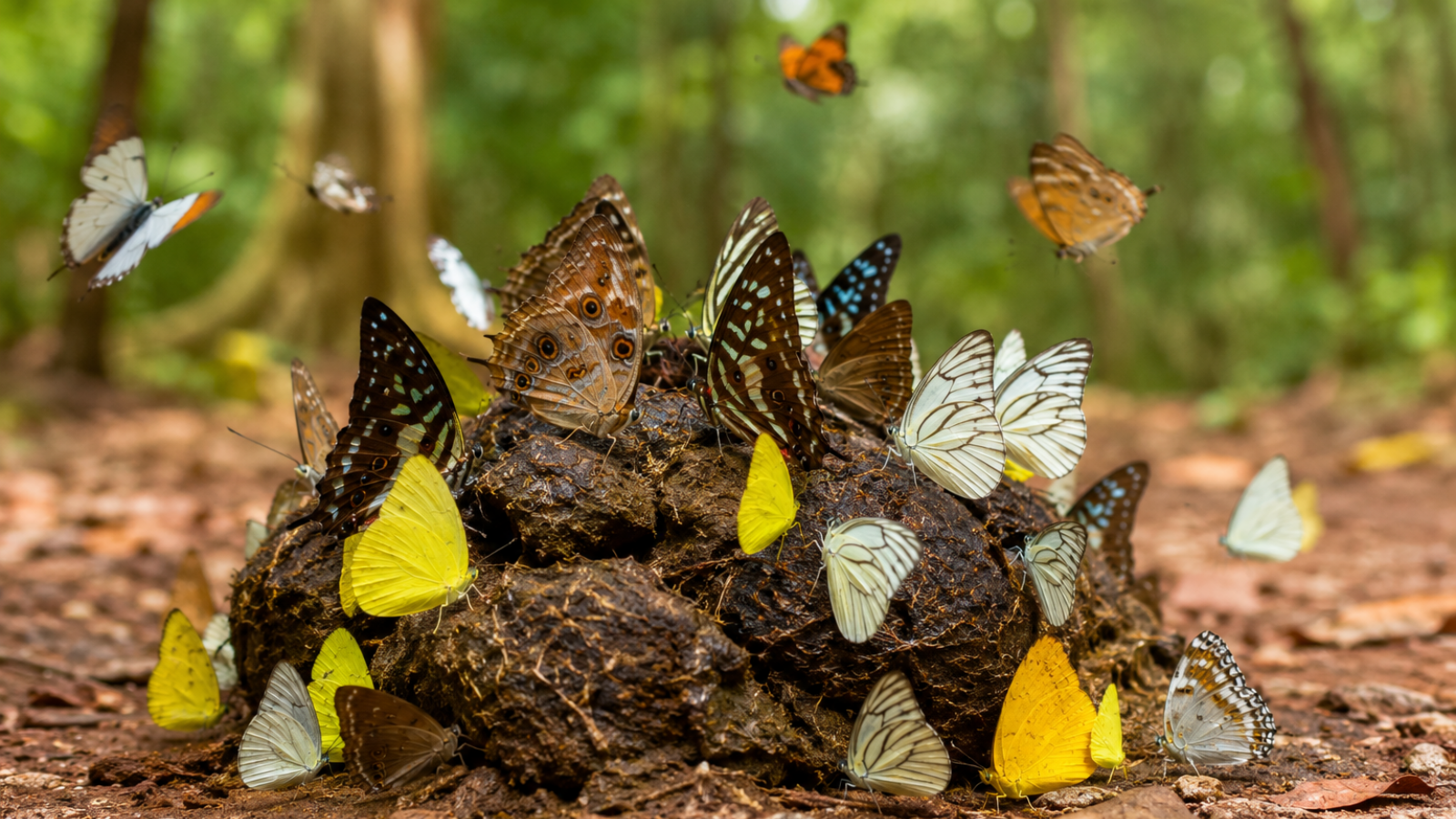
Butterflies often visit cow dung, not because they fancy the smell, but to access nutrients that nectar does not provide. This behavior, called puddling, serves as a nutritional stop for adult butterflies. While nectar supplies needed sugars, it lacks essential minerals and nitrogen, which can be found in animal waste like dung, urine, and other organic materials.
Butterflies use their proboscis to extract liquid from these surfaces, making damp patches more attractive than dry dung. This phenomenon is particularly common among male butterflies, as the nutrients they obtain can play a crucial role in their nutrition and reproduction. Some species even transfer nutrients to females during mating, a process known as a nuptial gift.
India has documented cases of butterflies puddling on elephant dung, urine, and bird excreta, alongside mineral-rich surfaces. Researchers suggest that these materials can provide essential nutrients such as amino acids and minerals, contributing to butterflies' fitness and reproductive physiology. In Arunachal Pradesh, researchers have observed butterflies feeding on various unusual sources, including dung, carrion, and ash.
The concentration of nutrients and moisture at a particular site can make it appealing to multiple butterfly species. Factors such as sodium concentration and temperature can influence which substrates different species prefer for puddling. So, when you come across a cluster of colorful butterflies around animal dung, consider it a surprising yet efficient nutritional stop for these insects, rather than a sign of them abandoning flowers.
Written by urgent.news from The Indian Express's reporting — not their text. Machine-written — may contain errors; check the original before relying on it.