When Citizen Accountability Turns Into Public Confrontation, Who Protects Due Process?
The death of Sheikh Mohammud Mafik, father of CJP volunteer Abdul Hafeez, who was part of the Cockroach Janta Party's (CJP) "School Thik Karo" campaign in West Bengal, should disturb every citizen, irrespective of political affiliation. Days later, on August 21, near Jaipur, another CJP team on the same mission was blocked and pushed out by villagers and alleged “BJP workers”, both sides trading…
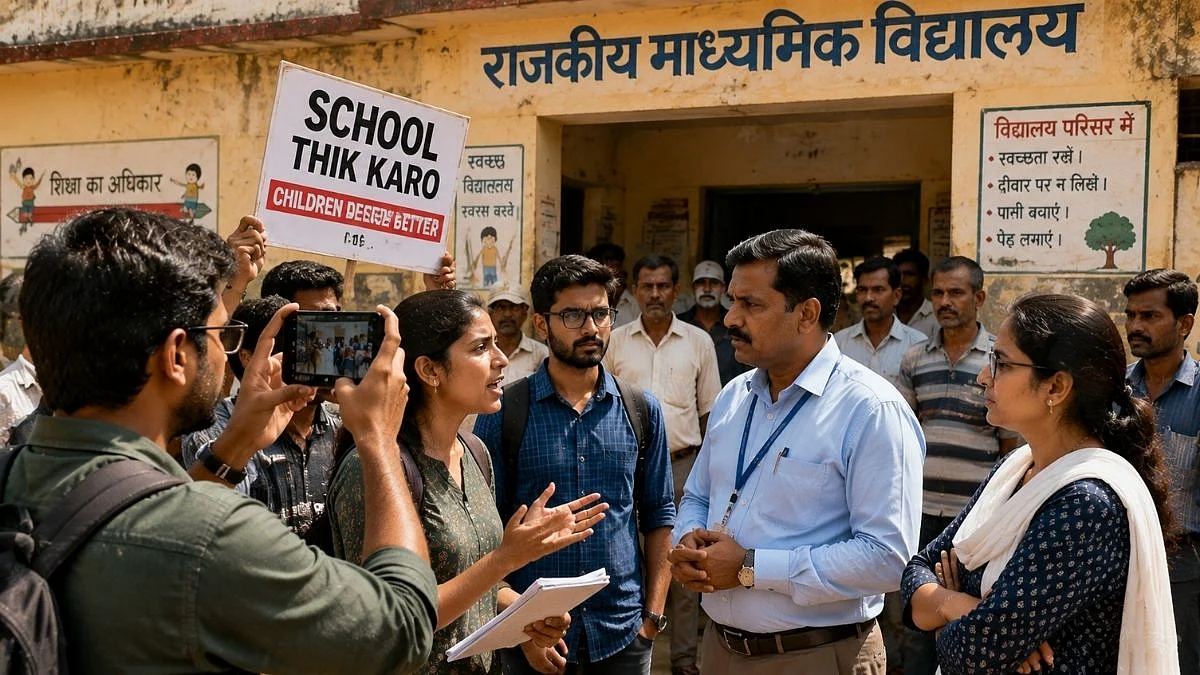
The death of Sheikh Mohammud Mafik, father of a volunteer with the CJP party, should alarm all citizens, regardless of their political beliefs. Recently, on August 21, a different CJP team faced obstruction from villagers near Jaipur, who accused both parties of assault and vandalism. While there was no fatality this time, the situation reflects a troubling pattern.
The question arises: can a legitimate push for institutional accountability morph into mob accountability, where citizens, armed with cameras and social media, take on the roles of inspector, investigator, and adjudicator? Campaigns like "School Thik Karo" are a genuine concern for public education. Government schools require safe buildings, functional facilities, electricity, water, and trained teachers for students to learn in dignity.
While citizens have the right to question the quality of public education, vigilance must not transform into vigilantism.
The root cause of poor school conditions is not just official indifference; it is the imbalance between demand and the limited resources available. India's vast population, including the young CJP base, strains public infrastructure. Even a well-run state faces challenges, and the competitive politics of our nation exacerbate the problem. Capital expenditure, which builds necessary infrastructure and facilities, often falls short of the budgeted amount.
In states like West Bengal and Rajasthan, where "School Thik Karo" confrontations have occurred, fiscal constraints are significant. The solution lies not in a CJP inspection squad passing judgment, but in allowing citizens to seek information, document deficiencies, and seek justice through established channels. Citizens must respect due process, distinguishing between vigilantism and legitimate concern for public institutions.
When citizens assume the role of judge, they risk disrupting democratic institutions and undermining the rule of law. Public servants must be allowed to perform their duties without unwarranted interference that could lead to confrontation or public humiliation. The example of an alumnus visiting his alma mater, Sainik School Bijapur, illustrates the importance of maintaining discipline in educational institutions.
While the CJP campaign aims to promote accountability, its methods may not be the most effective. Any official suspected of wrongdoing should be investigated and punished under the law, but this process must be carried out in an accountable manner. Citizens should question, institutions should answer, agencies should investigate, authorities should discipline, and courts should adjudicate.
Allowing self-appointed inspectors to intervene on behalf of all public services could lead to the normalization of mob vigilantism, a hallmark of a banana republic rather than a constitutional democracy.
Written by urgent.news from Free Press Journal's reporting — not their text. Machine-written — may contain errors; check the original before relying on it.