Vaccination of orange-bellied parrots begins as deadly bird flu spreads
H5 bird flu has now been detected across Tasmania, with vaccination efforts for captive orange-bellied parrots, which are critically endangered, getting underway.
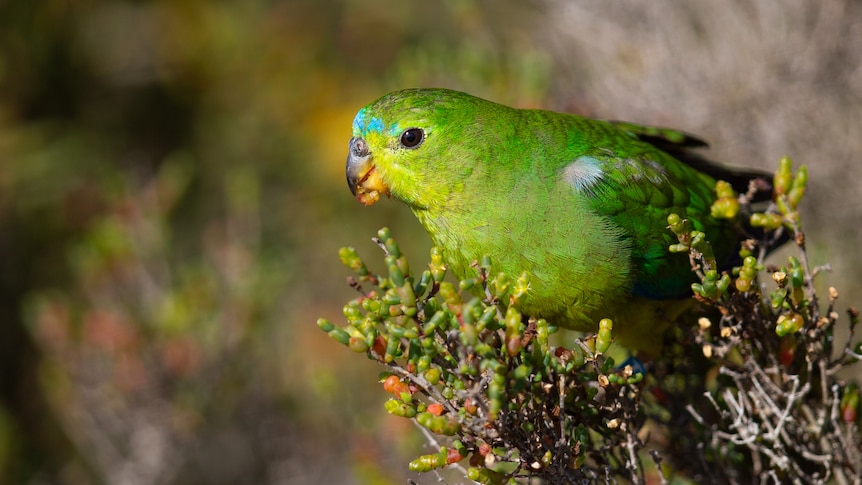
A deadly H5 bird flu has spread throughout Tasmania, with recent detections in Marrawah, Triabunna, and Acton Park, a suburb of Hobart. As part of the response, Tasmania's state government has launched a vaccination program for captive orange-bellied parrots, a critically endangered species. Officials estimate around 350 birds will be vaccinated over the coming months.
The Department of Natural Resources and Environment Tasmania confirmed the first cases of the virus in a tern at Acton Park and a forest raven at Triabunna, followed by another detection in a tern at Marrawah. The virus has been detected in 54 birds statewide since its initial appearance last month. Incident controller Wes Ford announced that the department would no longer report individual cases but instead focus on the areas where the virus is prevalent.
Routine testing in high-risk areas is expected to identify more infected birds, enabling better monitoring of the disease's spread. The state government urged Tasmanians to continue reporting sick or dead birds to aid surveillance efforts. While no poultry industry cases have been reported, chicken and eggs remain safe to consume.
Orange-bellied parrots, whose wild population is estimated to be fewer than 100, are among the priority species for vaccination. Environment Minister Guy Barnett and Federal Agriculture Minister Julie Collins visited the Five Mile Beach captive breeding facility to announce the program. The program involves vaccinating 350 captive birds between now and February, after which they will be relocated to Melaleuca in Tasmania's remote south-west to bolster the wild population.
The state's biosecurity system has been praised for its early detection of the virus, highlighting the effectiveness of Tasmania's biosecurity measures. Up to 50 birds will be vaccinated in Tasmania on the day, with close monitoring for any adverse effects, including fertility issues. Jason Jacobi, the Environment Department secretary, stated that while the risk to humans remains low, they should avoid contact with sick or dead birds, feathers, fluids, saliva, faeces, or other contaminated materials.
The Department of Health assured the public that human infection with H5 bird flu is rare, and the current risk to people in Tasmania is considered low.
Written by urgent.news from ABC News AU's reporting — not their text. Machine-written — may contain errors; check the original before relying on it.