UN committee says countries must consider reparations for slave trade
A U.N. committee said countries are legally obliged to consider reparations for the transatlantic slave trade and take other measures to address the enduring legacy of racial discrimination, it says, that persists today.
The United Nations Committee on the Elimination of Racial Discrimination has declared that nations are legally required to contemplate reparations for the transatlantic slave trade and implement measures to tackle the ongoing impact of racial discrimination, which remains a pressing issue today. The committee's guidance, released on Monday, asserts that these obligations stem from a legally binding 1965 convention on racial discrimination, rather than the legal standards of the era when the slave trade occurred.
The committee views this stance as a "paradigm shift" away from debates over historical accountability that governments have typically invoked to evade reparations claims. According to the U.N. document, states must enforce comprehensive reparatory measures for individuals of African descent, encompassing all facets of remedies.
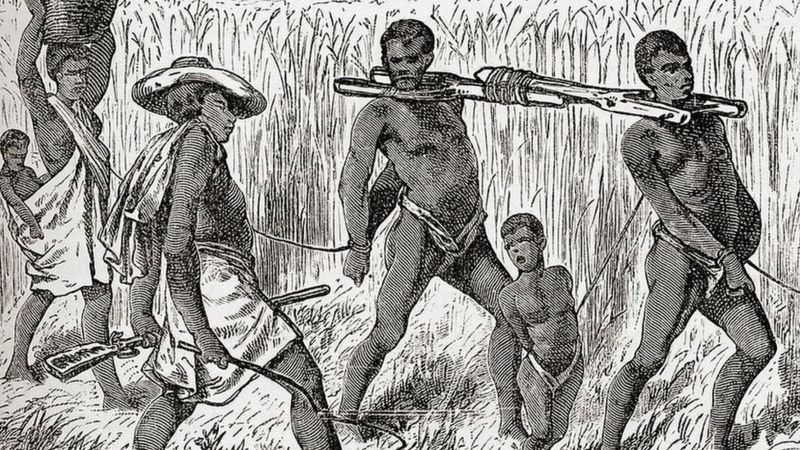
At least 12.5 million Africans were forcibly taken and sold between the 15th and 19th centuries, marking the largest forced displacement in history. Calls for reparations, ranging from official apologies to financial restitution, have gained traction globally, although detractors argue that states and institutions should not be held accountable for historical transgressions.
The European Union and Britain refrained from voting on a U.N. resolution addressing slavery in March. Some countries have attempted to avoid justice claims in court by asserting that there were no international laws prohibiting the slave trade at the time – a notion known as the intertemporality principle. However, the U.N. document contends that, irrespective of the historical legality of slavery and the slave trade, countries remain accountable under present international obligations to address the enduring effects of these practices.
The U.N. document emphasizes that financial compensation is insufficient; transformative measures are necessary, such as opening archives, revising public memorials, and establishing independent truth commissions. Pela Boker-Wilson, a committee expert from Liberia who contributed to the document, anticipates states to shift beyond mere expressions of regret and undertake concrete and meaningful actions.
She stated to Reuters, "We are calling on state parties to take concrete and meaningful action," emphasizing the need to affirm the dignity of those whose suffering was denied or minimized.
Written by urgent.news from MyJoyOnline Ghana's reporting — not their text. Machine-written — may contain errors; check the original before relying on it.
This story
This is one outlet's version. Read the fullest account.
- Countries legally obliged to consider slavery reparations, says UN committee theguardian.com
- Countries must consider reparations for slave trade, UN committee says scmp.com
- Countries obligated to consider repatriation for transatlantic slave trade – UN Committee premiumtimesng.com
- UN committee says countries must consider reparations for slave trade jpost.com