Sydney’s beaches enter the drone age to get swimmers back in the water after spate of shark attacks
Seventy beaches across New South Wales are part of the $34m dawn-to-dusk drone monitoring program, which one expert has called ‘the best technology we have at the moment’ Get our breaking news email , free app or daily news podcast “Hey Taha, what’s the visibility like?” shouts a man with a towel slung over his shoulder. “Uh, nice,” says Surf Life Saving New South Wales drone operator Taha…
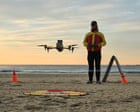
Seventy beaches across New South Wales are part of a $34 million drone monitoring program, which experts consider to be the best technology currently available. Surveillance at Coogee beach, where 34-year-old Sydney teacher Leah Stewart was attacked by a four-meter white shark, has been temporarily suspended due to its proximity to the airport's flight path.
However, the state government has recently implemented a $34 million initiative that includes year-round drone monitoring at 38 Sydney ocean beaches, including Coogee. The program will see surveillance hours extended to 6:15 am to 5 pm daily during spring. Taha Kafil-Hussain, a drone operator for Surf Life Saving New South Wales, explains that he looks for "anything moving in a different way than normal" during his 20-minute flights.
University of Sydney shark policy expert Christopher Pepin-Neff acknowledges that drones are currently the best technology available, but cautions that windy conditions may hinder shark detection. With the increased drone surveillance, there have been over 750 shark sightings and more than 200 intervention actions by Surf Life Saving NSW since July 1.
Written by urgent.news from The Guardian's reporting — not their text. Machine-written — may contain errors; check the original before relying on it.