Stones From One of Henry VIII's Fortresses Spent More Than a Century Hidden in Plain Sight. New Research Suggests the Victorians Repurposed Them as Building Materials
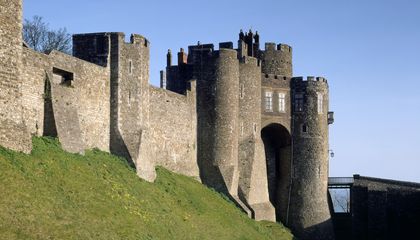
Recently discovered archival records indicate that workers constructing an extension of the Constable's Gate at Dover Castle in the late 19th century reused fragments of the Tudor-era Sandown Castle
In the final years of Henry VIII's reign, the Tudor king undertook a large-scale building project to fortify his kingdom's defenses against potential invasions by Spain or France. He constructed various fortifications along the English and Welsh coasts, ranging from imposing castles to modest blockhouses. One of these Kentish fortifications, Sandown Castle, was built between 1539 and 1540.
Although the castle fell into disrepair due to coastal erosion, recent research suggests that stones from the Tudor fort were repurposed during the Victorian era for an addition to the Constable’s Gate at Dover Castle. Christopher Moore, a research fellow at the University of Kent, uncovered this connection through archival research and architectural evidence.
He discovered a reference to a Tudor-era diary in The History of the King’s Works, which detailed the construction of Sandown Castle. After consulting the British Museum and British Library, Moore found the diary among unrelated manuscripts. The text mentioned historical buildings that had been demolished to build Sandgate Castle in the 16th century, and their architectural fragments, known as spolia, were repurposed in the new fortification.
Henry VIII, known for his chaotic love life, was also a respected Renaissance monarch with a keen interest in engineering. Moore believes that he might have played a direct role in the design of Sandown and its sister castles, Walmer and Deal, which still stand today. Stones extracted from Sandown Castle were reportedly bound for Dover Castle in 1883 to construct new quarters for the commanding officer.
Moore hopes to identify all repurposed fragments to shed light on the hidden stories of Tudor-era ruins.
Written by urgent.news from Smithsonian's reporting — not their text. Machine-written — may contain errors; check the original before relying on it.