Sold home jointly owned with wife? Here's how you can claim 100% LTCG benefit
The most important point to note in this matter is the proof of the financing for the first property. If you have a clear trail and adequate documentation that can establish the money to buy the first property was entirely yours, then the new property need not be purchased in joint names.
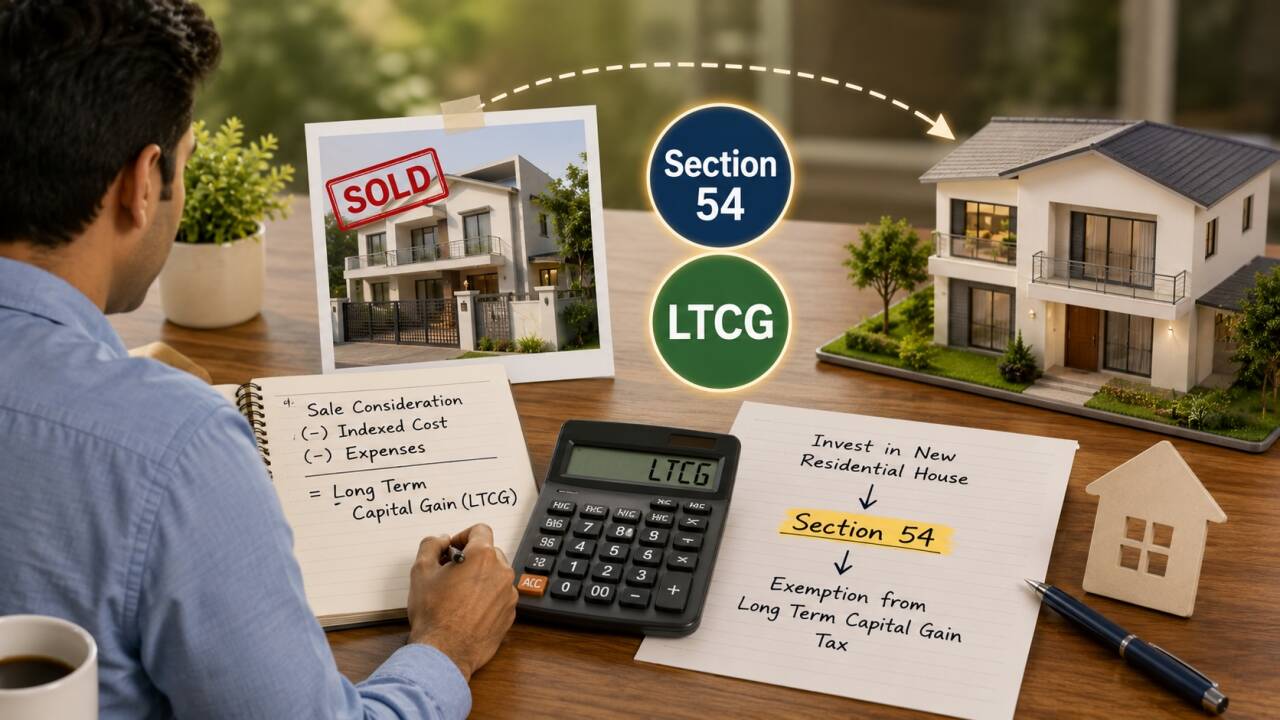
If you were the sole buyer of a jointly-owned property, you could potentially claim the full tax-free benefit on long-term capital gains (LTCG) when selling and reinvesting in another home. The key factor is having documented evidence showing the entire purchase price came from your own funds. With such clear records, the subsequent property can be registered in just your name.
When the jointly owned asset is sold, the buyer should deduct the full tax at source (TDS) based on your PAN. Ensure you report the full sale amount and resulting capital gain on your income tax return. It is advisable to retain all documentation proving sole funding of the original purchase, as this can help prove the transaction relates to your individual PAN.
The property sale may appear in your spouse's Annual Investment Statement (AIS) due to the information sourced from the sub-registrar. However, they should submit a statement on the portal indicating the transaction pertains to another PAN or family member, thereby avoiding any notice for non-reporting the income.
Section 54 of the Income Tax Act offers relief from LTCG tax when a residential property is sold and the capital gain is reinvested in another residential property within specified timeframes. This benefit is available only to individuals and HUFs. The property sold must be a residential house held as a long-term capital asset for 24 months or more. If the property is sold before this period, Section 54 exemption cannot be claimed.
The replacement property must be a residential house located in India. It can be purchased within a year before or two years after the sale of the original property, or a new house can be constructed within three years from the transfer date. Investments in the new property can be made up to the lesser of the capital gain or the amount invested. If the capital gain exceeds Rs 1 lakh but the investment is less, the remaining amount becomes taxable.
An exception allows investing in two residential properties if the LTCG does not surpass Rs 2 crore, but this option can be utilized only once by the taxpayer. However, if the cost of the new residential property exceeds Rs 10 crore, the excess amount beyond Rs 10 crore is disregarded while calculating the LTCG exemption.
If the capital gain has not been used to purchase or construct the new house by the income-tax return filing deadline, the unutilized amount can be deposited into the Capital Gains Deposit Account Scheme. This provides additional time to complete the purchase or construction of the replacement property, but the deposit must be made before the ITR deadline, or it will not qualify for the exemption. Once deposited, the money must ultimately be used for the house purchase or construction; otherwise, the exemption is lost.
Written by urgent.news from Times of India's reporting — not their text. Machine-written — may contain errors; check the original before relying on it.