Singapore tests robot guide at MRT station, but Olly still struggles with directions (VIDEO)
SINGAPORE, Sept 1 — A humanoid robot is being tested as a guide for commuters at Little India MRT station, but its...
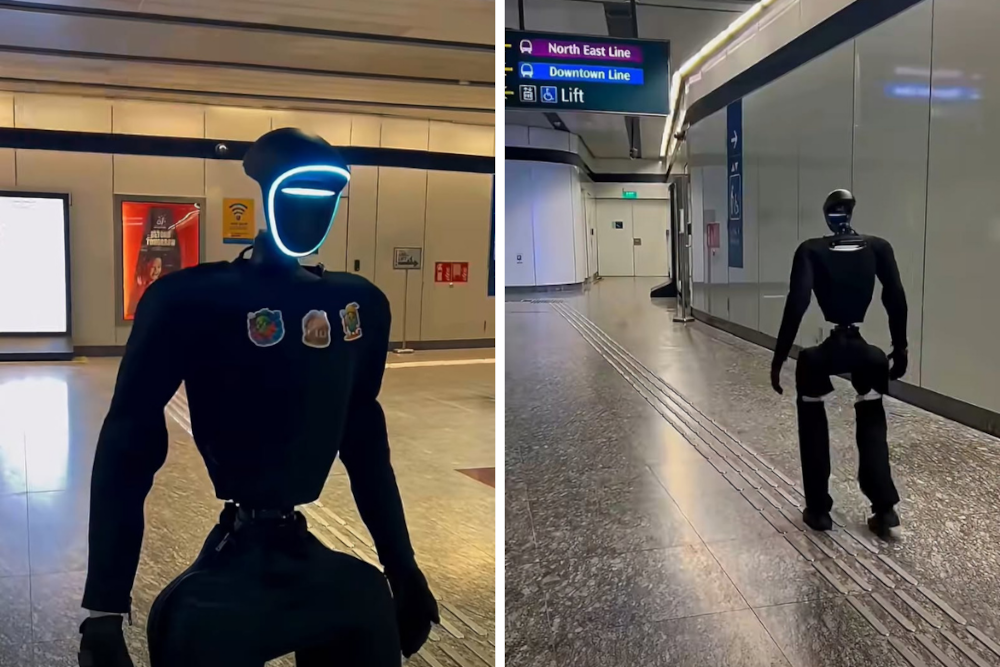
Singapore is testing a humanoid robot named Olly as a guide at Little India MRT station, but the 1.27-meter-tall robot's trial revealed it still faces challenges with directions and navigating the busy station. Developed by Unitree Robotics, Olly is part of Singapore’s Land Transport Authority (LTA)'s two-week exploration of AI-enabled technology to aid public transport operations.
The trial, from August 31 to September 11 between 10am and noon, aims to assess the robot's performance in a live station environment and gauge public reaction.
During a Monday interaction, Olly answered simple questions, such as those about first and last train services. However, it struggled with more complex requests, like providing directions to Tekka Centre, which took multiple prompts and eventually gave incorrect directions due to mishearing "Tekka Centre" as "Teacher's Centre." In contrast, Olly performed better when asked for directions to KK Women's and Children’s Hospital, guiding the commuter to Exit F and even offering to lead the way, drawing a small crowd of curious commuters.
After confirming the destination, Olly moved slowly towards the fare gates near Exit F, drawing attention from commuters, particularly children, who took photos and videos. The robot, supervised by LTA staff, provided further instructions for reaching the hospital, including turning left, taking the escalator, and proceeding through Exit F. LTA emphasized that the trial was conducted during off-peak hours to evaluate the robot's performance in a live station setting and gather public feedback, with no immediate plans for deployment.
Little India MRT station was chosen for the trial due to its proximity to LTA’s headquarters. Commuters, including retiree Steve Walker, expressed admiration for Olly's ability to balance and walk without wobbling but noted the robot's difficulty in distinguishing speech from background noise in the busy station, suggesting that a directional microphone could improve its performance.
Written by urgent.news from Malay Mail's reporting — not their text. Machine-written — may contain errors; check the original before relying on it.