'Sharp fall' in public trust on human rights delivery
There has been a "sharp fall" in public confidence that human rights are being delivered fairly, according to the latest annual public attitudes poll by the IHREC.
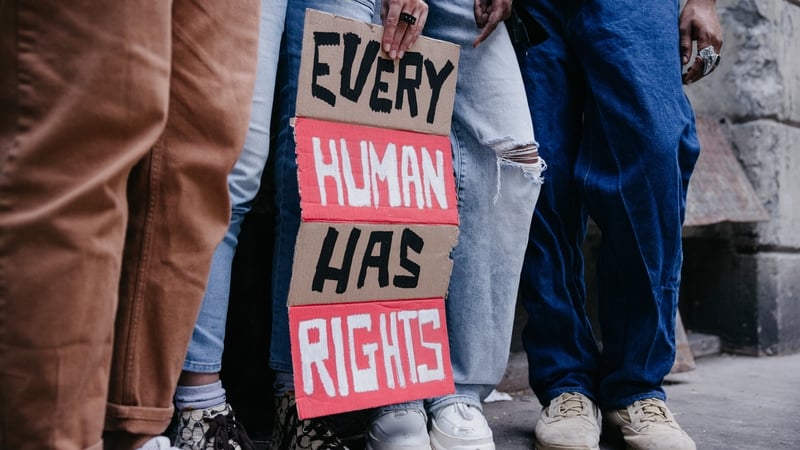
A recent survey conducted by the Irish Human Rights and Equality Commission (IHREC) reveals a significant decline in public trust regarding the fair delivery of human rights and equality. In the latest annual poll, 53% of respondents felt they had equal opportunities to succeed in life, down from 62% the previous year. Concerning efforts to combat discrimination, 26% believed these efforts were effective, a notable drop from 40% in 2025.
Despite acknowledging the importance of economic and social rights like affordable healthcare, housing, and decent wages, a substantial 84% of respondents still believe that everyone should be treated equally, regardless of their background. However, confidence in the treatment of refugees and asylum seekers has dropped significantly, with only 49% believing they have access to adequate accommodation and 47% believing they are treated fairly.
Women are consistently more likely than men to express concerns about discrimination, economic insecurity, and fairness. They are also less likely to believe that efforts to combat discrimination are effective. The gender divide is particularly visible in perceptions of economic fairness, with just 8% of women believing wealth is distributed fairly in Ireland, compared to 15% of men.
Age also plays a significant role in attitudes. While 65% of adults reported a strong understanding of human rights, this proportion decreased with age, with only 63% of those aged 50 and over expressing a strong understanding. Younger people—those aged 18 to 24—were much less confident about their ability to experience equality in practice.
Specifically, 40% of this age group believed they had equal opportunities to succeed, down from 60% the previous year. Conversely, those aged 65 and over remained the most likely to believe they had equal opportunities, with 75% of 18-24 year-olds reporting a lower level of confidence.
The survey also highlighted the realities of everyday life, with 87% of respondents worried about the cost of living. However, only 12% believed the government had been doing enough to address these pressures, while 72% disagreed. Similarly, only 11% believed wealth was distributed fairly in Ireland. Despite this, 89% of respondents considered disability benefits important, particularly among younger adults.
Written by urgent.news from RTE News's reporting — not their text. Machine-written — may contain errors; check the original before relying on it.
This story
This is one outlet's version. Read the fullest account.