Schiffahrt: Klimawandel kostet Rheinschifffahrt voraussichtlich Milliarden
Niedrigwasser und neue Energien machen einen Großteil der im Schnitt 50 Jahre alten Binnenschiffflotte untauglich. Marktführer HGK fordert ein Milliarden-Programm für 1000 neue Schiffe.
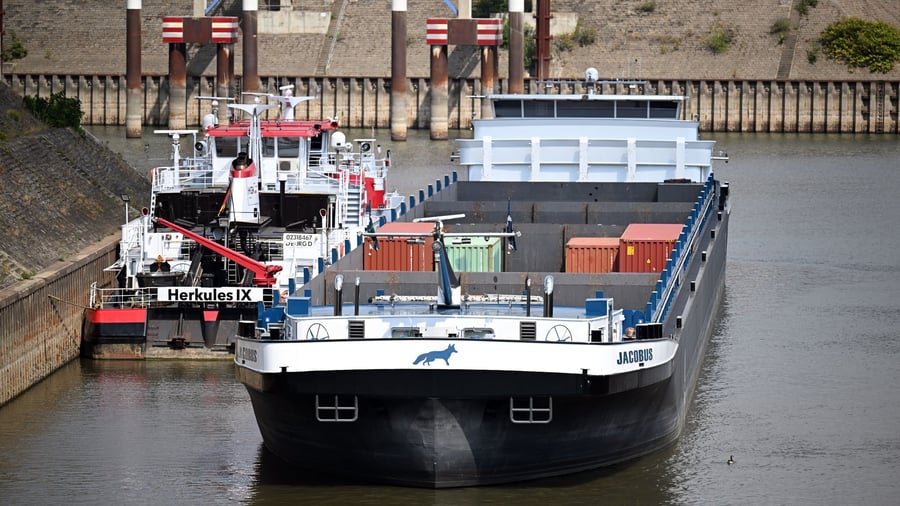
In this summer of record-low water levels, the inland shipping industry has suffered significant financial losses due to limited capacity. Steffen Bauer, CEO of Hafen- und Güterverkehr Köln (HGK), projected a need for a €1,000 million shipbuilding program by 2035. The federal government should allocate €400-500 million annually to support this initiative, Bauer told Handelsblatt.
In mid-August, the water levels on Europe's most important inland waterway, the Rhine, dropped to the lowest point since measurements began in 1880, with the Nadelöhr Kaub station in Rhineland-Palatinate showing only eight centimeters above the established zero point, 17 centimeters lower than the record low from 2018. This reduced depth meant many larger ships could not pass.
The inland shipping industry estimates this low-water event to have cost the German economy about €18 billion. The Rhine's shipping is sometimes partially halted south of Cologne, not only due to the slow removal of shallow spots and rocks along the river, planned to be completed by 2033, but also because the 7,000 inland ships on the Rhine are, on average, 50 years old and often unsuitable for current challenges.
Many freight barges were originally too heavily constructed for the types of cargo being transported, explained Bauer. The shift in freight towards lighter goods, such as containers and wind turbines, and the retirement of older coal-burning shipbuilding, mean many ships are now unfit for other types of freight. The Bund Verkehrsministerium has thus far funded this transition through an annual €35 million grant, used for ship refurbishments but not new builds.
The inland shipping industry is now advocating for "optimized ship design," with lighter construction materials and better balance to prevent grounding in low water. Additionally, a "flex tunnel" developed by the Duisburg research institute DST helps maintain propeller thrust even in low water. Rhenus, a ship operator, aims to reduce the weight of their ships by reducing the amount of steel used in their construction, though this could compromise the design.
Despite the government's support for ship refurbishments, Bauer argues for investing in new builds, as both changing freight types and the transition to alternative propulsion methods require new ship types.
Written by urgent.news from Handelsblatt's reporting — not their text. Machine-written — may contain errors; check the original before relying on it.