Quantum Physicist Takes Aim at the Universe's Mysterious Arrow of Time
Scientists and philosophers have argued over the nature of time since … well, since time immemorial. Is time real, or is it a convenient illusion? Why does time seem to flow in just one direction? In a new book called “On Time,” British physicist Jim Al-Khalili lays out what he thinks is the answer to such questions.
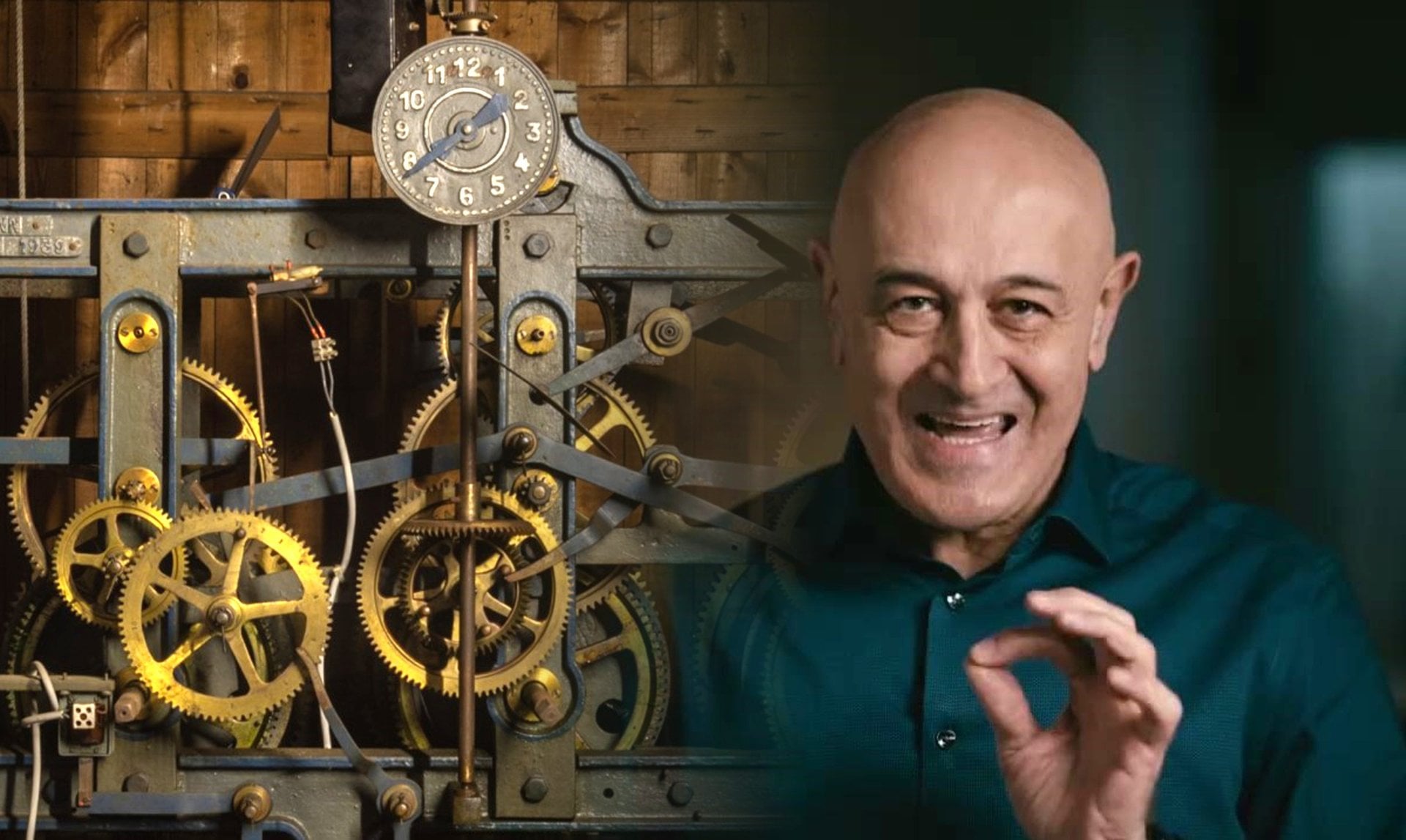
For centuries, the nature of time has been a subject of debate among scientists and philosophers. Does time flow in one direction, or is it merely an illusion? Can we observe the same instant repeatedly, like frames in a movie? And if so, could we change the outcome? In his new book, "On Time," British physicist Jim Al-Khalili offers his perspective on these questions.
Most physicists attribute the unidirectional flow of time to the Second Law of Thermodynamics, which states that the level of entropy or disorder must always increase in an isolated system. This inability to reverse time could be linked to the rise of entropy, making it impossible to reverse the flow of time. However, Al-Khalili, a professor emeritus at the University of Surrey and a science presenter for the BBC, specializes in quantum physics.
He argues that the arrow of time is real and stems from the quantum realm. The phenomena of quantum entanglement and decoherence play a crucial role in Al-Khalili's explanation. Entanglement refers to the idea that a quantum entity like an electron or a photon does not exist in isolation. When quantum entities interact, their properties can become linked, leading to what Albert Einstein called "spooky action at a distance."
However, when quantum entities are observed, their "quantumness" leaks away, a phenomenon known as quantum decoherence. Al-Khalili believes that every observation contributes to the universe's entanglement and decoherence. Every measurement involves becoming entangled with the observed entity, causing irreversible decoherence in the macroscopic world.
This act of observation sets the arrow of time in motion. While the many-worlds interpretation suggests that all possible outcomes of a quantum event occur in separate realities, Al-Khalili suggests that we are too deeply entangled with our version of the universe to jump into a different quantum stream. Al-Khalili does leave room for the many-worlds view but emphasizes that we must consider the current limitations of our understanding of spacetime and the potential for time travel.
Written by urgent.news from Universe Today's reporting — not their text. Machine-written — may contain errors; check the original before relying on it.