Protecting scam victims from recovery frauds
LETTER: PUBLIC discussions sometimes portray scam victims as careless or greedy. Such assumptions are not helpful, especially after a financial loss has already occurred.
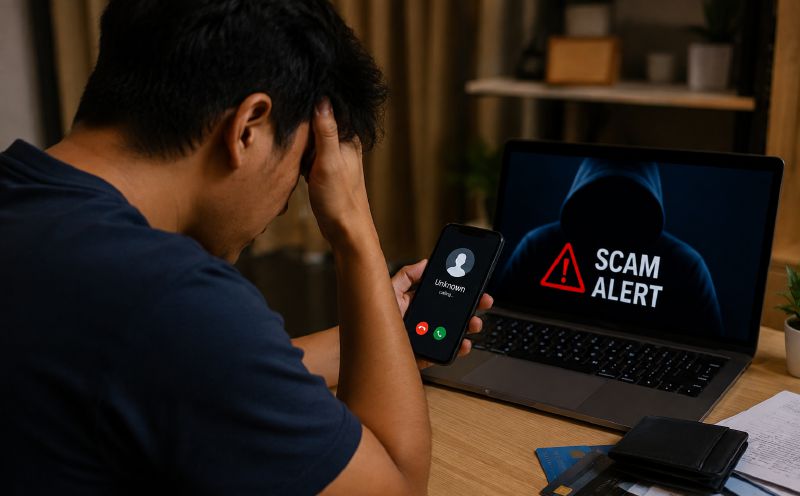
Scam survivors often face another threat: fraudsters claiming to help recover the stolen money. These "fake recovery agents" exploit victims who are already vulnerable, seeking to extract more funds through pressure and reassurance. Public awareness campaigns need to educate scam victims on how to handle this secondary issue.
While avoiding initial scams by spotting suspicious links and cautious investment remains crucial, victims also require clear guidance on the steps to take after losing money. They need to know which official organisations to contact, what information legitimate authorities may request legitimately, and whether any recovery process legitimately requires additional payments.
Anyone claiming to recover scam losses must be independently verified through official contact details, not the telephone numbers, links or documents supplied by the offering party.
This guidance should be disseminated widely, as Malaysia has seen a surge in online scams - 66,204 cases in 2025, totalling RM2.97 billion in losses, with fake investment schemes alone accounting for RM1.47 billion. As the number of victims grows, so does the potential pool of targets for criminals offering false recovery services.
Consequently, post-scam support must become an integral part of the national response to online fraud. Financial institutions, law enforcement agencies and public awareness programmes should provide victims with immediate, actionable next steps after reporting a scam. These should include warnings about fake investigators, recovery agents and anyone demanding advance payment to retrieve stolen money.
Victims need to remain wary of any supposed recovery process that heavily relies on reassurance, repeated claims of the money being found, or pressures to make further payments before funds can be released.
The legitimacy of any advice or instructions must come from independent verification, not from the confidence of the person making the claim. The language used by professionals can sound legitimate, but true legitimacy stems from independent verification, not from the persuasiveness of the individual making the claim. For scam victims, the second threat of recovery fraud can be as damaging as the initial scam, given that both financial and emotional distress are already present.
Preventing the first scam is vital, but protecting victims from the second scam requires equal attention.
Written by urgent.news from New Straits Times's reporting — not their text. Machine-written — may contain errors; check the original before relying on it.