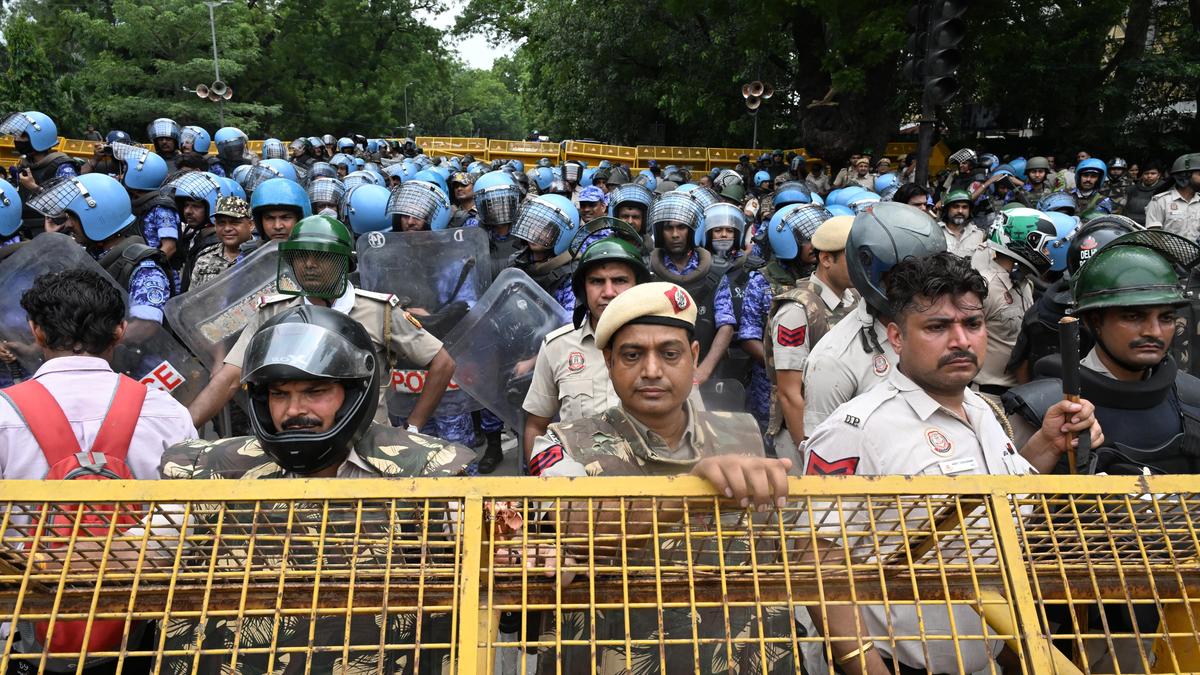
Police's use of 'lethal force' under scrutiny
The shooting of businessman Thabiso Ngcobo has put the use of lethal force by KwaZulu-Natal police under fresh scrutiny, just as a presidential inquiry has laid bare disturbing evidence surrounding the controversial Cato Manor police unit.

The investigation into the police use of lethal force has encountered renewed debate, following the unveiling of a presidential inquiry report. This report substantiated the prosecution of members of the notorious Durban Cato Manor organized crime unit. The inquiry, unveiled by President Cyril Ramaphosa, cleared Prosecution Chief Andrew Chauke of improper conduct while pursuing charges against the unit's members.
However, it also uncovered evidence backing racketeering and murder allegations against these individuals. Ngcobo, a prominent figure in the case, is currently ensnared in a criminal proceeding involving ten South African Police Service officers, including Chief Pedro Rodriguez, who face attempted murder charges stemming from the May 2024 shooting incident.
Ngcobo was targeted by unmarked vehicles in the early hours of May 2024; they approached his armored Toyota Fortuner and engaged him in gunfire. After the attack, he sought advice from KwaZulu-Natal Police Commissioner Lieutenant-General Nhlanhla Mkhwanazi, who instructed him to seek refuge at Pavilion Shopping Centre in Westville.
Ngcobo maintained his innocence, asserting the incident was not a case of mistaken identity but a deliberate attack. The case experienced multiple postponements, causing frustration for Ngcobo. On Friday, the Durban High Court rescheduled the trial to October 5 for a preliminary hearing. While the allegations against the officers have yet to be examined in court, the Ngcobo case is intertwined with a dark period in KwaZulu-Natal policing, epitomized by the Cato Manor unit and the associated deaths.
In 2010, the case gained widespread attention when 16-year-old Kwazi Ndlovu was asleep on a couch in his family's lounge when police stormed the house at around 3 am on April 1, 2010. Four shots were fired, killing Kwazi. His mother, Lindiwe, was unaware her son had been shot initially. The police ordered her to remain in the bedroom while they conducted the search.
When she was eventually allowed access, one of the officers obstructed her view of the lounge. She discovered Kwazi lying motionless on the couch, covered in a bullet wound, with a firearm placed beside him. Kwazi's murder was part of 23 murder cases brought against members of the Cato Manor organized crime unit, accused of functioning as a death squad, responsible for killing around 28 people between 2008 and 2011, many of them members or associates of the KwaMaphumulo Taxi Association.
Police maintained that those they shot were armed and had responded with force. However, the Nkabinde inquiry challenged this narrative, presenting 23 crime-scene reconstructions, revealing that four shots had been fired from a 5.56mm rifle, striking Kwazi who was lying on the sofa. The evidence contradicted the police account, and the finding was not disputed by the Nkabinde report.
The inquiry also heard allegations of planted firearms on victims after their shooting, with former police reservist Aristides Danikas testifying that the unit members habitually carried stolen firearms, which could be planted on suspects. These allegations against Major-General Johan Booysen, who headed the unit, and 18 others were never successfully prosecuted.
For over a decade, the National Prosecuting Authority believed there was insufficient evidence to prosecute the case, a belief that became central to the accusations against Chauke. Former National Director of Public Prosecutions Shamila Batohi accused Chauke of endorsing racketeering and murder charges against the unit despite lacking sufficient evidence.
While the Nkabinde inquiry found no credible evidence to exonerate the Chauke, it did acknowledge the existence of credible evidence supporting the prosecution of racketeering charges against members of the unit. The inquiry thus did not clear the Cato Manor officers of guilt nor confirm the legitimacy of the police killings. The historical evidence remains relevant in light of Ngcobo's case.
The individuals who allegedly fired at him were not criminals but rather members of the police force itself. Ngcobo claims he was approached by men in unmarked vehicles and shot at after being instructed to open his vehicle window. The officers involved in this incident are now facing scrutiny.
Written by urgent.news from IOL's reporting — not their text. Machine-written — may contain errors; check the original before relying on it.