Parents continue to bear hidden costs under Free SHS – Centre for Policy Scrutiny
The Centre for Policy Scrutiny has raised concerns over what it describes as hidden costs still confronting families under Ghana’s Free Senior High School (Free SHS) programme, nine years after its introduction. According to the Centre, delays in the distribution of uniforms and textbooks, as well as expenses associated with school prospectuses, continue to force […]
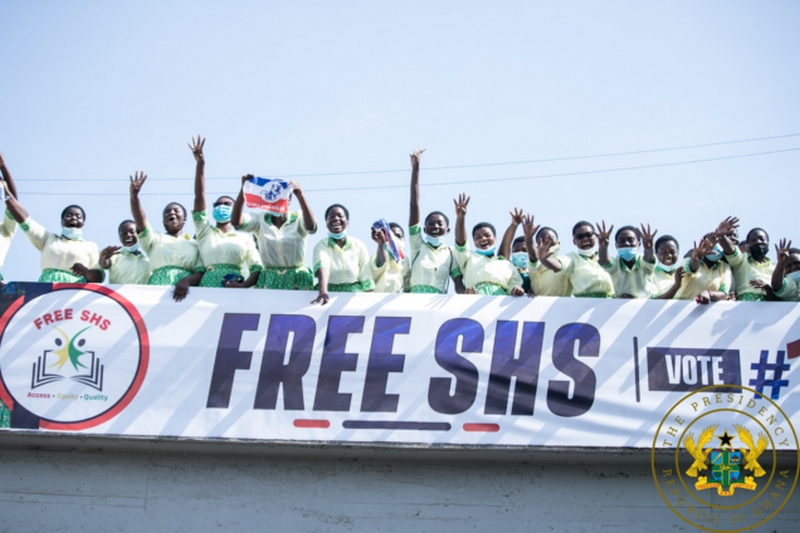
The Centre for Policy Scrutiny has highlighted ongoing financial burdens faced by families under Ghana's Free Senior High School (Free SHS) program, nine years after its inception. The organization points to persistent issues such as delayed uniform and textbook distributions, as well as expenses related to school prospectuses, which force parents to incur costs to meet their children's educational needs.
Dr Jacob Oppong Nkansah, a lecturer at the University of Education, Winneba, presented a new report titled "Improved Access, Quality Questioned: A Report on Nine Years of Ghana’s Free SHS" at a press conference on Tuesday, September 1. While the report acknowledges that Free SHS has significantly increased access to secondary education, it argues that the experiences of some families suggest the program is not entirely free.
The Centre found that parents are often required to buy items that should be provided by the government, especially when there are delays in the distribution of uniforms and textbooks. Furthermore, the report underscores the impact of the double-track system on families, noting that reduced contact hours under the system have led some parents to pay for private tutoring to supplement what students learn in school.
These additional expenses, according to the Centre, are hidden costs that could disproportionately affect low-income households, the very families the Free SHS program was designed to assist. The report asserts, "The 'free' is not always free. Despite its name, the policy still leaves many families paying." The Free SHS program was introduced to eliminate financial barriers to secondary education by covering tuition and admission fees in public senior high schools, as well as providing textbooks, access to library and science facilities, and examination costs.
For boarding students, the program also covers food and accommodation, while day students are expected to receive meals. However, the Centre for Policy Scrutiny contends that ongoing implementation gaps continue to leave some families responsible for out-of-pocket payments for essential educational needs, raising questions about the true extent to which the program can be considered entirely free.
Written by urgent.news from Adom Online's reporting — not their text. Machine-written — may contain errors; check the original before relying on it.