More nothing now
We are most human when we play freely, imaginatively, pointlessly. Gamification risks atrophying that most precious capacity - by Justin Neuman Read on Aeon
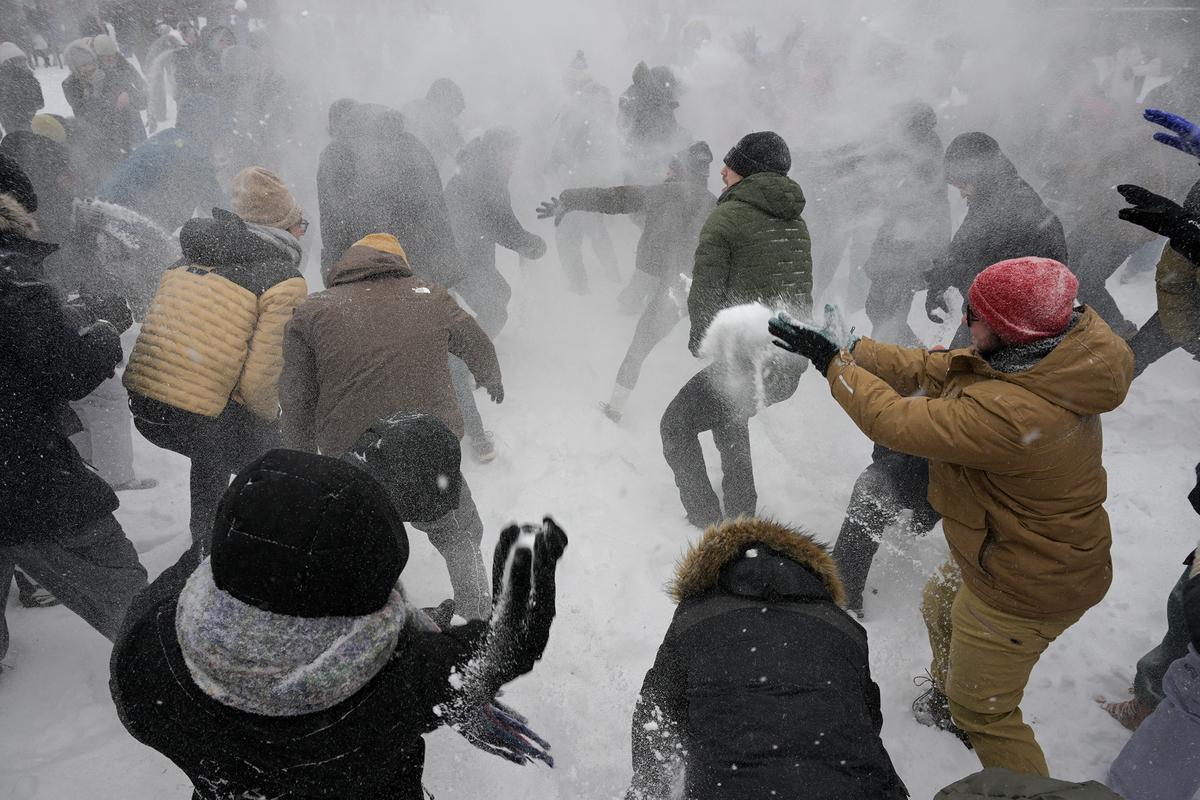
In Washington, DC, on 25 January 2026, children in Meridian Hill Park engaged in a mass snowball fight while rearranging the hexagonal tiles of a Settlers of Catan game into an archipelago of islands. They transformed the strategy game's components into a world with its own rules, without the intention of earning points or measuring themselves against opponents. This unstructured play, known as paidia, is a type of play that has almost disappeared from adult life and is crucial for fostering creativity and meaning.
The author, a 48-year-old professor, initially intended to teach the children the proper rules of Catan, but eventually realized that he needed to join them and build with them instead. This shift allowed them to create a world that deviated from the original game's purpose, highlighting the importance of free and spontaneous play.
This kind of play, described by French sociologist Roger Caillois in his 1958 work "Man, Play and Games," is distinct from competition, which involves following rules, pursuing objectives, and measuring oneself against others. The author argues that contemporary life is dominated by structured, competition-based gaming, with little room for free play or contemplation. This shift has led to the "gamification of leisure," where even mundane activities like running or journaling are turned into contests or scored.
The author draws upon Dutch historian Johan Huizinga's concept of the "magic circle" from his 1938 book "Homo Ludens," which describes a bounded space where ordinary rules are suspended, allowing for the emergence of new concepts of the good. Huizinga believed that play is essential to civilisation, but he feared that its presence had been declining since the end of the 18th century due to industrialisation and professionalisation.
The author contends that the magic circle has been instrumentalised into a dopamine hit, replacing the meaningful aspects of play with metrics that track output rather than generate meaning. To remedy this, the author suggests embracing more unstructured, free play, which allows the mind to wander and associate in ways that lead to unexpected insights and build community. The author stresses the importance of finding meaning in life beyond competition, by embracing the "nothing" that allows the mind to play freely.
Written by urgent.news from Aeon's reporting — not their text. Machine-written — may contain errors; check the original before relying on it.