Media freedom is a security strategy, not a security threat – Kwakye Ofosu
Felix Kwakye Ofosu, the Presidential Spokesman and Minister of State in-charge of Government Communications, has reiterated that media freedom is a security strategy, not a security threat.
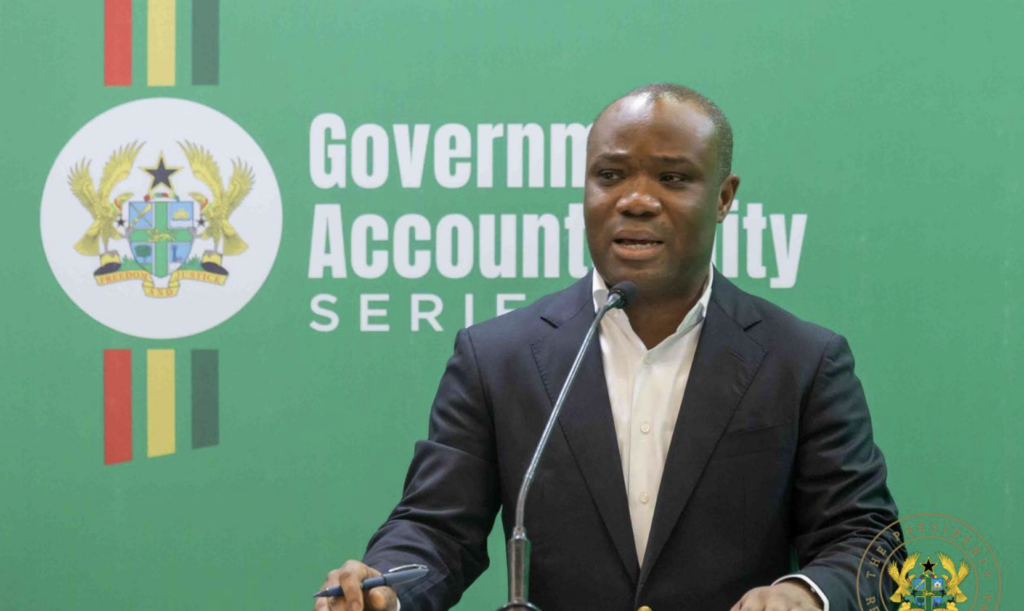
Ghana's Minister of State for Government Communications, Felix Kwakye Ofosu, has emphasized that media freedom is a security strategy, not a security threat. At a Capacity-Building Workshop on Responsible Security Reporting, Ofosu called for strong cooperation between media and national security institutions to protect citizens.
He stated that despite some security actors viewing a free press as a nuisance, Ghana's stability in a region of coups is due to its free press, not censorship. Ofosu emphasized that a free press serves as a pressure valve, allowing citizens to express their concerns without resorting to riots. He reiterated that the government's duty is not to fear the media but to ensure they have accurate information to report.
The Minister stressed the importance of responsible security reporting, stating that it is not solely the media's responsibility. He highlighted that when authorities delay providing official information, speculation fills the void, and where operational details cannot be disclosed immediately, authorities should explain limitations honestly and provide verified updates as circumstances permit.
The Minister underscored that contradictory official statements weaken trust, which is most needed during crises. He emphasized that trust must be built through consistent truthfulness, institutional competence, and respect for the public's right to know.
Ofosu also addressed the issue of speed in security reporting, warning that ethics must be the anchor. In crime reporting, the old rule was "If it bleeds, it leads," but in security reporting, that rule can harm the nation. He appealed to media professionals to verify information with at least two independent sources, one of which should be official, before publishing security alerts.
He outlined four questions media should ask before publishing: Have I verified with at least two independent sources, one official? Does this endanger troops, victims, or ongoing operations? Does it give tactical information to extremists? And does it inflame ethnic or religious tensions beyond facts? Ofosu emphasized that information integrity is now a national imperative, and there can be no meaningful national reset without peace, stability, and information integrity.
He stated that President John Dramani Mahama has repeatedly stressed that development cannot take place without peace, and protecting peace requires early warning, community engagement, credible public communication, and a media that can identify danger without magnifying panic.
Written by urgent.news from MyJoyOnline Ghana's reporting — not their text. Machine-written — may contain errors; check the original before relying on it.