Knowledge Nugget | Why is North India’s cotton belt shrinking?
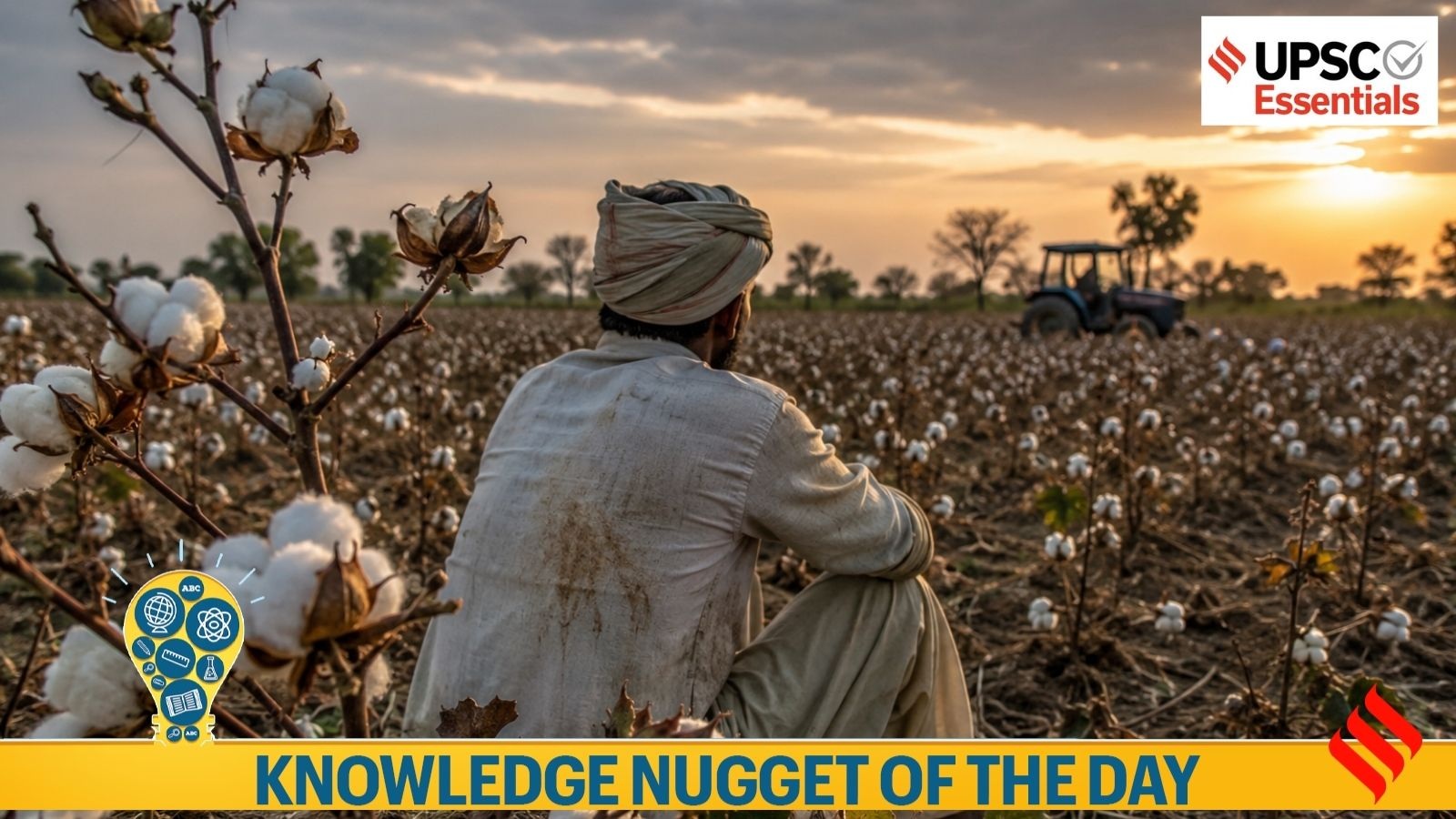
North India's cotton belt is experiencing a significant decline in cotton production, with the region's three main cotton-growing states of Punjab, Haryana and Rajasthan witnessing a decline of over 23 percent in the area under cotton. Last year, the three states had around 11.83 lakh hectares under cotton, but this year, the area has fallen to around 9.09 lakh hectares, or 6.77 lakh acres.
The sharpest decline is seen in Punjab, where cotton acreage has dropped from around 1.28 lakh hectares last year to just 80,000 hectares this year, a decrease of nearly 48,000 hectares, or 37.5 percent in a single season. The traditional cotton belt in Punjab, comprising several districts, has shifted towards paddy and other crops.
The long-term decline is even more remarkable, as Punjab had around 7 lakh hectares under cotton in the late 1980s, and the crop occupied more than 4-5 lakh hectares in several years until 2014-15.
The decline accelerated after the 2015 whitefly attack and repeated pink bollworm infestations since 2021, bringing acreage down to barely 80,000 hectares now. Haryana and Rajasthan have also witnessed significant falls in cotton production, with Haryana losing around 85,000 hectares in a year and Rajasthan seeing a reduction of 1.21 lakh hectares, or 18.5 percent.
Experts attribute a significant part of this year's decline to rain and monsoon conditions. However, in Haryana and Rajasthan, farmers blame pest attacks, declining Bt-cotton resistance, and mounting cultivation losses for the reduction in cotton acreage. Between 2020 and 2025, Haryana's cropping pattern has transformed, with the area under rice cultivation expanding while cotton acreage has shrunk drastically.
Farmers now face heavy losses due to ineffective Bt-cotton and high pesticide costs, leading them to abandon cotton in favor of more profitable crops like paddy.
Written by urgent.news from The Indian Express's reporting — not their text. Machine-written — may contain errors; check the original before relying on it.