Iran urges US to comply with interim deal after Trump threatens further strikes
The US-Iran war, which is into its sixth month, has shifted into an economic standoff, but tensions remain high and could spill over into military action.
The US-Iran conflict, now in its sixth month, has transitioned into an economic dispute, while tensions persist and could escalate into military action. Iran has pledged to retaliate if the United States upholds its commitments under a June interim deal aimed at halting hostilities, but tensions remain high following US President Donald Trump's threat of further strikes.
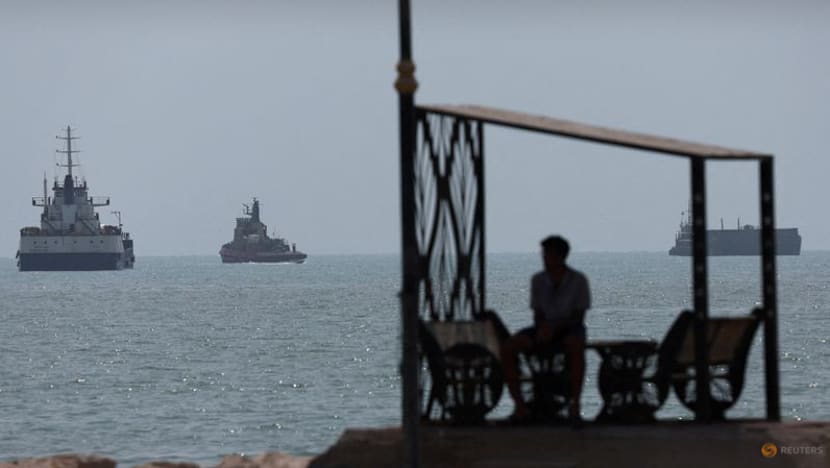
Oil prices surged after the first direct attacks since late July and reports of two tankers being fired upon in the Strait of Hormuz, a crucial global oil supply route Iran effectively controls by closing it to shipping. The six-month-long conflict evolved into an economic standoff after a US attack on Iran's Larak Island on Sunday, which Iran countered with overnight missile strikes against two US air bases in Jordan.
US President Trump allegedly stated on Monday that Iran would face a "hard response," though he later told reporters that the renewed strikes did not indicate a return to full-scale war. A senior Iranian source told Reuters that the exchanges of fire were a limited and contained confrontation, but Tehran would deliver a harsh response if attacked again.
Both sides appear unwilling to return to full-scale war, but their assurances to respond to further attacks underscore how quickly a conflict that has increasingly involved sanctions, blockades, and economic pressure could revert to military action. Iran has repeatedly insisted it will only permit free navigation through the Strait of Hormuz if Washington implements the terms of the Memorandum of Understanding (MOU) signed in June, which soon dissolved without resolving major issues.
Iranian President Masoud Pezeshkian announced during a Shanghai Cooperation Organisation summit that Iran would reciprocate if the US met its MOU obligations. He also reiterated that war was undesirable and Iran remained open to negotiations, but there has been no breakthrough, and the recent tensions have reignited concerns over potential oil supply disruptions from the world's largest crude-producing region.
Brent futures rose 1.3% on Tuesday amid fears of supply disruptions. The tit-for-tat missile exchanges between the US and Iran validate those who believe the conflict could persist indefinitely, according to PVM analyst John Evans. Another concern is the heightened tensions this week, which have raised fears of oil supply disruptions from the key crude-producing region.
Written by urgent.news from Channel News Asia's reporting — not their text. Machine-written — may contain errors; check the original before relying on it.
This story
This is one outlet's version. Read the fullest account.
- Iran urges US to comply with interim deal after Trump threatens further strikes brecorder.com
- Iran urges US to comply with interim deal after Trump threatens further strikes al-monitor.com
- Whistleblower: Postal Service's work to comply with Trump order is rushed and sloppy pbs.org
- Oil prices rise again as U.S. renews Iran strikes cbsnews.com
- Qatar urges US, Iran to resume talks after flare-up malaymail.com
- Trump summons US refiners as Iran war pushes up fuel prices ft.com