How LightMake is rethinking desktop 3D printing with four independent printheads
For lots of small businesses, design studios, makers and print farms, 3D printing is no longer about making a single prototype. The problem is what happens when demand increases. A print farm may have to print identical parts in a run. A design studio could go through several iterations for various clients. A small manufacturer […]
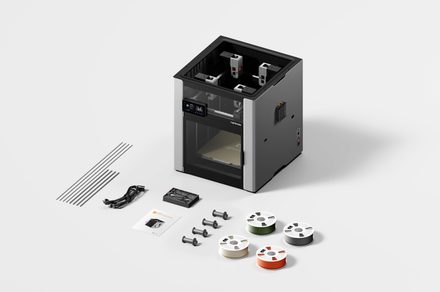
LightMake, a company founded in 2025, has introduced a new desktop 3D printer called the LightMake L4. This innovative device aims to revolutionize desktop 3D printing by employing four independent printheads to work simultaneously, rather than relying on a single printhead that can bottleneck production. This approach is designed to increase productivity and efficiency for various users, including small businesses, design studios, and makers.
The LightMake L4's unique feature is its use of four separate printheads, which can work in parallel to handle multiple printing jobs at once. This allows the printer to perform multiple printing tasks simultaneously, significantly reducing the need for users to wait for one job to finish before starting another. This is particularly advantageous for businesses that produce batches of identical parts or design studios working on several projects at once.
One of the key advantages of the L4 is its ability to print up to four times faster on single-color models compared to traditional single-printhead workflows. However, the most significant benefit may be its flexibility in handling multi-color prints. Traditional 3D printers often struggle with multi-color printing due to the need for frequent toolhead changes or color switches, which can interrupt the production process and increase material waste.
The LightMake L4 addresses this issue by allowing four different printheads to work on different materials or colors concurrently. This approach minimizes interruptions, reduces filament waste, and streamlines the multi-color printing process. Additionally, the printer features a direct-drive linear motor system for precise, ±1µm movement, a vibration-damping design to minimize movement during operation, and a large build volume for accommodating larger print jobs.
These features contribute to the printer's overall stability and reliability, reducing the likelihood of failed prints and associated issues like missed deadlines and lost production time.
Written by urgent.news from Digital Trends's reporting — not their text. Machine-written — may contain errors; check the original before relying on it.