How engineered microbes could help feed the world’s crops
Fertilizer is crucial for the global food supply, but making it uses a lot of energy and produces a lot of emissions. Some companies hope microbes can help. A growing body of research shows that seeding the soil around a crop’s roots with beneficial microbes can help feed the plant, providing crucial nitrogen to help…
Fertilizer plays a vital role in global food production, yet its manufacturing process consumes considerable energy and emits significant greenhouse gases. A number of firms are exploring the potential of microbes to aid crops by enhancing nutrient availability, thereby potentially reducing reliance on chemical fertilizers that account for approximately 2% of global emissions.
Adopting such biological alternatives could also alleviate the financial burden on farmers, particularly amid recent surges in energy and fertilizer prices triggered by geopolitical tensions.
Humans have employed biological fertilizers, such as manure, for millennia, and there's a long history of developing microbial fertilizers through genetic engineering. However, engineering microbes to consistently deliver nitrogen to crops while sustaining their own existence presents substantial challenges. A startup named Switch Bioworks is trying a novel strategy that enables microbes to establish themselves and flourish as colonies before transitioning into nitrogen-generating mode.
Founder and CEO Tim Schnabel highlights their innovative approach, stating, "We have to reinvent fertilizer." While nitrogen constitutes nearly 80% of the air, plants cannot directly utilize this "free" nitrogen, as it fails to react readily with other elements. Consequently, they depend on fixed nitrogen, which has been transformed into reactive compounds such as ammonia.
In nature, microbes facilitate this nitrogen fixation. Certain plants, like legumes, forge symbiotic relationships with nitrogen-fixing bacteria, nurturing them within nodules in their roots.
The primary obstacle faced by microbial fertilizer companies is the high energy expenditure required for microbes to produce and release ammonia. Overinvesting energy in nitrogen fixation may impede their growth. Switch Bioworks is optimistic about resolving this issue through a genetic switch. This mechanism involves a DNA segment or segments that govern gene expression, triggering ammonia production and release within the cell.
The company is exploring multiple options to activate this genetic switch, with the most promising involving the microbes' response to soil nitrogen levels. Once the nitrogen level falls below a specific threshold, the microbes initiate ammonia production. Dan Blaustein-Rejto, director of food and agriculture at the Breakthrough Institute, notes that nitrogen fixation is metabolically expensive for microbes.
When they fix nitrogen, they prioritize its use for protein synthesis and survival rather than fertilizing crops. Integrating genetic switches could empower microbes to grow and thrive, subsequently providing benefits to the crops.
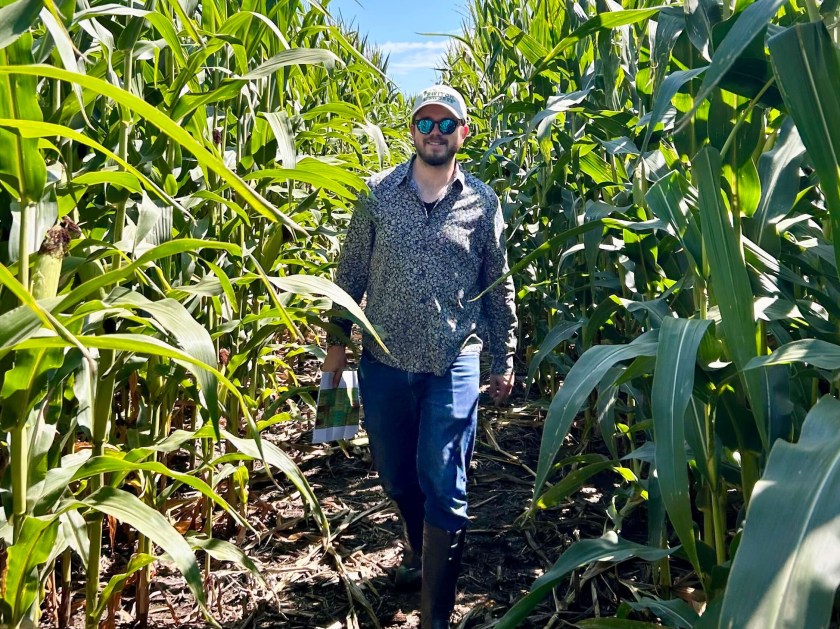
Switch Bioworks is presently conducting trials of its product across six US states, with plans to introduce it commercially within two to three years. Their initial focus is on corn, the most widely cultivated crop in the US, accounting for over 90 million acres in 2026. Schnabel acknowledges that the effectiveness of their approach in field conditions remains uncertain.
The company intends to assess the plants in late October or early November, though preliminary observations suggest that Switch-treated corn plants appear more robust compared to untreated ones.
Switch's products may significantly contribute to mitigating agriculture's environmental impact. Travis Frey, chief technology officer at Pivot Bio, emphasizes the potential benefits, stating, "There's a lot of potential for these companies and products to help farmers reduce emissions." While lab results have demonstrated promising outcomes, field trials are crucial in validating the product's efficacy.
Independent trials are also essential, as there can be a considerable discrepancy between a company's reported data and the findings of independent researchers.
Written by urgent.news from MIT Technology Review's reporting — not their text. Machine-written — may contain errors; check the original before relying on it.