Grasshoppers, flowers, ramen to umbrellas: Why Japan has vending machines for everything
Japan has an impressive count of more than 2.6 million vending machines, providing a vast array of products for all kinds of consumers. Each machine is powered by advanced embedded computer systems that enhance the efficiency of product dispensing. Sophisticated sensors validate payments through coins or banknotes, while various mechanical methods ensure that products are delivered carefully.…
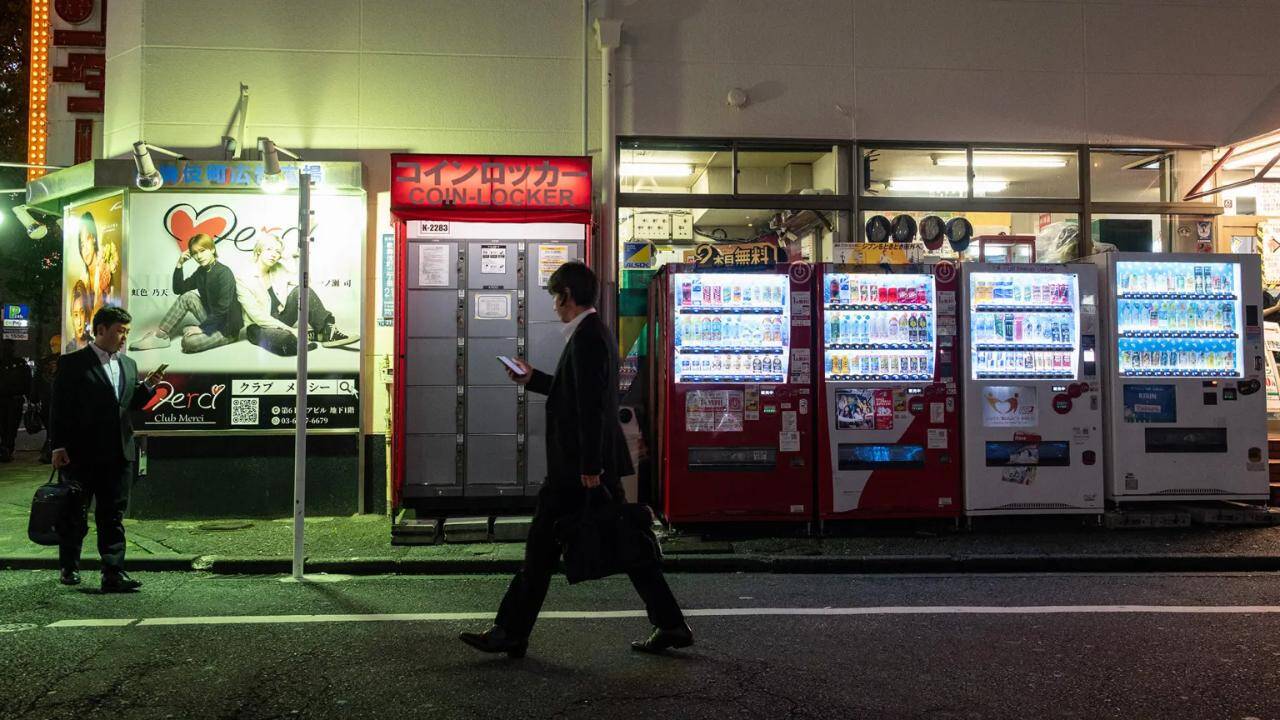
Japan boasts an astonishing 2.6 million vending machines, one for every 45-50 residents. These machines dispense a vast array of goods, from fresh flowers to hot ramen, umbrellas, and even edible grasshoppers. For Japanese consumers, the convenience of the machines is unparalleled, providing instant access to desired items without the need for waiting in lines.
To understand the origins and inner workings of these machines, we spoke with David Widjaja, a former employee of the vending machine industry and the owner of Japantogo LLC, a company based in Ishikawa that exports Japanese vending machines internationally.
Vending machines are far older than one might think, with their origins traced back to ancient Egypt in the first century AD when Hero of Alexandria invented the first known vending machine. This machine dispensed holy water from temples using a simple counterweight lever system. Though the concept faded for over a thousand years, it resurfaced in the late 19th century when coin-operated machines began appearing on London railway platforms, dispensing postcards, envelopes, and notepaper.
The idea then spread to the United States, with the Thomas Adams Gum Company installing gum-dispensing machines in New York City's transit system by 1888.
However, it wasn't until after World War II that vending machines became deeply ingrained in Japanese culture, driven by the country's rapid postwar economic recovery. Widjaja explained that the appeal of vending machines lies in their ability to cater to Japan's fast-paced lifestyle, eliminating the need for people to wait in lines.
Vending machines operate using an embedded computer system, consisting of a microcontroller, sensors, actuators, and gears responsible for releasing items. The microcontroller receives customer selections, validates payments, and sends commands to the appropriate dispensing motor.
Payment verification involves electromagnetic sensors that identify a coin's metal composition, optical sensors measuring the coin's size and shape, and infrared, UV, and magnetic ink sensors for paper currency. Credit card payments are verified by transmitting encrypted data to a banking network. Once payment is confirmed, the microcontroller shifts into dispensing mode, sending signals to specific motors for each item.
Some machines use spiral coils to push items off the shelf, while others employ robotic elevator arms or picker mechanisms to avoid damaging fragile items like carbonated drinks.
Unlike many vending machines worldwide, Japanese vending machines often feature built-in refrigeration for both hot and cold items, depending on the season. These dual-temperature machines employ separate, heavily insulated compartments and heat-pump systems to recycle thermal energy, significantly reducing energy consumption.
Written by urgent.news from Times of India's reporting — not their text. Machine-written — may contain errors; check the original before relying on it.