From watching anime to translating shuttlers: Young interpreters' untold story
Behind the BWF World Championship interviews were interpreters carrying the weight of accuracy. At the recently concluded tournament in New Delhi, young language experts in Mandarin, Japanese and Korean navigated high-pressure media interactions, preparing with archival footage and AI tools to ensure players' words crossed cultural and linguistic barriers without losing their meaning.
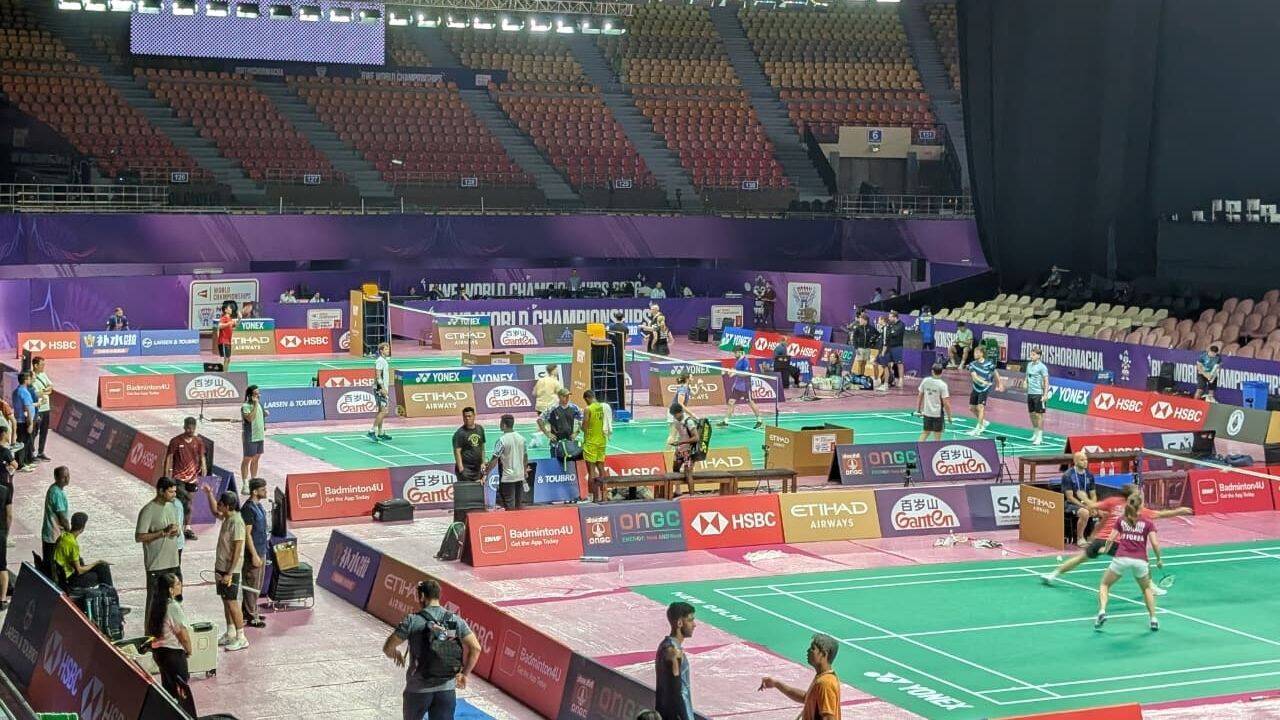
At the recent BWF World Championships, the focus was on the players' performances. However, a critical yet often overlooked aspect was the interpreting services provided. These interpreters played an essential role in ensuring that the athletes' words were accurately translated from Mandarin, Japanese, and Korean into English. The stakes were high, as a single mistranslated phrase could lead to misinterpretation, misunderstandings, or even unintended geopolitical controversies.
Chava Raj, a third-year PhD student in Chinese Studies at Jawaharlal Nehru University, recounted his daunting first assignment during the tournament. He was tasked with interpreting for World No. 1 and defending champion Shi Yu Qi, losing to local player Ayush Shetty in their opening match. Raj explained that the pressure was immense, as he was not only representing his own team but also interpreting for a world-renowned athlete.
The job was challenging, given the complexity of the Chinese language, which is pictographic, tonal, and varies in dialect and context.
Raj had been studying Mandarin for five years and had even traveled to Beijing for a visiting scholarship. He emphasized the importance of watching videos, movies, and engaging in conversations with native Chinese speakers to maintain fluency. The interpreters underwent rigorous preparation, studying vocabulary, potential media questions, and the possible responses from the players. Despite their efforts, they often felt nervous during the actual interpreting, as the players looked to them for accurate translations.
The BWF provided three interpreters, while the Badminton Association of India (BAI) recruited an additional six through partnerships with a PR firm and a third-party vendor. Sahin Parween and Nandini were among the interpreters recruited by the BAI. Parween, a recent graduate from JNU, was initially drawn to Japanese culture through anime and Japanese media. Her interest in Japanese grew as she discovered the lucrative opportunities available in India for Korean and Japanese interpreters.
Nandini's journey into Korean language interpretation was also influenced by pop culture, particularly K-pop and K-dramas. Like her colleague Parween, she found herself drawn to the language through media exposure. Both Nandini and Parween spent considerable time preparing for the tournament, studying vocabulary, potential media questions, and the possible responses from the players.
The duo admitted to experiencing moments of nervousness and uncertainty, particularly in front of their idols. However, they recognized that each experience served as an opportunity for learning and improvement.
Written by urgent.news from Times of India's reporting — not their text. Machine-written — may contain errors; check the original before relying on it.