Fidelity Bank convenes debt capital markets conference to turn Ghana’s recovery into long-term growth
Fidelity Bank Ghana has convened a landmark Debt Capital Markets Conference, bringing together the stakeholders in the financial sector to discuss investment.
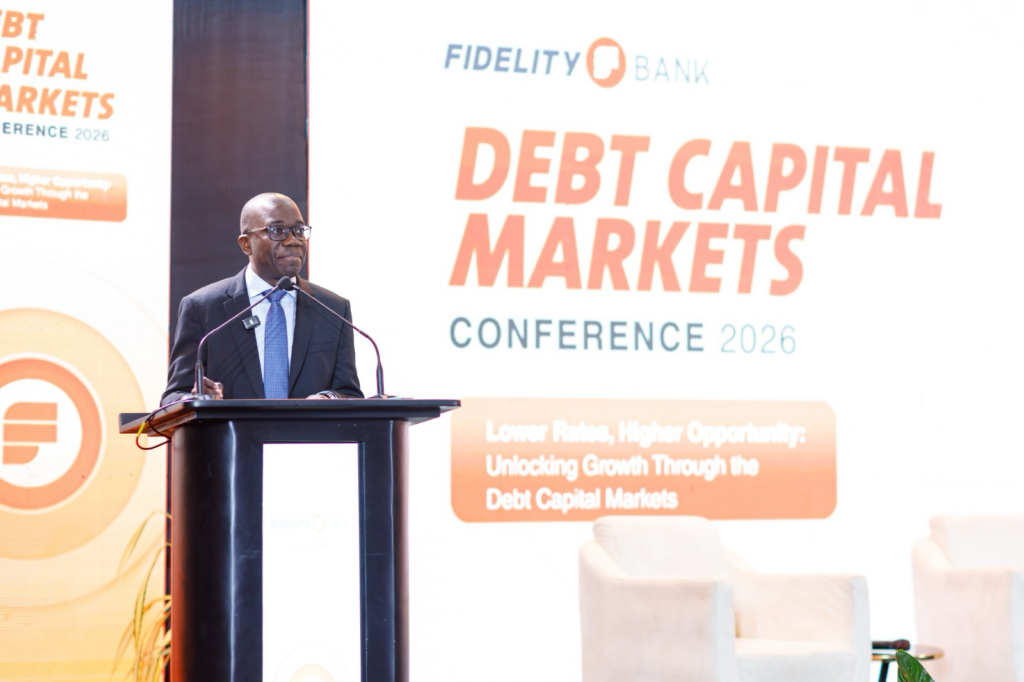
Fidelity Bank Ghana organized an important Debt Capital Markets Conference, gathering key players in the financial world to discuss investment opportunities. The event involved the Bank of Ghana, the Ministry of Finance, the Ghana Stock Exchange, the Securities and Exchange Commission, the National Pensions Regulatory Authority, institutional investors, issuers, and market leaders.
Their shared goal was to determine how Ghana transforms its recent macroeconomic stability into efficient, long-term capital for productive investments. The conference, themed "Lower Rates, Higher Opportunity: Unlocking Growth Through the Debt Capital Markets," marked a shift in focus from strengthening economic fundamentals to establishing the groundwork for sustainable growth in the debt capital markets.
Fidelity Bank's Managing Director, Julian Opuni, emphasized that while the focus had been on stabilization, the current improving conditions present a genuine opportunity to convert macroeconomic stability into efficiently priced, long-term capital. He highlighted Fidelity Bank's significant contributions to the market, with over GHS 30 billion in debt capital market transactions.
Dr Johnson Pandit Asiama, the Governor of the Bank of Ghana, shared data demonstrating Ghana's robust recovery, with real GDP growth of 6.4% in Q1 2026, headline inflation down to 4.6% in July 2026, and gross international reserves at $12.9 billion. He hailed the reopening of the domestic bond market in March as a major milestone, signifying a transition from crisis management to proactive debt management.
The focus was on how the market would prove its depth, not through auction results, but through tangible investments like power projects, expanded factories, financed housing developments, and SMEs financed by accessible capital. Abena Amoah, Managing Director of the Ghana Stock Exchange, reflected on the market's decade-long journey since its inception in 2015, stressing the importance of trust and cooperation in building market institutions.
She noted the market's heavy reliance on sovereign issuances and called for broader private-sector participation. Panel discussions addressed the challenges of maintaining macroeconomic stability during the growth transition, with experts advocating for stronger institutions, disciplined mobilization of domestic pension and insurance funds, and credible issuers, transparent disclosures, and robust governance structures for a thriving corporate debt market in Ghana.
Written by urgent.news from Joy Business's reporting — not their text. Machine-written — may contain errors; check the original before relying on it.
Also reported by 4 other outlets
- Conference for Registrars of Cooperative Societies held at Reserve Bank of India, New Delhi on September 1, 2026 rbi.org.in
- India's GDP surged to 7.8% and growth forecasts are climbing: Why the Reserve Bank of India now faces 75bp of hikes fxstreet.com
- Fidelity Bank convenes debt capital markets conference to turn Ghana’s recovery into long-term growth myjoyonline.com
- Bank of Canada set to hold rates as strong growth collides with trade risks investing.com