Das neue Geben: Die klügste Investition in Ostdeutschland ist eine Spende
Populistische Regierungen sind ein Standortrisiko. Unser Autor teilt eine Liste von Organisationen, die die Zivilgesellschaft stärken.
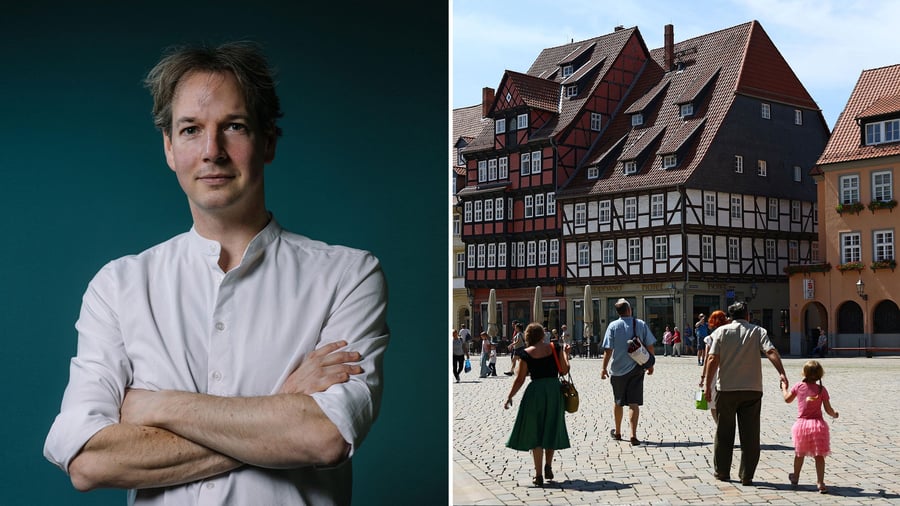
Dresden is set to build a €10 billion chip factory, the largest private investment in East German history. Farther west, in Saxony-Anhalt, the AfD is polling at 43 percent ahead of the state legislature election. This is prompting concern among investors, with a survey of business promoters revealing that over 80 percent see the rise of the AfD as a risk to their locations.
Not a single promoter sees any benefit. Labor market researchers at the IAB have measured how xenophobic attitudes in a region hinder in-migration of workers, both from abroad and within the country. Research on 51 populist governments since 1900 estimates they cost their countries roughly 10 percent of economic output after 15 years.
The skepticism towards private investments must disappear; the risks are not yet a harm. However, they should be managed. Building the dike in a floodplain is the responsibility of local civil society – associations, counseling centers, youth work – all that makes regions livable for skilled workers while making them unattractive to extremists.
Their primary funder in the East is the state, which is now dwindling: Funding for around 200 projects under the federal program "Demokratie leben!" is set to end by the end of 2026, and the budget is decreasing. Therefore, private money is needed. Yet nowhere is trust in the state as a distributor higher and trust in private wealth lower than in East Germany.
Both factors are historically understandable, and both are leading to emptiness. Anyone who wants the state to manage things must watch it retreat. Private money for civil society is neither ideological nor altruistic in the East – but a prudent investment in the future. More and more wealthier individuals understand this. The Bosch family, through the Heidehof Foundation and co-funder Hans Schöpflin, is financing a fund in Saxony-Anhalt that distributes funds to young activists there.
Rubin Ritter, former co-founder of Zalando, uses his Kinnings Foundation to support initiatives exclusively in East Germany. Businesspeople Robert Hinsch and Klaus Wegener are launching the Aufwind Festival in Gera in November, with donors being more interested in democracy in the East than any time in the past 20 years. Not a single drama or appeal surrounding the three East German state elections in September.
Most discussions revolve around deficits and warnings, mostly from people in West Germany. What engaged citizens in the East need most right now is money. For their work in education, regional infrastructure, diversity of life projects, and most importantly, the ongoing development of their own democratic coexistence, they need money above all else.
There are three principles for targeted giving: First, fund organizations, not projects, without purpose binding and over the long term. In business, equity capital is stronger than purpose-bound loans. Second, seek co-investors who understand the situation – the same euro achieves a lot more at the right place than purpose-bound loans in the nonprofit sector.
Third, for those who want to find individual organizations or build relationships, consider portfolios instead of direct donations. Similar to stocks, an ETF is often more beneficial than one or two individual shares. For readers of Handelsblatt, I have compiled a list of organizations and community funds that have impressed me according to these principles.
They can be supported anonymously or with names, in any size, fully transferred. The chip factory in Dresden has its investors. The dike still needs finding, and time is pressing. The smartest investment in East Germany is one into the civil society risk management, even with a donation receipt. Felix Oldenburg is the author of "The Trapped Prosperity" (2025) and CEO of the startup foundation Bcause.
Previously, he led the German Foundations Association and the Social Entrepreneurship Network Ashoka. He encourages everyone who can contribute to join the new giving movement. First publication: 28.08.2026, 04:00 AM.
Written by urgent.news from Handelsblatt's reporting — not their text. Machine-written — may contain errors; check the original before relying on it.
This story
This is one outlet's version. Read the fullest account.