Commentary: Rebuilding Nepal without repeating mistakes of 2015 earthquake
The question is not simply how to respond to the flood, but how to reduce the economic and human consequences of the next disaster, says this researcher.
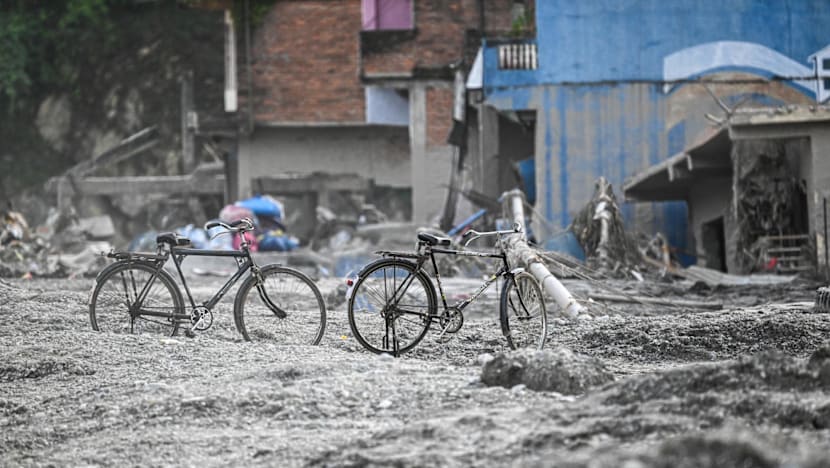
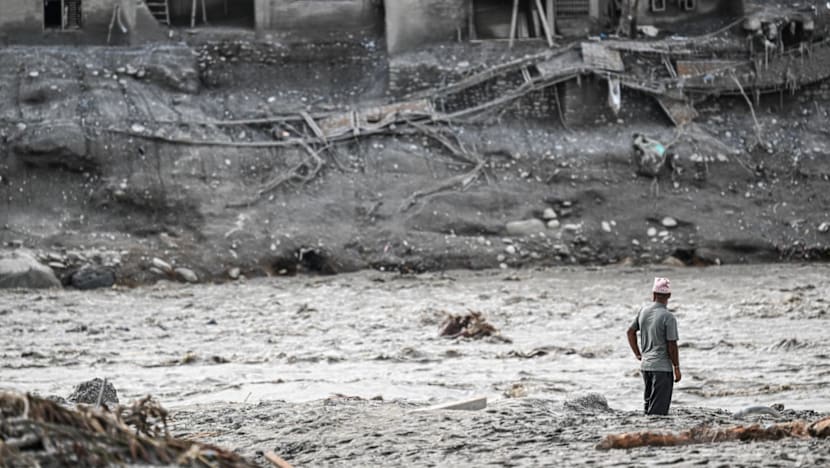
The recent flood disaster in Nepal has claimed at least 1,000 lives and left nearly 4,500 missing after millions of cubic meters of water cascaded down the Bhote Koshi and Trishuli rivers. The immediate economic impact has been severe, with surface powerhouses destroyed, the energy grid crippled, farmlands inundated during peak planting season, and vital bridges and roads washed away, including the crucial artery to Kathmandu.
This has left Nepal facing not only an immediate humanitarian emergency but also long-term economic consequences. The disruption of trade routes to the Chinese border has forced Nepal to reroute roughly $3 billion in Chinese imports through the Korala Pass or Indian seaports, adding at least 20 days of transit time and a 40% tariff cost that disproportionately affects small enterprises.
The tourism route of Kailash Mansarovar is also likely to suffer due to the loss of lives and infrastructure. As Nepal prepares for a major reconstruction effort, the question is not just about the financial aspects but also about reducing the economic and human consequences of future disasters. Nepal's experience after the 2015 earthquake shows that reconstruction spending alone does not guarantee quality recovery.
The reconstruction bill is estimated to be between $4 billion and $5 billion, placing Nepal under external debt-servicing obligations as it prepares for graduation from Least Developed Country status. The issue is not only about mobilizing reconstruction money but also about how that money is spent. Conventional procurement rules and construction contracts proved inadequate during the 2015 recovery, with bureaucratic delays and difficulties in responding to changing conditions.
The forthcoming Post-Disaster Needs Assessment by the National Planning Commission provides an opportunity to address these issues by incorporating climate and geological risk into reconstruction decisions. However, this must be accompanied by institutional reforms that adapt to post-disaster conditions, allowing for faster approvals and realistic timelines while providing flexibility to respond to unforeseen changes.
Coordination is also crucial, with the government activating the Prime Minister Relief Fund and foreign partners pledging financial assistance, supplies, specialist teams, and equipment. Effective deployment of these resources requires addressing gaps in Nepal's disaster-response capacity, including the lack of automated early-warning networks along dangerous rivers and unregulated infrastructure development in vulnerable flood zones.
Additionally, there is a need for transboundary monitoring and data sharing among China, Nepal, and India to manage some environmental risks more effectively. Ultimately, Nepal must change what reconstruction means by incorporating future risks into the rebuilding process and improving coordination across borders.
Written by urgent.news from Channel News Asia's reporting — not their text. Machine-written — may contain errors; check the original before relying on it.