Chinese rescue work in Tibet flood disaster zone still trudging along days later
Reopening the China-Nepal border crossing has been a battle against the elements, with rescuers working in a narrow gorge between crumbling cliffs and a raging river.
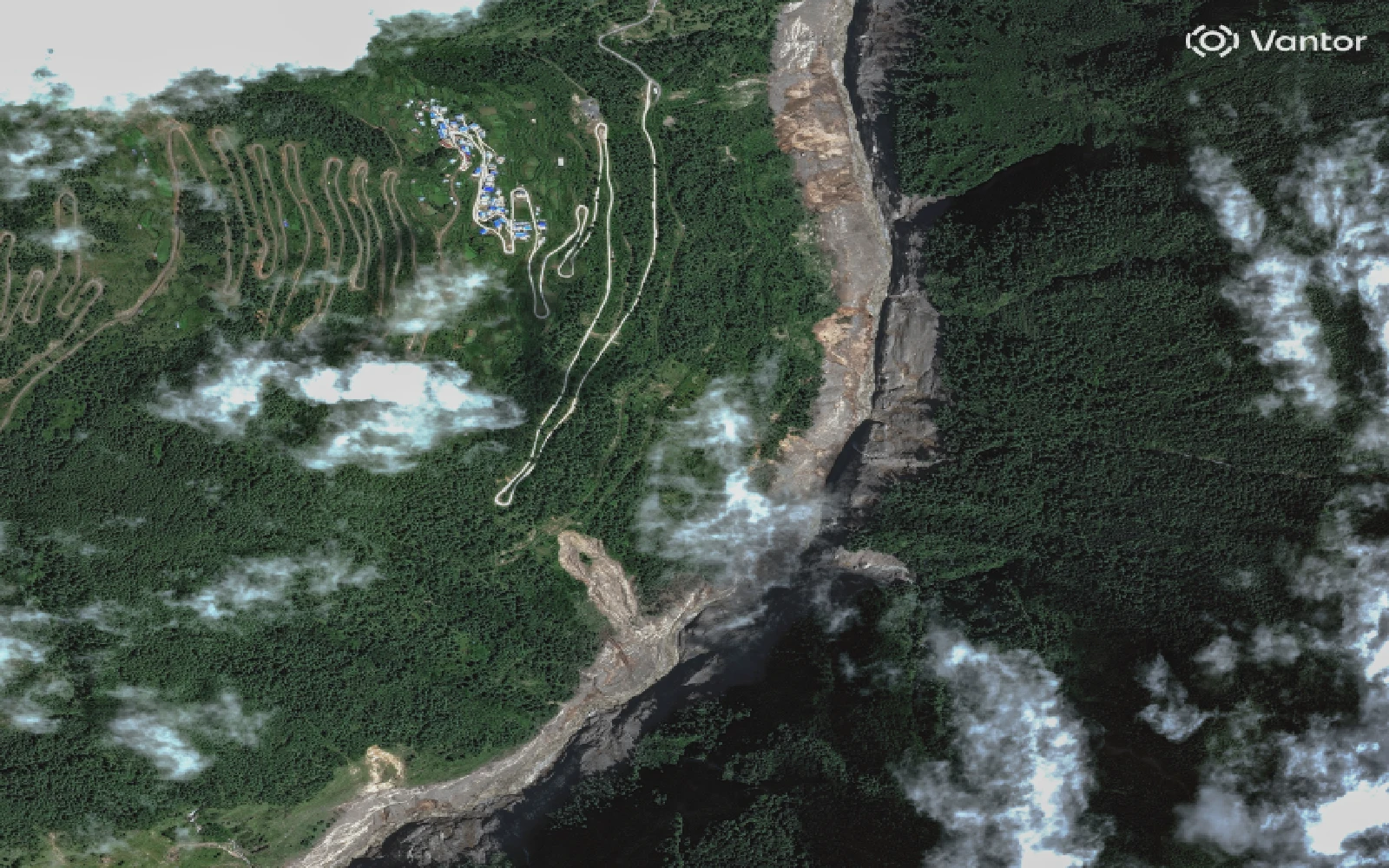
On Wednesday, Chinese rescue crews persevered through a torrential downpour and relentless river currents to mend the final kilometer of National Highway 216, the solitary road linking Tibet to Nepal. The road's collapse, triggered by a glacier collapse and ensuing avalanche, left rescuers grappling in a treacherous gorge, with river currents surging at 6 to 7 meters per second — nearly six times their usual pace, according to CCTV.
State broadcaster CCTV reported that the road's destruction was wrought when debris from the backflow of mudslides surged back upstream from the border crossing complex. The narrow gorge, flanked by crumbling cliffs and a raging river, has proven a formidable obstacle for the rescue mission. During the past few days, excavators struggled to rebuild the road, often teetering precariously at the shattered edge, clinging to a bend where the highway simply disappears into the water, as footage from CCTV showed.
The disaster, which began with a glacier collapse, has left a gaping crater estimated to hold water equivalent to 260 Olympic swimming pools. While earlier lakes in the Tibetan side have gradually drained, the landslide risk and a volatile body of water in Nepal upstream could still dam the rivers. A sudden burst from this precarious situation could send another torrent into the rescue zone, heightening the danger.
CCTV reported that by Tuesday afternoon, more than 60 rescuers had ventured into the disaster zone, conducting search operations twice for survivors. The impact of the mudslide is evident in the surrounding slopes, reaching heights of 60 meters, roughly the height of a 20-story building. As of Sunday, China's official count stood at 16 fatalities and 546 people still missing.
Written by urgent.news from Free Malaysia Today's reporting — not their text. Machine-written — may contain errors; check the original before relying on it.
Also reported by 1 other outlet
- Chinese rescue work in Tibet flood disaster zone still trudging along days later freemalaysiatoday.com