Burnham promises more devolution and public control of essential services
Tory leader Kemi Badenoch said Burnham was offering "more government control, more taxes and more politicians", as he addressed MPs for the first time as PM.
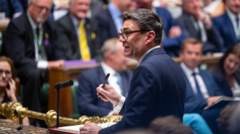
Andy Burnham, the newly appointed prime minister, addressed the House of Commons for the first time since assuming power. He acknowledged that Britain is not where it should be and promised to build a new sense of optimism across the nation. Burnham outlined a series of wrong turns taken since the 1980s, including political power centralisation and economic power privatisation. He identified these issues as having led to deindustrialisation, austerity, and the hollowing out of councils.
Burnham emphasized that a plan to address these problems, including the desire for greater public control of water and energy, would be presented later in the year. Conservative leader Kemi Badenoch criticised Burnham's proposals, accusing him of advocating for more government control, higher taxes, and increased political influence. She dismissed his theory of growth, stating that merely increasing government spending would not lead to prosperity.
Burnham highlighted his experience as Greater Manchester mayor, claiming it provided him with a clear theory of growth: devolving powers to regions outside of London would stimulate local economies. He expressed the intention to extend this approach to every region and nation in England, fostering economic growth in every postcode.
He also addressed concerns about areas without mayors and potential two-tier systems, assuring the House of Commons that his government would collaborate with Cornwall Council and its six MPs to establish a devolution deal, regardless of whether an elected mayor was involved.
During his speech, Burnham paid tribute to his predecessor, Sir Keir Starmer, praising his lifetime of public service and contributions to positive change in the country. He outlined his approach to various issues, including welfare, where he suggested that increasing council home availability could lower rents and reduce the benefits bill. Burnham also committed to introducing legislation allowing homeowners to transition from leasehold to commonhold ownership more easily.
When questioned about defence spending, Burnham explained that he had chosen John Healey as chancellor due to his commitment to defence. Healey had resigned as defence secretary earlier this year, criticizing the previous government for failing to allocate sufficient resources to ensure national security. Liberal Democrat leader Sir Ed Davey questioned the government's plans to approve new drilling licences for the Rosebank oil field and the Jackdaw gas field in the North Sea.
Tice argued for more drilling as a means to reduce imports and Ellie Chowns opposed the move, citing the significant climate damage these projects would cause. Burnham pledged to take a pragmatic approach to the transition to renewable energy, aiming to achieve this goal in the most effective and affordable manner possible.
Written by urgent.news from BBC News's reporting — not their text. Machine-written — may contain errors; check the original before relying on it.