At 14, a Kerala girl built a washing machine that needed no electricity
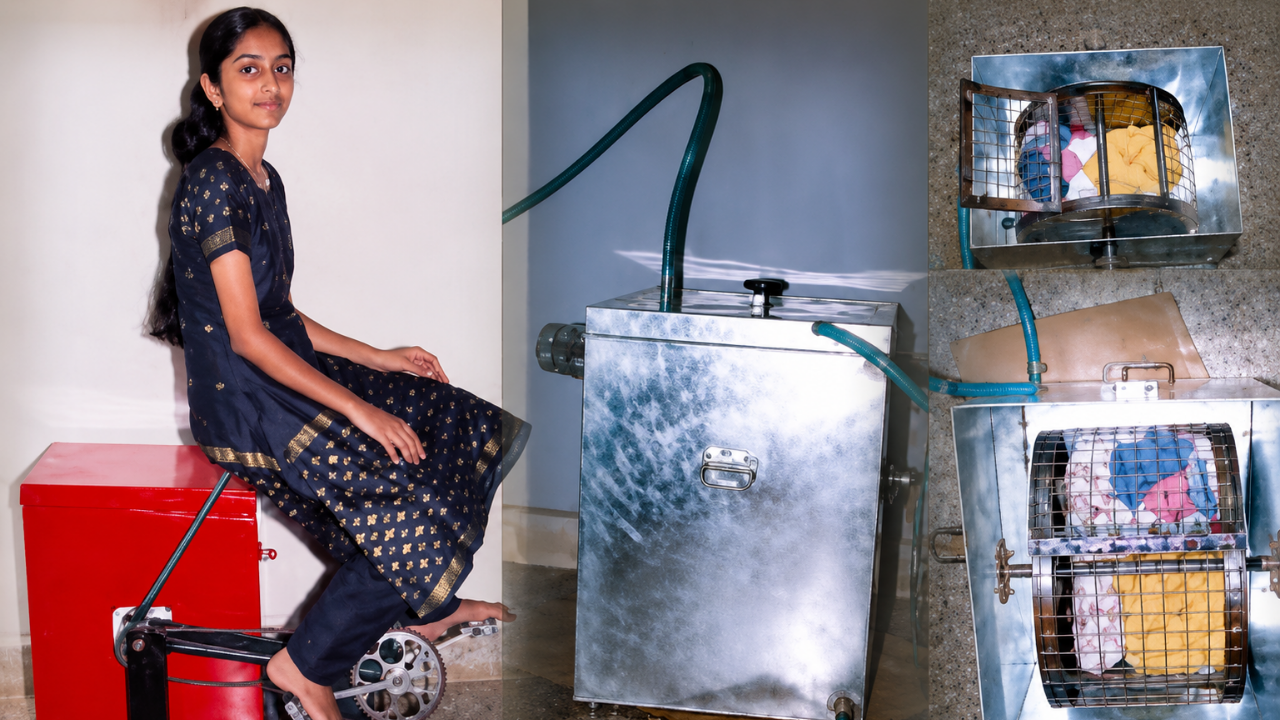
In a time when laundry was just one more task alongside school, travel and family duties, a young schoolgirl named Remya from Kerala conceived an innovative solution to the lack of electricity for washing machines. The 10th-grade student endured long travels to school and helped her twin sister with household chores, while her mother was ill and her father fought cancer. Frustrated with the situation, Remya observed how an electric washing machine operated and pondered whether a bicycle could provide the same motion.
Through sketching and guidance from a nearby automobile workshop, Remya transformed her bicycle-inspired concept into a functional pedal-powered washing machine. She utilized a bicycle mechanism, a metal drum and an aluminium enclosure to create a machine that could wash clothes without relying on electricity. The construction cost was relatively low, estimated at around Rs 2,000 (approximately US$25), and it could be easily transported as it was not permanently installed.
Operating the machine required the user to pedal for roughly three to four minutes, during which the cylinder rotated rapidly, washing and spin-drying the clothes. After the wash, the dirty water was drained, and the compartment was refilled for rinsing. Additionally, the spinning drum could double as a simple centrifuge, leaving the clothes around 80 percent dry. There was no need for an electrical system or a specialised installation, making the machine affordable and easy to use.
The inspiration for Remya's invention stemmed from her demanding personal circumstances. She had to commute for about two hours each direction to and from school, while her mother's illness and her father's cancer treatment left little time for other activities. Laundry, therefore, became a significant challenge, competing with schoolwork and the limited free time available. Remya and her twin sister, Soumya, shared the washing, which eventually led Remya to explore mechanical alternatives.
Remya's family initially had mixed reactions to her invention. Her father, a Hindi teacher, had doubts about her idea, but eventually helped bring the machine to life. Her mother expressed concerns about Remya's focus on inventions rather than her studies. However, as the machine gained attention and demonstrated its effectiveness, her mother's attitude shifted. Remya's sister, Soumya, provided support throughout the process, and friends were initially sceptical but became convinced upon seeing the working machine.
Written by urgent.news from Times of India's reporting — not their text. Machine-written — may contain errors; check the original before relying on it.