AI Agents Are Opening Up, but What About the Data?
A2A and MCP are making AI agents easier to connect, but proprietary data remains harder to move, govern, and secure across enterprise AI systems.
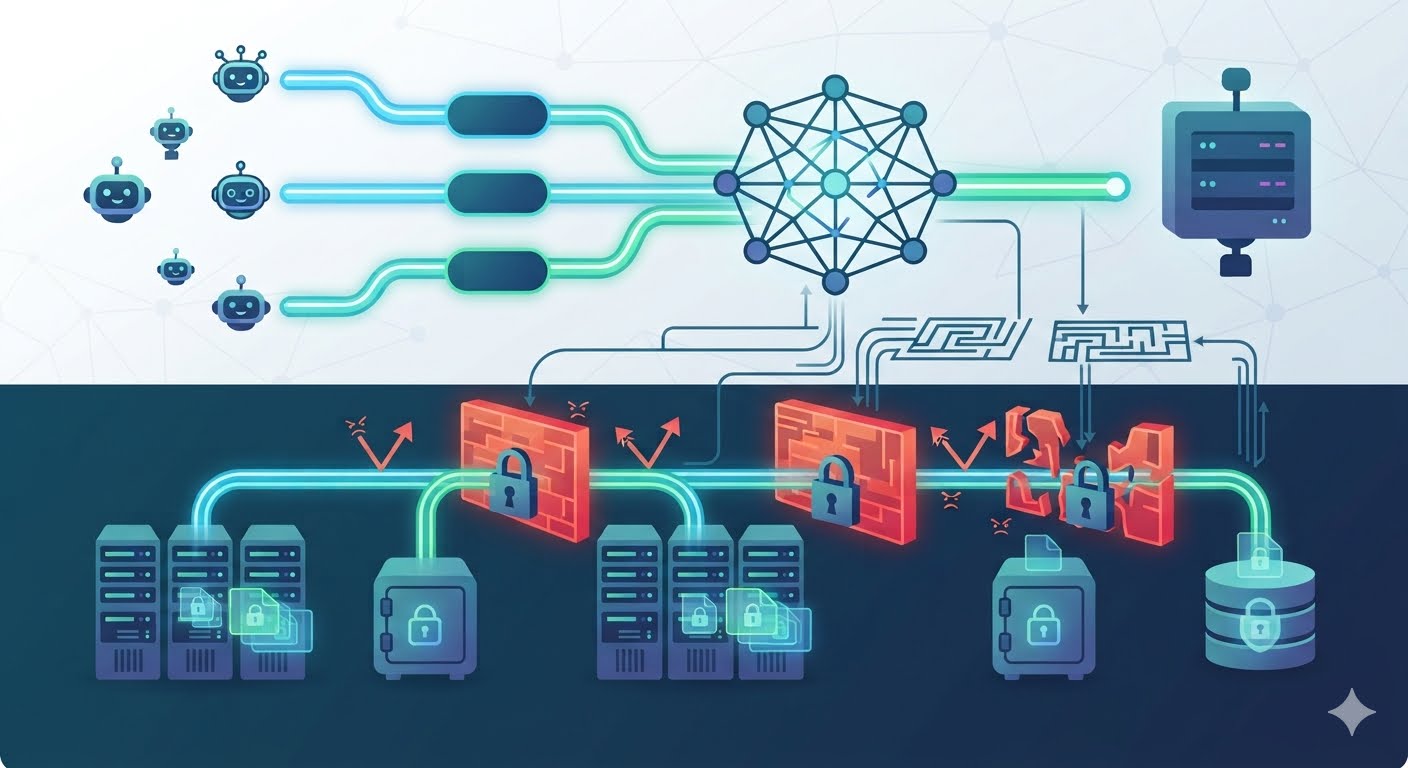
As companies adopt more AI agents for tasks like supply chain monitoring, customer support, and application troubleshooting, open protocols are emerging to help these agents communicate and collaborate effectively. Google's Agent2Agent Protocol (A2A) allows independent agents to discover one another and delegate work, while the Model Context Protocol (MCP) standardizes how AI applications connect to external tools and data.
These efforts gained momentum in August when A2A joined other open agent infrastructure projects under the Agentic AI Foundation.
However, while open protocols make it easier to connect agents, a new interoperability challenge is emerging. These agents still require access to company data, and simply changing the agent doesn't make that underlying data any simpler to move, govern, or protect. The Agent Layer, which contains company data, remains a crucial part of the stack that enterprises have the clearest control over, according to Max Romanenko, Chief Engineering Officer at EnterpriseDB.
While open protocols facilitate easier agent-to-agent communication, they don't necessarily address how data is governed or protected. If an agent still depends on data trapped in a proprietary platform, swapping out the agent can become more complex. The data layer, where the company has control, remains an essential component for maintaining flexibility in the AI architecture.
When live data and governance remain under the enterprise's control, models and agents become components that can be inspected, replaced, or sandboxed as requirements change, ensuring genuine flexibility.
Written by urgent.news from HackerNoon's reporting — not their text. Machine-written — may contain errors; check the original before relying on it.