Why Merchants Save Their Best Offers for Checkout
Merchants have plenty of ways to target shoppers with promotions. Their problem is getting the right offer in front of the right customer while there is still a purchase to influence. That gap shows up clearly in “The Smart Basket Opportunity: How Merchants Can Capture More Consumer Spending,” a July 2026 report produced by PYMNTS […] The post Why Merchants Save Their Best Offers for Checkout…
Merchants employ diverse tactics to attract buyers with promotional offers, yet struggle to present the appropriate incentive to the ideal consumer before a purchase can be influenced. This gap is evident in "The Smart Basket Opportunity: How Merchants Can Capture More Consumer Spending," a July 2026 report by PYMNTS Intelligence in partnership with FIS.
Conducted via a survey of 60 grocery, retail, and restaurant and food service merchants, the research reveals that 65% cite access to data as the primary barrier to running personalized promotions, despite many merchants perceiving their data capabilities as advanced. While 73% of merchants utilize personalized or targeted offers, only 48% consider them their most successful promotional mechanism, highlighting a discrepancy between deployment and success rates.
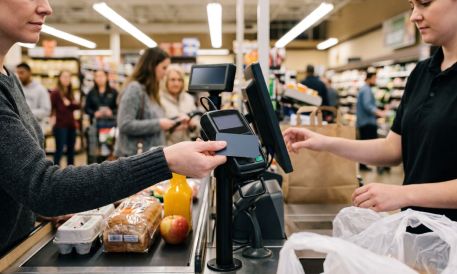
A potential solution lies in implementing smart checkout offers, which analyze a shopper's basket in real-time at the point of sale, automatically applying eligible product-level offers, loyalty rewards, and brand-funded incentives without requiring shoppers to activate them beforehand. This method aligns with existing merchant practices, with checkout-integrated promotions being the most commonly employed promotional channel among surveyed merchants at 58%.
Furthermore, merchants plan to allocate more budget to embedded, real-time checkout optimization in the next three years, reflecting a growing trend toward this approach. Merchants desire control over promotional construction and seek to protect margins, gain visibility into incremental sales or ROI, and establish data usage rules.
Additionally, 77% are willing to share transaction signals and performance data with payment platforms, provided they receive clear evidence of resulting sales or conversions and transparency into how their information is utilized.
Written by urgent.news from PYMNTS's reporting — not their text. Machine-written — may contain errors; check the original before relying on it.